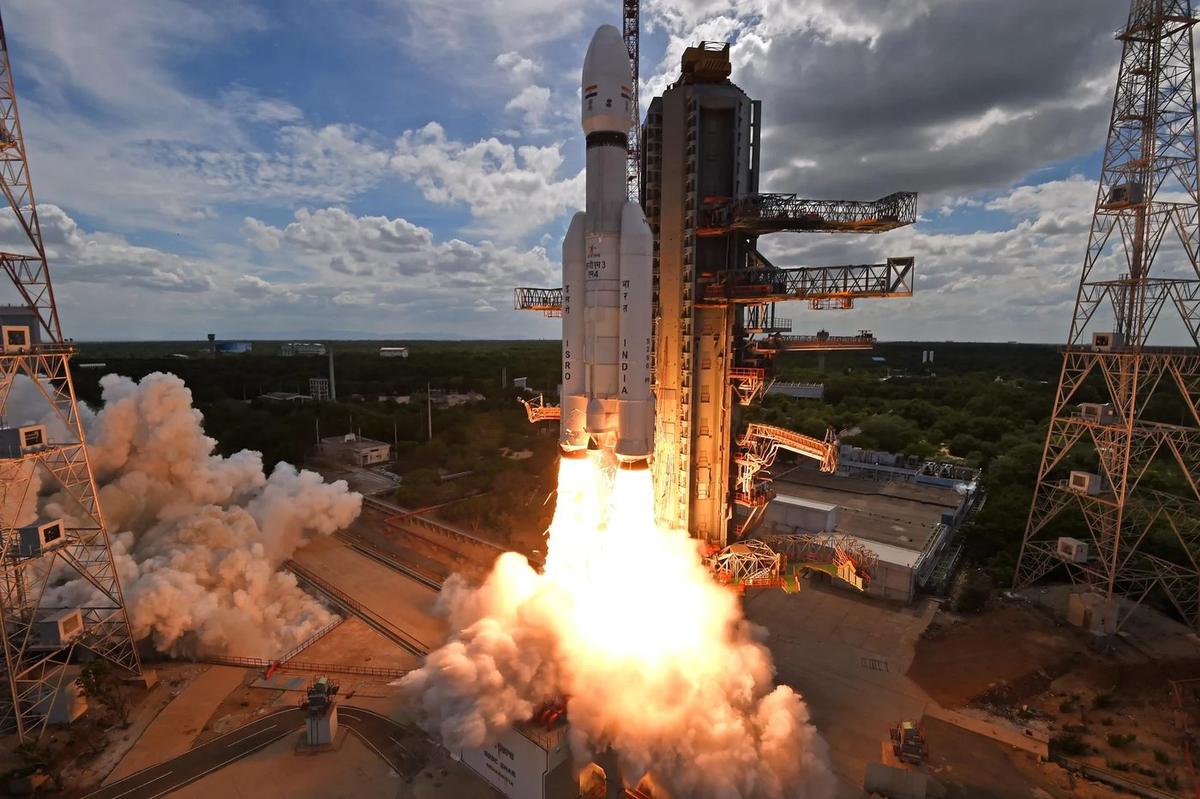
Photo: LVM3 launch, Sriharikota, ISRO, GODL-India

APPSC Group-I Mains 2025 · Paper V
2025 Paper V · Q11(a): model answer
Science, Technology & Environmental Issues · Pollution, waste and climate change. Held in May 2025 (Notification 12/2023).
Define global warming, and differentiate it clearly from climate change. Explain the key natural and human-induced causes of global warming and briefly discuss which factors are currently dominant in driving global temperature rise.
Syllabus: Pollution, waste and climate change · Climate change and sustainable development
Global warmingClimate changeEnhanced greenhouse effectHuman influence
Global warming is the long-term rise in Earth's average surface temperature, caused mainly by greenhouse gases (GHGs) that strengthen the natural greenhouse effect. Climate change is broader: lasting shifts in temperature, rainfall, extremes, sea level, ice and ocean chemistry, whether natural or human-caused. Warming is thus one driver and one symptom of climate change. 2024 was the first calendar year more than 1.5 °C (about 1.55 °C) above pre-industrial levels (WMO).
1. Global warming vs climate change
| Basis | Global warming | Climate change |
|---|---|---|
| Meaning | Rise in global mean surface temperature | Long-term change in the whole climate system |
| Scope | One variable: temperature | Temperature, rainfall, winds, extremes, sea level, ice, ocean pH |
| Cause | Mainly the enhanced greenhouse effect | Natural variability plus human forcing |
| Example | 2024: about 1.55 °C above 1850–1900 | Heavier downpours, longer heat waves, faster-intensifying cyclones |
- Cause and effect: warming melts ice, expands sea water and lets air hold about 7% more moisture per °C, producing many of the changes called climate change.
- Not uniform: land warms faster than the ocean and the Arctic fastest; some regions get wetter, others drier.
- Legal usage: the UNFCCC (1992) defines climate change as change attributed directly or indirectly to human activity, over and above natural variability.
2. Natural causes
- Solar output: the Sun's 11-year cycle varies heat input slightly; solar activity shows no rising trend since about 1980, while temperatures rose.
- Volcanoes: large eruptions put sulphate aerosols in the stratosphere and cool the Earth for a year or two (Pinatubo, 1991).
- Orbital (Milankovitch) cycles: changes in Earth's orbit and tilt drive ice ages over tens of thousands of years, too slow to explain recent warming.
- Internal variability: El Niño years are warmer and La Niña years cooler; oceans move heat around but do not add it.
3. Human-induced causes
- Fossil fuels: coal, oil and gas for power, transport and industry are the largest CO₂ source; CO₂ reached 423.9 ppm in 2024, about 152% of pre-industrial.
- Land-use change: deforestation releases stored carbon and removes sinks.
- Methane and nitrous oxide: paddy, livestock, landfills and gas leaks (methane, GWP about 27–30); nitrogen fertilisers (N₂O, about 273).
- F-gases and soot: HFCs and SF₆ trap heat strongly; black carbon darkens snow and ice.
- Aerosols: sulphate pollution reflects sunlight and masks part of the warming.
4. Dominant factors today
| Driver | Contribution (°C) |
|---|---|
| Well-mixed greenhouse gases | +1.0 to +2.0 |
| Aerosols and other human drivers | 0 to −0.8 (cooling) |
| Natural drivers (Sun, volcanoes) | −0.1 to +0.1 |
| Internal variability | −0.2 to +0.2 |
| Total human-caused | about +1.07 (0.8 to 1.3) |
| Observed warming | about +1.06 |
- Human influence is unequivocal (IPCC AR6): practically all observed warming is human-caused, and natural drivers added almost nothing.
- CO₂ leads, methane second: fossil CO₂ is the single largest driver; the 3.5 ppm rise in 2024 was a record.
- Natural factors only modulate: the 2023–24 El Niño helped push 2024 above 1.5 °C, but the trend is set by GHGs; the Paris limit refers to about 20-year averages.
AP angle: the warming already shows on AP's 1,053 km coast through erosion at Uppada, rapidly intensifying Bay of Bengal cyclones and severe heat waves in Rayalaseema.
Global warming is the thermometer reading; climate change is the whole illness. Since humans dominate the cause, deep cuts in CO₂ and methane, as in India's 500 GW non-fossil target and net zero by 2070, are the cure.
The other choice in Q11
Answer either one in the exam.
Every model answer on these pages is free to read. The Tool Kit adds four PDF books for Mains Papers I–IV: every previous question sorted by syllabus, with practice questions. It is in the ₹149 All-in-One Pass, with every previous paper of every exam on the site, practice quizzes, timed tests, mock test series and study books.
₹149 · valid for 12 months from the day you pay, on every exam · pay by UPI, card or net banking