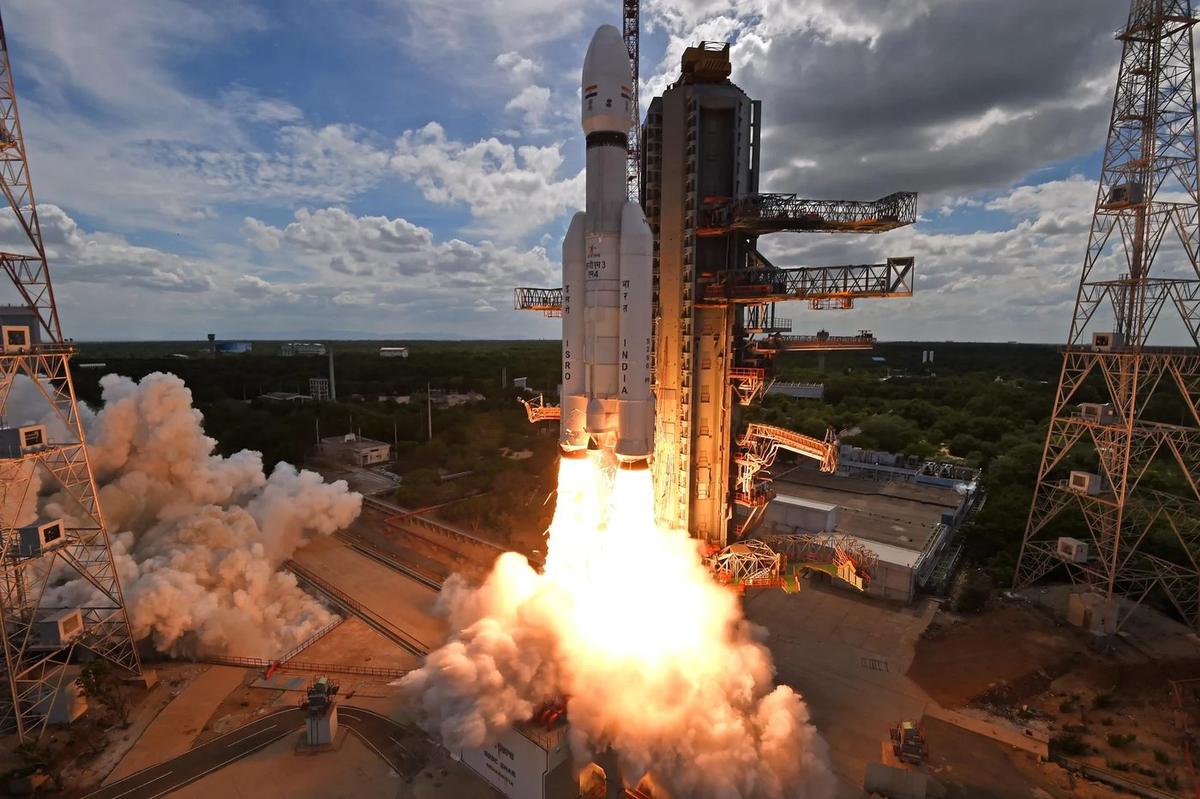
Photo: LVM3 launch, Sriharikota, ISRO, GODL-India

APPSC Group-I Mains 2025 · Paper V
2025 Paper V · Q10(b): model answer
Science, Technology & Environmental Issues · Environmental laws, EIA and disaster management. Held in May 2025 (Notification 12/2023).
Discuss the legislative framework for controlling air and water pollution in India. Highlight the key provisions and limitations of relevant acts.
Syllabus: Environmental laws, EIA and disaster management · Environmental laws, EIA and disaster management
Water Act 1974Air Act 1981Environment (Protection) Act 1986Pollution control boards
India's pollution laws rest on Article 21 (read by the Supreme Court to include a clean environment), Articles 48A and 51A(g), and Parliament's powers under Article 252 (the Water Act was passed at the request of States) and Article 253 (the Air and EP Acts implement the Stockholm Conference, 1972). The framework is a command-and-control system run by pollution control boards and, since 2010, backed by the National Green Tribunal.
1. Water (Prevention and Control of Pollution) Act, 1974
- Institutions: created the Central Pollution Control Board (CPCB) and State Pollution Control Boards (SPCBs).
- Consent system: no industry may be set up or discharge effluent without the SPCB's consent to establish and consent to operate; boards set standards and inspect.
- Enforcement: boards can order closure or cut power and water; the 2024 amendment replaced jail with penalties of ₹10,000 to ₹15 lakh for many offences, and applies first to Himachal Pradesh, Rajasthan and the UTs.
2. Air (Prevention and Control of Pollution) Act, 1981
- Same boards: States declare air pollution control areas, where industries need consent and must meet emission standards.
- Wider scope: noise was added as an air pollutant in 1987; ambient standards (2009) cover 12 pollutants.
- Recent changes: the Jan Vishwas Act, 2023 replaced imprisonment with penalties for many offences; the Commission for Air Quality Management Act, 2021 created an airshed body for Delhi-NCR.
3. Environment (Protection) Act, 1986 and the NGT
- Umbrella law after Bhopal: gives the Centre wide powers to set standards, restrict industrial locations and order closure; the EIA Notification and the waste, CRZ and GM rules are made under it.
- Citizen's suit: any person may complain to a court after 60 days' notice to the authorities.
- National Green Tribunal Act, 2010: speedy civil remedies and compensation under the Water, Air and EP Acts, applying polluter pays and the precautionary principle.
4. Limitations
- Weak boards: SPCBs are understaffed and short of experts; monitoring relies heavily on industries' own reports.
- Point-source bias: the Acts target factories, while vehicles, dust, crop-residue burning, farm runoff and untreated town sewage, the largest water polluter, escape effective control.
- Deterrence: penalties are small and prosecutions slow.
- Fragmentation: airsheds and rivers cross State boundaries that boards cannot; courts and the NGT often fill executive gaps.
- Results: only 14 of 130 NCAP cities met the PM10 standard in 2025-26; CPCB lists 296 polluted river stretches.
AP angle: the APPCB grants consents and monitors industries; the LG Polymers styrene leak at Visakhapatnam (2020), where the NGT imposed an interim ₹50 crore under absolute liability, and aquaculture effluents in Kolleru show both the reach and the gaps of the law.
The legal framework is sound, but enforcement capacity lags; independent, well-staffed boards, continuous monitoring and airshed and river-basin management can turn the Acts into clean air and water.
The other choice in Q10
Answer either one in the exam.
- Q10(a)Critically assess the effectiveness of major disaster management initiatives undertaken in India since the enactment of the Disaster Management Act, 2005.
10 marks · Environmental laws, EIA and disaster management · Environmental laws, EIA and disaster management
Every model answer on these pages is free to read. The Tool Kit adds four PDF books for Mains Papers I–IV: every previous question sorted by syllabus, with practice questions. It is in the ₹149 All-in-One Pass, with every previous paper of every exam on the site, practice quizzes, timed tests, mock test series and study books.
₹149 · valid for 12 months from the day you pay, on every exam · pay by UPI, card or net banking