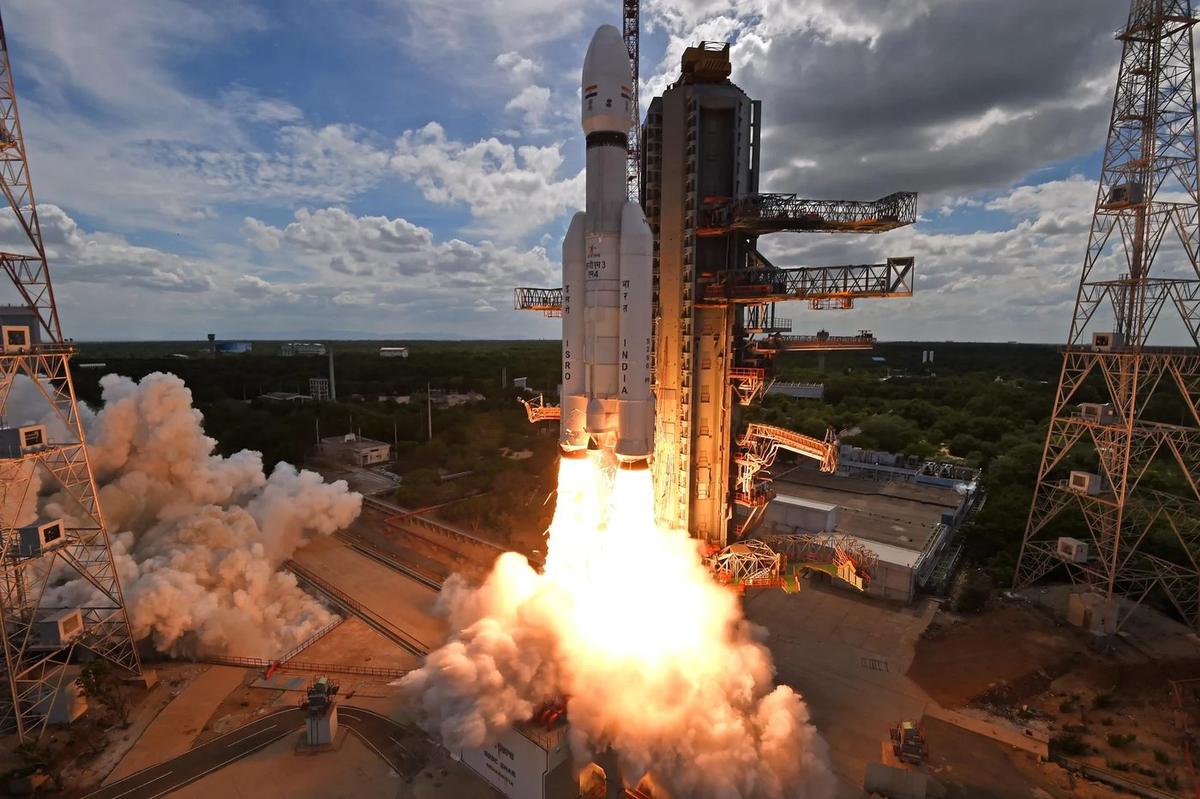
Photo: LVM3 launch, Sriharikota, ISRO, GODL-India

APPSC Group-I Mains 2025 · Paper V
2025 Paper V · Q6(a): model answer
Science, Technology & Environmental Issues · Ecology, biodiversity and natural resources. Held in May 2025 (Notification 12/2023).
Investigate the relationship between mining activities and the occurrence of earthquakes. Explain how mining operations can be regulated to minimize seismic risks.
Syllabus: Ecology, biodiversity and natural resources · Natural resources, forests and mining
Induced seismicityRock burstStress redistributionMine safety regulation
Most earthquakes are natural, caused by sudden slip along faults as tectonic stress builds up. Human activity can also trigger them; this is called induced seismicity. Mining removes huge volumes of rock, ore, water or gas and changes the balance of stresses in the crust, producing tremors that range from small rock bursts in deep mines to rare shocks strong enough to damage buildings. The deep Kolar Gold Fields (Karnataka) were notorious for rock bursts.
1. How mining causes earthquakes
- Stress redistribution: in deep hard-rock mines the weight of the overlying rock concentrates around the openings; brittle rock then fails violently as a rock burst, as in Kolar and South Africa's deep gold mines.
- Fault reactivation: mining close to an already stressed fault can make it slip, releasing more energy than the mining alone could.
- Collapse and subsidence: old, unfilled underground workings, as in the Jharia and Raniganj coalfields, cave in, causing tremors and land subsidence.
- Fluid changes: dewatering mines or extracting oil and gas alters pore pressure; gas extraction at Groningen (Netherlands) caused hundreds of quakes and led to the field's closure.
- Blasting: opencast blasting shakes the ground and cracks nearby houses, though it is not an earthquake in the geological sense.
| Type | Cause | Example |
|---|---|---|
| Mining-induced | Removal of rock; collapse of workings | Kolar Gold Fields; South African gold mines |
| Fluid extraction | Pumping out gas, oil or water | Groningen gas field, Netherlands |
| Reservoir-induced | Weight of water and seepage along faults | Koyna, Maharashtra (1967) |
| Fluid injection | Waste-water injection, fracking | Oklahoma, USA |
2. Assessing the link
- Most mining tremors are small and shallow, but a shallow focus means strong shaking close to the mine.
- The main victims are miners, through rock bursts and roof falls, and villagers whose houses crack.
- Risk rises with depth, hard and brittle rock, fast extraction, nearby faults and location in a higher seismic zone.
3. Regulating mining to minimise seismic risk
- Before mining: geotechnical and seismic-hazard studies in the EIA, avoiding active faults, and approved mining plans with safe pillar and stope design.
- During mining: microseismic monitoring networks that detect stress build-up and warn workers; backfilling (stowing) of voids; controlled extraction rates; and controlled blasting within DGMS vibration limits.
- Law and institutions: the Mines Act, 1952 with DGMS rules (Coal Mines Regulations, 2017; Metalliferous Mines Regulations, 1961); the MMDR Act, 1957 with mine closure plans; research support from CSIR-CIMFR (Dhanbad) and CSIR-NGRI.
- After mining: sealing and filling old workings, subsidence monitoring and buffer zones around villages.
AP angle: AP lies on the stable Peninsular shield, but blasting in the limestone quarries of the Kurnool–Kadapa–Palnadu belt and the granite quarries of Chimakurthy (Prakasam), and underground uranium mining at Tummalapalle (Kadapa), call for vibration monitoring and structural audits of nearby homes.
Mining-induced tremors are usually small and largely preventable; science-based mine design, continuous monitoring and strict DGMS enforcement can keep mineral development safe for miners and communities.
The other choice in Q6
Answer either one in the exam.
- Q6(b)Define sustainable development and critically evaluate its relevance in the context of modern industrialization.
10 marks · Pollution, waste and climate change · Climate change and sustainable development
Every model answer on these pages is free to read. The Tool Kit adds four PDF books for Mains Papers I–IV: every previous question sorted by syllabus, with practice questions. It is in the ₹149 All-in-One Pass, with every previous paper of every exam on the site, practice quizzes, timed tests, mock test series and study books.
₹149 · valid for 12 months from the day you pay, on every exam · pay by UPI, card or net banking