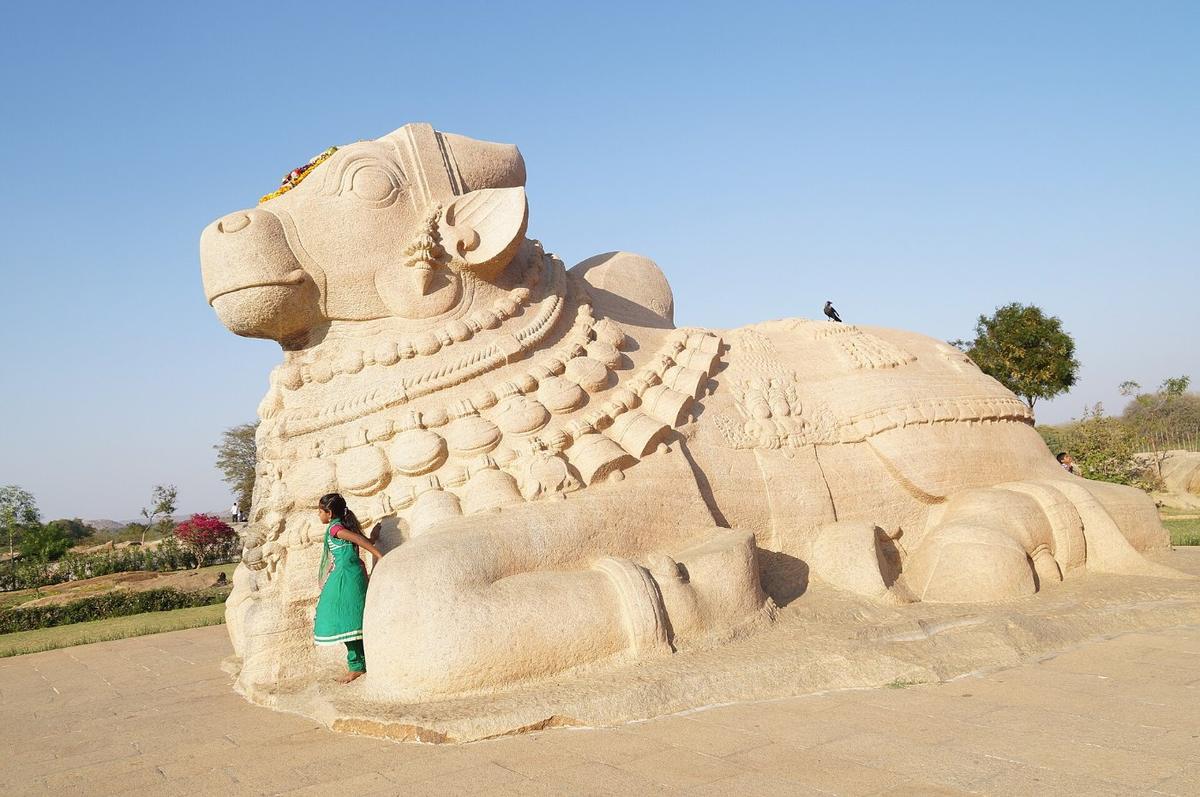
Photo: Lepakshi Nandi, Rahmanuddin, CC BY-SA 4.0

APPSC Group-I Mains 2025 · Paper II
2025 Paper II · Q8(a): model answer
History, Culture & Geography of India and Andhra Pradesh · Ancient and Medieval Andhra. Held in May 2025 (Notification 12/2023).
Discuss the growth of various Saivite sects during the Kakatiya rule.
Syllabus: Ancient and Medieval Andhra · Kakatiyas, Reddis, Gajapatis and Vijayanagara
Kakatiya SaivismKalamukhaAradhyaVirashaivism
The Kakatiyas of Warangal (c. 1163–1323), the first dynasty to unite most Telugu-speaking lands, began as Jains but became devoted Shaivites. Under Rudradeva, Ganapatideva, Rudramadevi and Prataparudra, Shaivism flourished in many forms, from ascetic orders and temple mathas to the socially radical Virashaiva movement. These sects shaped religion, literature, temples and society in the Telugu lands.
1. The major Saivite sects
- Kalamukha and Pashupata: ascetic orders with mathas at Srisailam, Alampur and other centres; their acharyas managed temples, taught and received royal grants.
- Shaiva Siddhanta (Golaki Matha): Visvesvara Sivacharya, rajaguru of Ganapatideva and Rudramadevi, headed this order; the Malkapuram inscription (1261) records his foundation of a matha with a school, a hospital and a feeding house.
- Aradhya Shaivism: led by Mallikarjuna Panditaradhya (12th century), one of the Pancha Aradhyas; these Brahmin Shaivites worshipped the linga but kept Vedic rites and caste.
- Virashaivism: Basavanna's movement from Kalyani rejected caste, ritual and priestly authority; it was popularised in Telugu by Palkuriki Somanatha (Basava Puranam, Panditaradhya Charitra) and attracted artisans and peasants.
| Sect | Leading figure | Key features |
|---|---|---|
| Kalamukha and Pashupata | Acharyas of Srisailam and Alampur | Ascetic orders; ran temples and mathas |
| Shaiva Siddhanta (Golaki) | Visvesvara Sivacharya | Royal preceptor; matha with school, hospital and feeding house |
| Aradhya | Mallikarjuna Panditaradhya | Brahmin Shaivism; kept Vedic rites and caste |
| Virashaiva | Palkuriki Somanatha (in Telugu) | Rejected caste and ritual; mass appeal |
2. Royal patronage and temples
- Temples: the Thousand Pillar (Rudreswara) temple at Hanamkonda (1163) and the Ramappa temple at Palampet (1213, UNESCO World Heritage Site 2021) express Kakatiya Shaiva devotion in stone.
- Temple and tank: Kakatiya temples were often paired with irrigation tanks, as the Ramappa temple with the Ramappa lake, linking religion with agrarian prosperity.
- Grants: endowments went to great Shaiva centres such as Srisailam and Draksharamam, and mathas received land for teaching and charity.
3. Impact on literature and society
- Literature: the "Shivakavi" age — Nannechoda (Kumarasambhavam), Panditaradhya (Sivatattvasaram) and Somanatha, who used the desi dwipada metre and brought Telugu literature to ordinary people.
- Society: mathas became centres of learning, health care and charity; Virashaiva equality challenged caste rigidity.
- Tolerance: Vaishnavism and Jainism coexisted, and Tikkana's Mahabharata honoured Harihara, the unity of Shiva and Vishnu.
AP angle: Srisailam and Draksharamam, both in present Andhra Pradesh, were among the Shaiva centres that received patronage in this age and remain major pilgrimage centres today.
Kakatiya-era Saivism, from Brahmanical Aradhyas to radical Virashaivas, enriched Telugu religion, literature and art; its legacy lives on in Ramappa and in the Shaiva centres of Andhra Pradesh.
The other choice in Q8
Answer either one in the exam.
- Q8(b)Discuss the significance of the Warangal Fort complex as a historical monument.
10 marks · Ancient and Medieval Andhra · Kakatiyas, Reddis, Gajapatis and Vijayanagara
Every model answer on these pages is free to read. The Tool Kit adds four PDF books for Mains Papers I–IV: every previous question sorted by syllabus, with practice questions. It is in the ₹149 All-in-One Pass, with every previous paper of every exam on the site, practice quizzes, timed tests, mock test series and study books.
₹149 · valid for 12 months from the day you pay, on every exam · pay by UPI, card or net banking