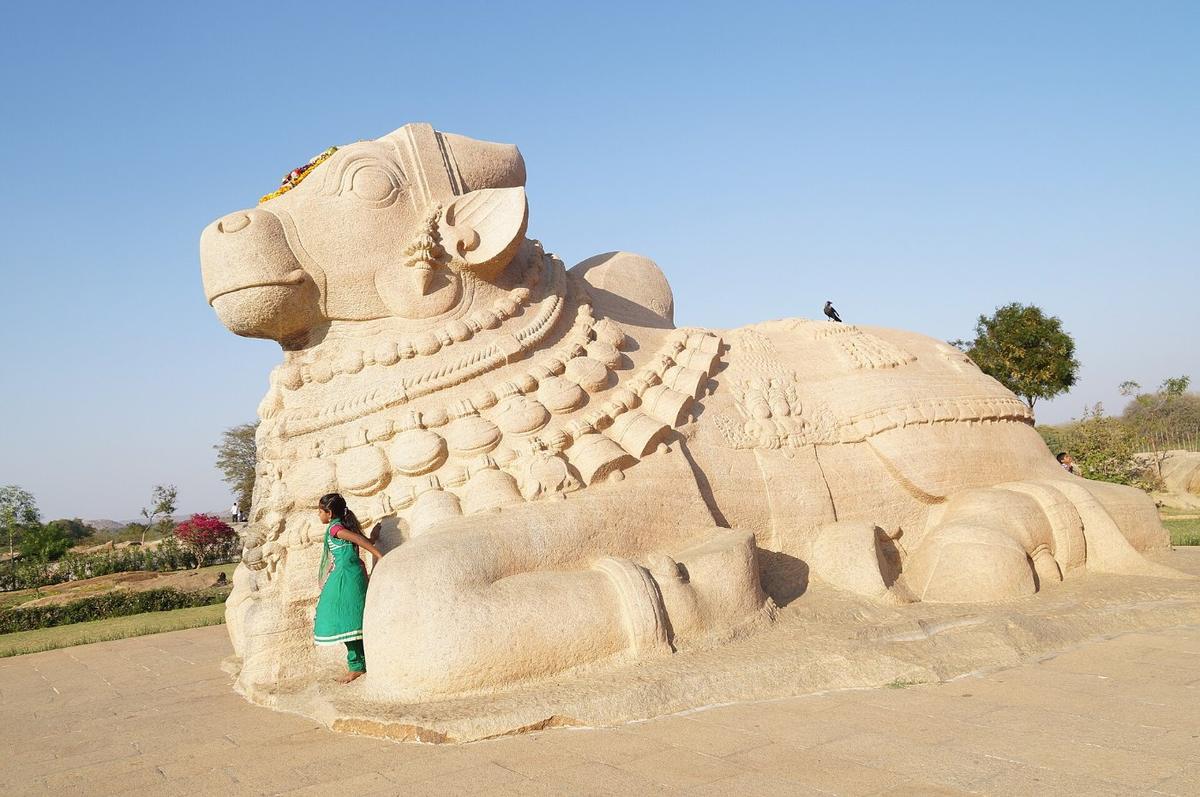
Photo: Lepakshi Nandi, Rahmanuddin, CC BY-SA 4.0

APPSC Group-I Mains 2023 · Paper II
2023 Paper II · Q6(b): model answer
History, Culture & Geography of India and Andhra Pradesh · Ancient and Medieval Andhra. Held in June 2023 (Notification 28/2022).
Explain the re-structuring of the socio-religious life of the Eastern Chalukyas with reference to the impact caused by immigrations, caste mobility and social awakening.
Syllabus: Ancient and Medieval Andhra · Eastern Chalukyas; origins of Telugu people and language
Eastern Chalukyas of VengiImmigration and agraharasCaste mobilityTelugu awakening
The Eastern Chalukyas of Vengi (c. 624–1076 CE), founded by Kubja Vishnuvardhana, brother of Pulakesin II, ruled coastal Andhra from Vengi (Pedavegi) and later Rajamahendravaram. Over four centuries, immigration from Karnataka and the Tamil country, caste mobility in an age of war, and a new Telugu literary consciousness restructured the region's society and religion.
1. Impact of immigration
- Karnataka connection: the dynasty came from Badami, bringing officials, warriors, Brahmana families and Jaina monks.
- Agraharas: immigrant Brahmanas settled on land grants (agraharas) spread Vedic learning, Sanskrit and the varna ideal across the Godavari–Krishna delta.
- Spread of settled agriculture: new agraharas and temple villages extended cultivation in the deltas and drew local cultivators, artisans and service groups into a Brahmanical village order.
- Chola ties: Vimaladitya and Rajaraja Narendra married Chola princesses, bringing Tamil influence; Kulottunga I united the Vengi and Chola crowns in 1070.
2. Caste mobility
- Warrior-cultivators rise: long wars, especially with the Rashtrakutas, allowed cultivating and warrior groups to rise through military and village service.
- Village headmen: the rattagudi (the root of 'Reddi') and nayakas gained status.
- Regional groups: groups from regions such as Kammanadu and Velanadu later crystallised into landed castes; merchants and artisans gained prestige through temple endowments.
3. Religious restructuring
- Decline of Buddhism: once dominant in the Krishna valley, Buddhism faded; Jainism enjoyed early patronage, with basadis at Vijayawada and Ramatirtham and grants by kings such as Ammaraja II.
- Rise of Shaivism: Pashupata and Kalamukha teachers made Shaivism dominant; Chalukya Bhima I is credited with the Draksharama and Kumararama (Samalkot) temples of the Pancharamas, and Gunaga Vijayaditya III's age saw the Biccavolu temples.
- Temple as centre: Vaishnavism and Brahmanical temple worship grew, and temples became centres of land, learning, dance and charity.
4. Social awakening
- Telugu in inscriptions: Pandaranga's Addanki inscription (9th century) and Yuddhamalla's Bezawada inscription contain early Telugu verse.
- Adikavi Nannaya: under Rajaraja Narendra (1019–1061), Nannaya, assisted by Narayana Bhatta, began the Andhra Mahabharatam, the first Telugu kavya, earning the title Adikavi.
- Identity: Telugu became a language of courts and temples, fostering a distinct Telugu identity alongside Sanskrit.
| Force | What happened | Result |
|---|---|---|
| Immigration | Brahmanas, Jainas and officials from Karnataka; Chola marriages | Agraharas, Sanskrit learning, Tamil influence |
| Caste mobility | Warriors and cultivators rose through war and village service | Seeds of later landed castes |
| Religious change | Buddhism declined; Shaivism and temple worship rose | Pancharama temples; temple-centred society |
| Social awakening | Telugu used in inscriptions and poetry | Nannaya's Mahabharatam; Telugu identity |
- 624 Kubja Vishnuvardhana founds the Vengi kingdom
- 9th century Gunaga Vijayaditya III; Pandaranga's Addanki inscription
- Late 9th–early 10th century Chalukya Bhima I: Draksharama and Samalkot temples
- 1019–1061 Rajaraja Narendra; Nannaya's Andhra Mahabharatam
- 1070 Kulottunga I unites the Vengi and Chola crowns
The Eastern Chalukya age thus laid the foundations of Telugu society, culture and literature, a synthesis of immigrant traditions and local vitality.
The other choice in Q6
Answer either one in the exam.
- Q6(a)Discuss the socio-religious conditions during the Satavahana period with special reference to prominence bestowed on women.
10 marks · Ancient and Medieval Andhra · Early Andhra kingdoms (Satavahanas to Vishnukundins)
Every model answer on these pages is free to read. The Tool Kit adds four PDF books for Mains Papers I–IV: every previous question sorted by syllabus, with practice questions. It is in the ₹149 All-in-One Pass, with every previous paper of every exam on the site, practice quizzes, timed tests, mock test series and study books.
₹149 · valid for 12 months from the day you pay, on every exam · pay by UPI, card or net banking