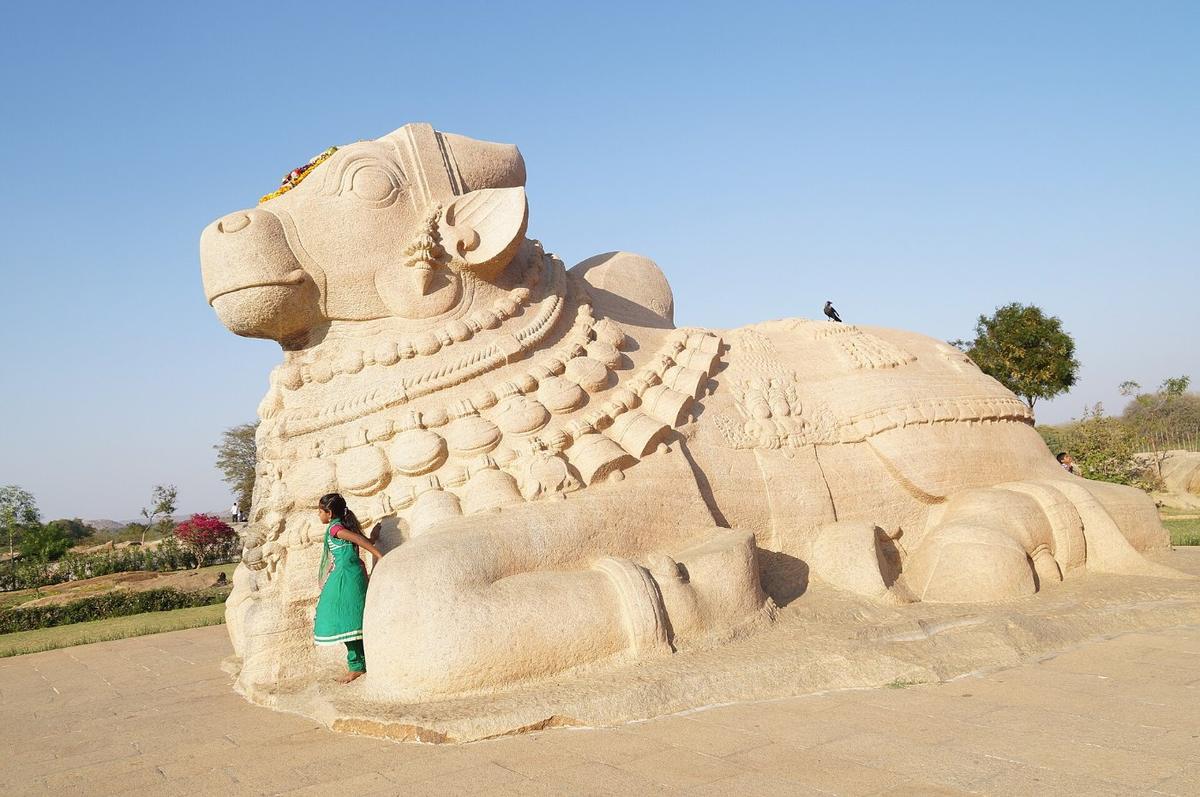
Photo: Lepakshi Nandi, Rahmanuddin, CC BY-SA 4.0

APPSC Group-I Mains 2023 · Paper II
2023 Paper II · Q6(a): model answer
History, Culture & Geography of India and Andhra Pradesh · Ancient and Medieval Andhra. Held in June 2023 (Notification 28/2022).
Discuss the socio-religious conditions during the Satavahana period with special reference to prominence bestowed on women.
Syllabus: Ancient and Medieval Andhra · Early Andhra kingdoms (Satavahanas to Vishnukundins)
Satavahana societyBrahmanism and BuddhismMatronymicsWomen donors
The Satavahanas (c. 1st century BCE–early 3rd century CE), the first great empire of the Deccan, ruled from Pratishthana and Dhanyakataka (Amaravati). Their inscriptions at Naneghat, Nasik and Karle, the Buddhist stupas of the Krishna valley and Hala's Prakrit anthology Gathasaptasati reveal a society that combined Brahmanical order with Buddhist patronage and gave women unusual visibility.
1. Social conditions
- Varna order: the Nasik inscription calls Gautamiputra Satakarni 'ekabrahmana' and credits him with stopping the mixing of the four varnas.
- Absorption of foreigners: Sakas and Yavanas took Indian names and made gifts to Buddhist monasteries; Vasishthiputra Satakarni married the daughter of the Saka ruler Rudradaman.
- Status groups: mahabhojas and maharathis (feudatories), amatyas (officials), gahapatis (householders) and merchants (naigamas, sarthavahas).
- Guilds: potters, oil-pressers, weavers and other artisans were organised in guilds (srenis), which also acted as bankers and accepted permanent deposits for religious gifts.
- Rural life: the Gathasaptasati, in Maharashtri Prakrit, portrays village life, love, farming and festivals.
2. Religious conditions
- Brahmanism: Vedic sacrifices, including the Ashvamedha and Rajasuya, are recorded in Queen Naganika's Naneghat inscription, which also invokes Sankarshana and Vasudeva, early evidence of the Bhagavata cult.
- Land grants: tax-free land grants to Brahmanas and Buddhist monks began in this period.
- Buddhism: stupas at Amaravati, Jaggayyapeta and Ghantasala and rock-cut chaityas at Karle and Nasik flourished; Acharya Nagarjuna is traditionally linked with Yajnasri Satakarni.
- Dual patronage: kings performed Vedic rites yet patronised the sangha, a pattern of tolerance.
3. Prominence of women
- Matronymics: kings bore their mothers' names (Gautamiputra, Vasishthiputra, Madhariputra), on inscriptions as well as coins.
- Royal women in power: Naganika acted as regent and issued the Naneghat record; Gautami Balasri's Nasik inscription eulogised her son and recorded her gift of a cave to the Buddhist sangha.
- Women as donors: many women, including nuns, appear as donors at Amaravati, Karle and Nasik, showing that they could hold and give property.
- Caveat: this applied mostly to elite women; polygamy existed, and matronymics may reflect polygamous royal households rather than matriliny.
| Source | Evidence | What it shows |
|---|---|---|
| Naneghat inscription | Queen Naganika records Vedic sacrifices and gifts | Regency and royal authority |
| Nasik inscription | Gautami Balasri praises her son and gifts a cave | Prestige of the queen mother; religious patronage |
| Royal names and coins | Gautamiputra, Vasishthiputra | Mother's lineage honoured |
| Donor records at Amaravati, Karle, Nasik | Women, including nuns, give slabs, pillars and caves | Property rights and religious agency |
Schematic map of Andhra Pradesh (2011 census district outlines), not to scale; for study only.
AP angle: the Puranas call the dynasty 'Andhras'; Dhanyakataka on the Krishna served as a capital, and the Krishna valley stupas show that Andhra was a heartland of Satavahana-age Buddhism.
The Satavahana age combined Brahmanical order with Buddhist patronage and gave women a visibility rare in early India, though largely confined to the elite.
The other choice in Q6
Answer either one in the exam.
- Q6(b)Explain the re-structuring of the socio-religious life of the Eastern Chalukyas with reference to the impact caused by immigrations, caste mobility and social awakening.
10 marks · Ancient and Medieval Andhra · Eastern Chalukyas; origins of Telugu people and language
Every model answer on these pages is free to read. The Tool Kit adds four PDF books for Mains Papers I–IV: every previous question sorted by syllabus, with practice questions. It is in the ₹149 All-in-One Pass, with every previous paper of every exam on the site, practice quizzes, timed tests, mock test series and study books.
₹149 · valid for 12 months from the day you pay, on every exam · pay by UPI, card or net banking