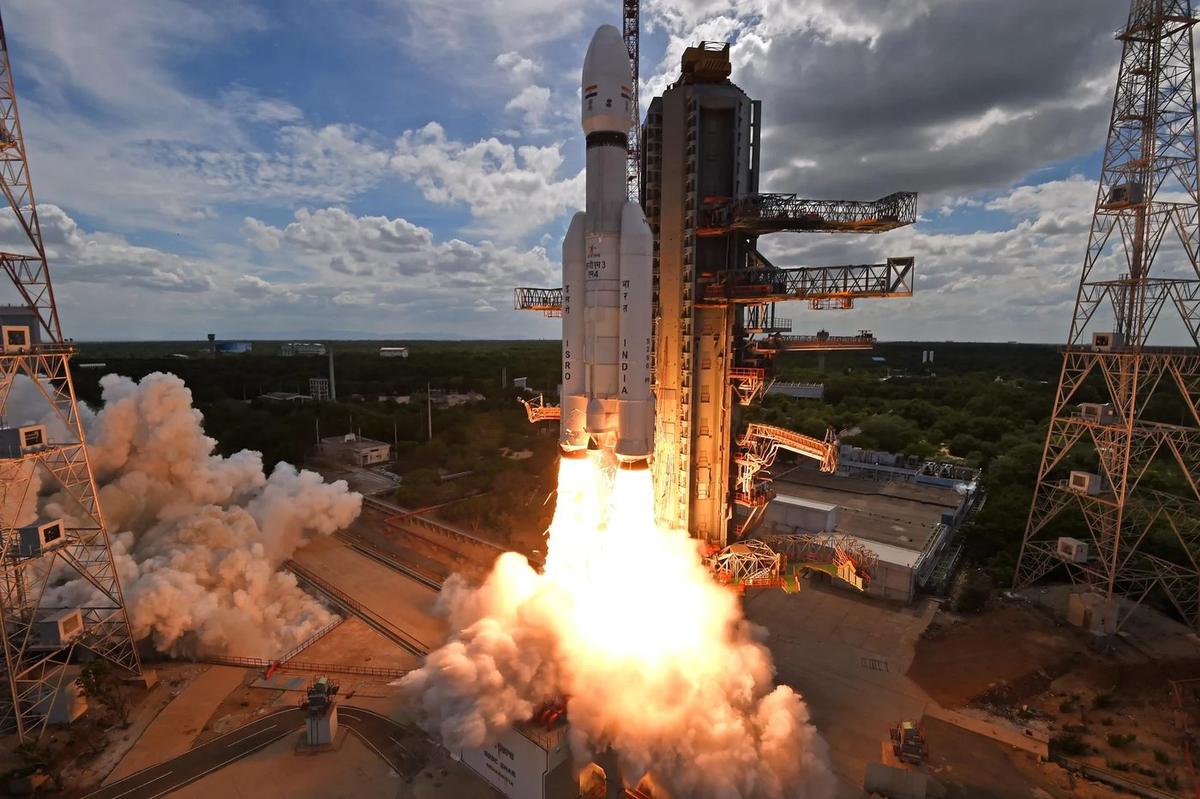
Photo: LVM3 launch, Sriharikota, ISRO, GODL-India

APPSC Group-I Mains 2020 · Paper V
2020 Paper V · Q9(b): model answer
Science, Technology & Environmental Issues · Science and technology policy, institutions and IPR. Held in December 2020 (Notification 27/2018).
What is a patent? Give examples of patents. What is the difference between process patents and product patents? How are GI tags related to patents?
Syllabus: Science and technology policy, institutions and IPR · Intellectual property rights
PatentProduct vs process patentPatents Act, 1970 and 2005Geographical Indication
A patent is an exclusive right granted by the State for an invention, a product or a process, that is new, involves an inventive step and is capable of industrial application. In India it is granted under the Patents Act, 1970 for 20 years from filing and is valid only in India. In return, the inventor must disclose the invention in full, so that others can build on it once the term ends.
1. Patents and examples
- Classic examples: Alexander Graham Bell's telephone (US patent, 1876); the CRISPR gene-editing patents contested by the Broad Institute and the University of California; Bayer's patent on the cancer drug sorafenib (Nexavar), on which India granted its first compulsory licence, to Natco, in 2012.
- India's activity: CSIR labs, IITs and pharma firms hold patents on drugs, materials and devices; India received 1,10,375 patent applications in 2024-25, 62% from Indian residents.
- Not patentable (Sections 3 and 4): discoveries, mathematical methods, computer programs as such, plants and animals, traditional knowledge and methods of treatment. Section 3(d) bars new forms of known substances without enhanced efficacy, stopping "evergreening" (Novartis case, 2013).
2. Product patents vs process patents
| Basis | Product patent | Process patent |
|---|---|---|
| Protects | The product itself, however it is made | Only the specific method of making it |
| Competition | Nobody else may make or sell the product | Others may make the same product by a different process |
| Prices | Monopoly; higher prices | Generic competition; lower prices |
| Example | A patent on the molecule imatinib | A new method of synthesising a known drug |
| In India | All fields since 2005 (TRIPS) | The only option for food, drugs and chemicals, 1972–2005 |
- The 1970 Act allowed only process patents for food, medicines and chemicals, so Indian firms legally made foreign drugs by new routes. This built the generic industry that made India the "pharmacy of the developing world" and cut the price of HIV drugs for Africa.
- The 2005 amendment restored product patents in all fields to meet TRIPS, but kept safeguards: Section 3(d), pre- and post-grant opposition and compulsory licensing.
3. How GI tags are related to patents
- Common ground: both are industrial property under the Paris Convention and TRIPS; both are registered, territorial rights that stop misuse by others; both are administered by the Controller General of Patents, Designs and Trade Marks (the GI Registry is in Chennai).
- Different subject: a patent rewards a new invention; a Geographical Indication (GI Act, 1999) protects goods whose quality or reputation comes from their place of origin, such as Darjeeling tea, India's first GI.
- Different owner and term: a patent belongs to an individual or firm for 20 years; a GI is a collective right of the producers of a region, renewable every 10 years without limit, and it cannot be licensed or sold.
- Complementary roles: traditional products fail the novelty test of patents, so GIs, along with the Traditional Knowledge Digital Library, guard them against misappropriation, as the Basmati, turmeric and neem disputes showed.
Schematic map of Andhra Pradesh (2011 census district outlines), not to scale; for study only.
AP angle: Andhra Pradesh's GIs range from the Tirupati Laddu and Banaganapalle mango to Araku Valley coffee and Kalamkari; Ponduru Khadi was added in 2025-26.
Patents reward invention, while GIs reward heritage; together with Section 3(d) and compulsory licensing, they let India balance innovation, access to medicines and community knowledge.
The other choice in Q9
Answer either one in the exam.
- Q9(a)What is Intellectual Property? Explain with examples the differences between copyrights, patents, and trademarks. What are the rights an inventor has on his invention, and how are these rights gained and enforced globally?
10 marks · Science and technology policy, institutions and IPR · Intellectual property rights
Every model answer on these pages is free to read. The Tool Kit adds four PDF books for Mains Papers I–IV: every previous question sorted by syllabus, with practice questions. It is in the ₹149 All-in-One Pass, with every previous paper of every exam on the site, practice quizzes, timed tests, mock test series and study books.
₹149 · valid for 12 months from the day you pay, on every exam · pay by UPI, card or net banking