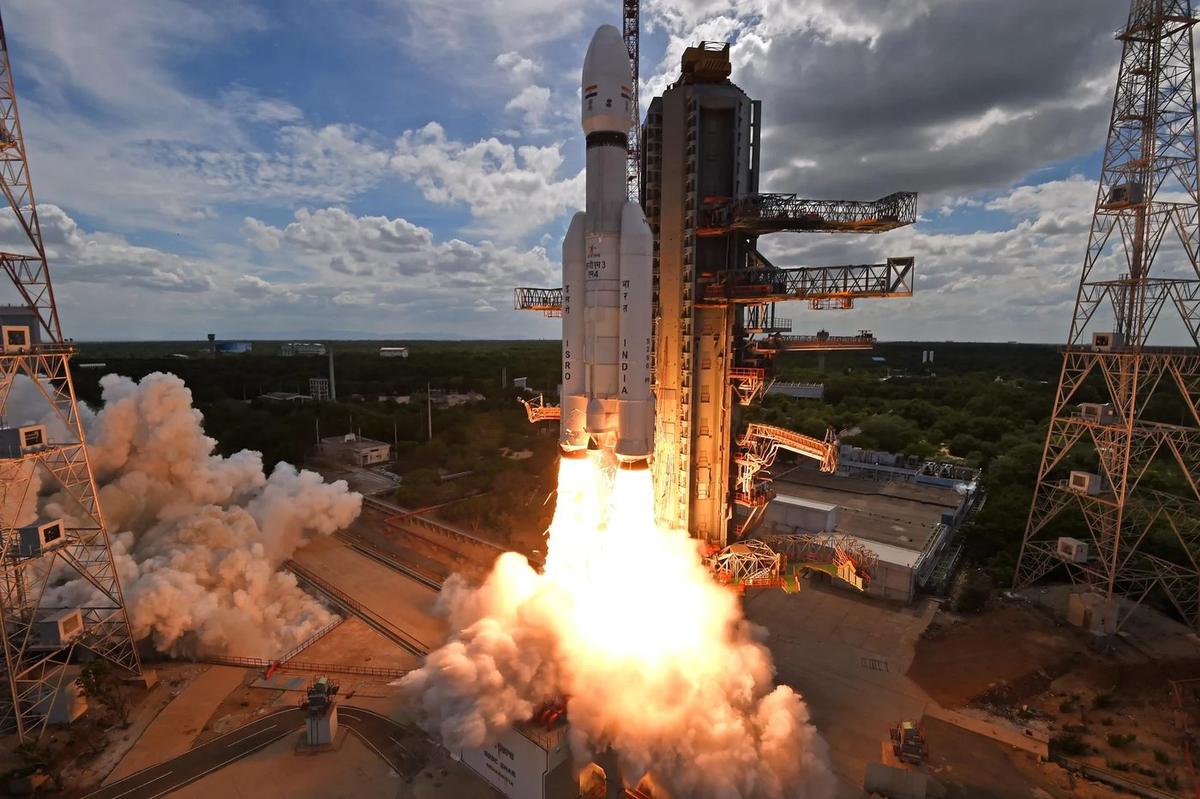
Photo: LVM3 launch, Sriharikota, ISRO, GODL-India

APPSC Group-I Mains 2020 · Paper V
2020 Paper V · Q5(a): model answer
Science, Technology & Environmental Issues · Pollution, waste and climate change. Held in December 2020 (Notification 27/2018).
All member states of the UN adopted 17 goals in the 2030 Agenda for Sustainable Development. Name any four of these goals and explain how India can reach them.
Syllabus: Pollution, waste and climate change · Climate change and sustainable development
2030 AgendaSustainable Development GoalsSDG India IndexLeave no one behind
In September 2015 all 193 UN member states adopted the 2030 Agenda for Sustainable Development, with 17 Sustainable Development Goals (SDGs) and 169 targets that replaced the eight Millennium Development Goals. Built on the promise to "leave no one behind", the goals join the economic, social and environmental pillars of development. India's composite score in NITI Aayog's SDG India Index rose from 57 (2018) to 71 (2023-24).
| Goal | Key 2030 target | India's position (latest) |
|---|---|---|
| SDG 1: No poverty | End extreme poverty; halve poverty in all its dimensions | Multidimensional poverty fell from 29.17% (2013-14) to 11.28% (2022-23); 24.82 crore people escaped it (NITI Aayog) |
| SDG 3: Good health and well-being | MMR below 70; neonatal mortality 12; under-five mortality 25 | MMR 87, neonatal 18, under-five 28 (SRS) |
| SDG 6: Clean water and sanitation | Safe water and sanitation for all | Rural tap connections in about 82% of homes (July 2026); villages declared open-defecation free (2019) |
| SDG 7: Affordable and clean energy | Universal access; more renewables; efficiency | Near-universal household electrification; non-fossil sources over 50% of power capacity (June 2025) |
1. SDG 1: No poverty
- Jobs-led growth: labour-intensive manufacturing, MSME credit and skilling to absorb farm and informal workers.
- Social protection: free foodgrains under PM Garib Kalyan Anna Yojana, PM-KISAN income support, 125 days of rural wage work under the VB-G RAM G Act, 2025 (which replaced MGNREGA in July 2026), housing (PMAY) and Jan Dhan-linked insurance and pensions.
- Target lagging regions: focus on high-poverty States and aspirational districts, tribal and minority groups.
2. SDG 3: Good health and well-being
- Primary care first: about 1.82 lakh Ayushman Arogya Mandirs for maternal care, immunisation and NCD screening.
- Financial protection: Ayushman Bharat PM-JAY (₹5 lakh per family); raise public health spending towards the 2.5% of GDP goal of the National Health Policy, 2017.
- Disease programmes: TB Mukt Bharat, malaria elimination by 2030, Mission Indradhanush and the HPV vaccine.
3. SDG 6: Clean water and sanitation
- Finish and sustain: complete the Jal Jeevan Mission (extended to December 2028) and keep villages ODF Plus through solid and liquid waste management.
- Source sustainability and quality: groundwater recharge, water budgeting, removing fluoride and arsenic, and treating and reusing urban wastewater (Namami Gange, AMRUT).
4. SDG 7: Affordable and clean energy
- Renewables with storage: reach 500 GW of non-fossil capacity by 2030 with battery and pumped storage and green energy corridors.
- Households and farms: PM Surya Ghar rooftop solar, PM-KUSUM solar pumps, Ujjwala LPG for clean cooking, and energy-efficiency drives such as LED lighting.
5. Enablers: localising the goals
Progress depends on States and panchayats, on reliable data (MoSPI's National Indicator Framework), on finance (green bonds, CSR) and on partnerships with civil society.
AP angle: Andhra Pradesh is a Front Runner in the SDG India Index; its maternal mortality ratio of 30 (2021–23) already beats the SDG target, its Clean Energy Policy (2024) serves SDG 7, and its natural-farming programme serves SDGs 2 and 15.
With barely four years left, India can meet these goals only if growth stays inclusive and green, States and panchayats lead implementation, and data track the last mile, so that truly no one is left behind.
The other choice in Q5
Answer either one in the exam.
- Q5(b)What causes earthquakes? Can we prevent or predict where and when an earthquake will happen? What should relief agencies do after an earthquake occurs in an inland and a coastal region?
10 marks · Environmental laws, EIA and disaster management · Environmental laws, EIA and disaster management
Every model answer on these pages is free to read. The Tool Kit adds four PDF books for Mains Papers I–IV: every previous question sorted by syllabus, with practice questions. It is in the ₹149 All-in-One Pass, with every previous paper of every exam on the site, practice quizzes, timed tests, mock test series and study books.
₹149 · valid for 12 months from the day you pay, on every exam · pay by UPI, card or net banking