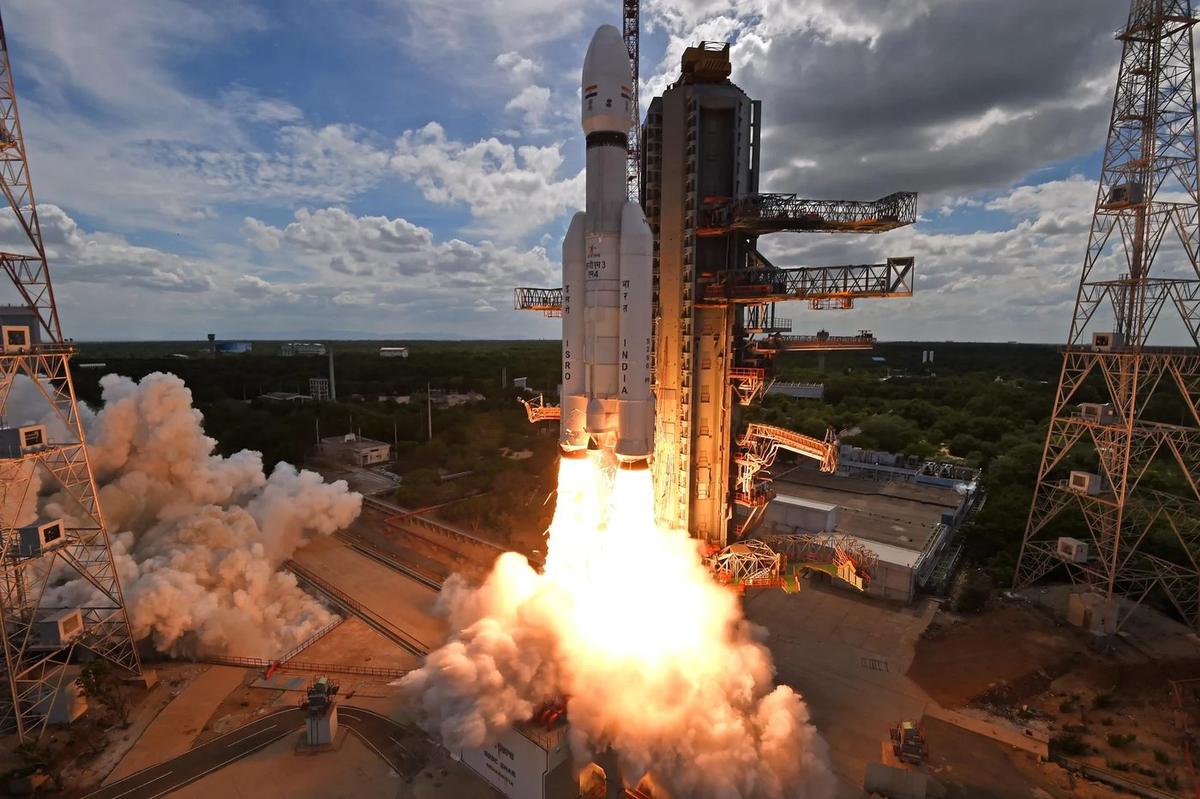
Photo: LVM3 launch, Sriharikota, ISRO, GODL-India

APPSC Group-I Mains 2025 · Paper V
2025 Paper V · Q8(a): model answer
Science, Technology & Environmental Issues · Ecology, biodiversity and natural resources. Held in May 2025 (Notification 12/2023).
Explain the different types of natural resources in India. How are they being conserved through government initiatives?
Syllabus: Ecology, biodiversity and natural resources · Natural resources, forests and mining
Natural resourcesRenewable and non-renewableConservationSustainable use
Natural resources are materials and energy found in nature that people use: land, soil, water, forests, wildlife, fisheries, minerals and energy sources. India has about 2.4% of the world's land and 4% of its freshwater but about 18% of its people, so pressure on resources is intense. Their conservation rests on sustainable use: taking no more than nature can regenerate, using finite stocks efficiently, and sharing the benefits fairly.
1. Types of natural resources
| Basis | Types | Indian examples |
|---|---|---|
| Origin | Biotic; abiotic | Forests, fish, livestock; minerals, water, soil |
| Renewability | Renewable; non-renewable | Sunlight, wind, forests, fish; coal, oil, iron ore, deep groundwater |
| Stage of development | Actual (in use); potential | Coal mined today; offshore minerals, tidal energy |
| Ownership | Individual, community, national, international | Farmland; village commons, sacred groves; minerals; deep-sea resources |
- Renewable is not inexhaustible: aquifers, fish stocks and forests behave like non-renewable resources when used faster than they recover.
2. India's resource base
- Land and soil: fertile alluvial, black and red soils, but 29.7% of land was degraded in 2018-19 (ISRO atlas).
- Water: large rivers and monsoon rain, but groundwater extraction stands at about 61% of recharge (CGWB, 2025), with about 11% of assessment units over-exploited.
- Forests: forest and tree cover on 25.17% of the area (ISFR 2023).
- Minerals and energy: about 95 minerals, with strength in iron ore, bauxite, chromite, limestone and barytes; coal output above 1 billion tonnes (2024-25); but nearly 89% of crude oil and most critical minerals are imported.
- Fisheries: the world's second-largest fish producer (about 198 lakh tonnes, 2024-25).
- Biodiversity: one of 17 megadiverse countries, with 7–8% of recorded species and four of the world's 36 biodiversity hotspots.
3. Conservation through government initiatives
| Resource | Key initiatives |
|---|---|
| Water | Jal Shakti Abhiyan "Catch the Rain"; Atal Bhujal Yojana (2019); Mission Amrit Sarovar (2022); micro-irrigation |
| Soil and land | Soil Health Card (2015); restoring 26 million ha of degraded land by 2030; watershed works |
| Forests and wildlife | Green India Mission; CAMPA; protected areas; community forest rights (FRA, 2006) |
| Minerals | Auctions and District Mineral Foundations (2015); National Critical Mineral Mission (2025) |
| Energy | PAT, UJALA, CCTS; 500 GW non-fossil capacity by 2030; E20 blending |
| Fisheries | 61-day monsoon fishing ban; PMMSY (2020) |
- Legal approach: laws such as the Forest Rights Act, the Biological Diversity Act and the MMDR Act regulate use and protect local rights.
- Economic approach: auctions, royalties, compensatory afforestation and tradable certificates put a price on resource use.
- Community approach: Joint Forest Management, water-user associations and Gram Sabha consent under PESA make local people custodians.
- Technology approach: satellite monitoring, drip irrigation and recycling ("urban mining") stretch resources further.
AP angle: AP's natural farming programme (APCNF) restores soil and saves water, WALTA (2002) regulates groundwater, sand and trees, and Mangampet holds the world's largest single barytes deposit.
Gaps: groundwater over-extraction, illegal sand mining, shrinking wetlands and monoculture plantations show that enforcement still lags behind policy; perverse incentives such as free farm power also encourage waste.
Conserving resources does not mean locking them away but using them wisely and fairly; natural-resource accounting in planning and community stewardship are the way forward.
The other choice in Q8
Answer either one in the exam.
- Q8(b)What are the key principles of Integrated Solid Waste Management (ISWM)? Discuss the role of waste hierarchy in ISWM.
10 marks · Pollution, waste and climate change · Pollution and waste management
Every model answer on these pages is free to read. The Tool Kit adds four PDF books for Mains Papers I–IV: every previous question sorted by syllabus, with practice questions. It is in the ₹149 All-in-One Pass, with every previous paper of every exam on the site, practice quizzes, timed tests, mock test series and study books.
₹149 · valid for 12 months from the day you pay, on every exam · pay by UPI, card or net banking