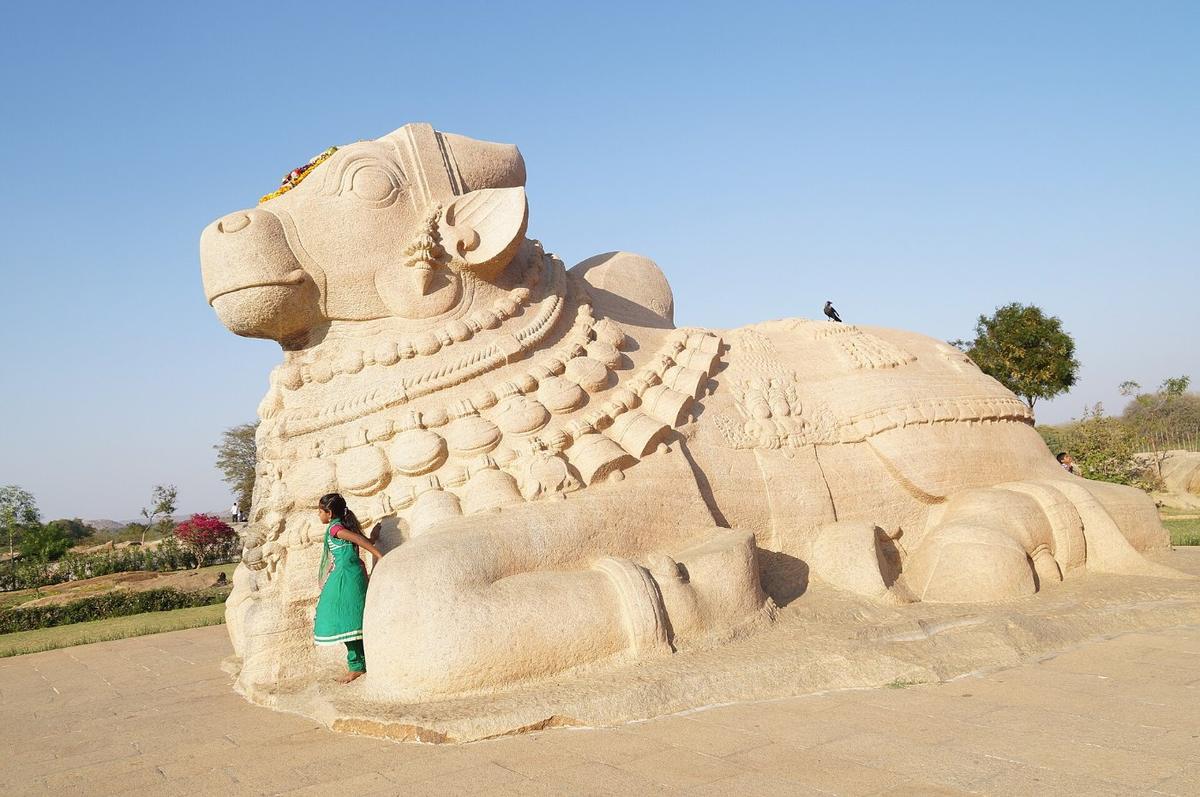
Photo: Lepakshi Nandi, Rahmanuddin, CC BY-SA 4.0

APPSC Group-I Mains 2025 · Paper II
2025 Paper II · Q7(a): model answer
History, Culture & Geography of India and Andhra Pradesh · Ancient and Medieval Andhra. Held in May 2025 (Notification 12/2023).
What are the various stories about the origins of Andhra people and the Andhra language?
Syllabus: Ancient and Medieval Andhra · Eastern Chalukyas; origins of Telugu people and language
AndhrasAitareya BrahmanaTrilingaDravidian Telugu
The Andhras are among the oldest peoples named in Indian literature, first mentioned in the Aitareya Brahmana. Their language, Telugu, is spoken by about 8.1 crore people (Census 2011) and was declared a classical language in 2008. Legends, Sanskrit texts, Greek accounts, inscriptions and modern linguistics offer different stories about who the Andhras were and how their language and its names arose.
1. Stories about the origin of the Andhra people
- Aitareya Brahmana: the earliest reference presents the Andhras as descendants of sage Vishvamitra's sons, cursed to live on the borders of the Aryan world along with the Pundras, Sabaras and Pulindas.
- Epics and Puranas: the Mahabharata and Ramayana mention the Andhras as a southern people; the Puranas call the Satavahanas "Andhra-bhrityas".
- Megasthenes: the Andarae had 30 walled towns and an army of 1,00,000 infantry, 2,000 cavalry and 1,000 elephants.
- Ashoka's Rock Edict XIII: lists the Andhras among the peoples within the empire.
- Modern views: historians differ; some see a northern tribe that moved south into the Deccan, others the natives of the Deccan itself.
| Source | Period | What it says |
|---|---|---|
| Aitareya Brahmana | Later Vedic age | Descendants of Vishvamitra's sons, on the Aryan frontier |
| Megasthenes | c. 300 BCE | Andarae: 30 walled towns and a large army |
| Ashoka's Rock Edict XIII | 3rd century BCE | Andhras among the peoples of the empire |
| Puranas | Early centuries CE | Satavahanas called "Andhra-bhrityas" |
2. Stories about the language and its names
- Trilinga theory: "Telugu" comes from Trilinga, the land bounded by three Shiva lingas at Srisailam, Draksharamam and Kaleswaram.
- Tene theory: "Tenugu" comes from tene (honey), the sweet language, later called the "Italian of the East".
- Sanskrit-origin view: some traditional grammarians derived Telugu from Sanskrit or Prakrit because of its large Sanskrit vocabulary.
- Andhra and Telugu: "Andhra" first named the people and "Telugu" or "Tenugu" the language; by medieval times the two were used as synonyms, as in Nannaya's Andhra Mahabharatam.
- Dravidian view (accepted): Robert Caldwell's Comparative Grammar of the Dravidian Languages (1856) showed Telugu to be a Dravidian language, though rich in Sanskrit words.
Schematic map of Andhra Pradesh (2011 census district outlines), not to scale; for study only.
3. Evidence from inscriptions and literature
- Earliest word: the word "Nagabu" in an early Prakrit inscription from Amaravati is cited as the earliest Telugu word.
- Prakrit to Telugu: early Andhra inscriptions, including those of the Satavahanas, were in Prakrit, with Telugu place and personal names appearing gradually.
- Earliest inscription: the Kalamalla inscription (c. 575 CE) of the Renati Cholas in YSR Kadapa is the earliest Telugu inscription.
- Literature: Nannaya's Andhra Mahabharatam (11th century) began Telugu literature.
Legends reflect early contact with the Vedic world, while linguistics and epigraphy show Telugu as an independent Dravidian language with a long, documented history, the basis of its classical status.
The other choice in Q7
Answer either one in the exam.
- Q7(b)How did far trade routes contribute to the exchange of Buddhist ideas in ancient Andhra?
10 marks · Ancient and Medieval Andhra · Early Andhra kingdoms (Satavahanas to Vishnukundins)
Every model answer on these pages is free to read. The Tool Kit adds four PDF books for Mains Papers I–IV: every previous question sorted by syllabus, with practice questions. It is in the ₹149 All-in-One Pass, with every previous paper of every exam on the site, practice quizzes, timed tests, mock test series and study books.
₹149 · valid for 12 months from the day you pay, on every exam · pay by UPI, card or net banking