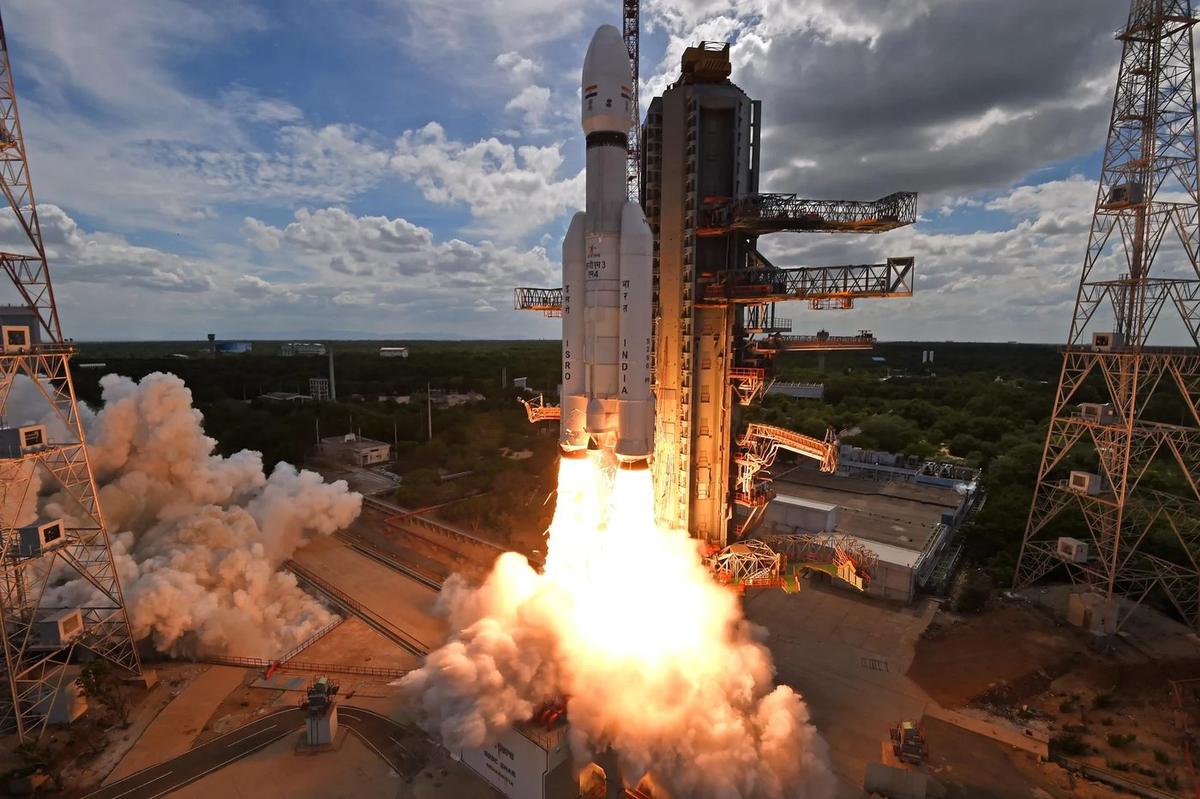
Photo: LVM3 launch, Sriharikota, ISRO, GODL-India

APPSC Group-I Mains 2023 · Paper V
2023 Paper V · Q7(a): model answer
Science, Technology & Environmental Issues · Biotechnology and health. Held in June 2023 (Notification 28/2022).
Biotechnology has unlocked a vast potential for improving human life, but the risks it poses are now a concern - Discuss throwing light on blessing and curse of Biotechnology.
Syllabus: Biotechnology and health · Biotechnology
BiotechnologyGenetic engineeringBiosafety and bioethicsDual-use risks
Biotechnology uses living cells, organisms and their molecules to make useful products and processes. Since recombinant DNA (1973) and CRISPR genome editing (Nobel Prize, 2020), it has transformed medicine, farming and industry, and India's bioeconomy reached about US$195 billion in 2025. But the same power to rewrite life raises concerns of biosafety, ethics, inequity and misuse.
1. Blessings of biotechnology
- Health: recombinant insulin and vaccines (India makes nearly 60% of the world's vaccines, including Covaxin and the HPV vaccine CERVAVAC), India's own CAR-T therapy NexCAR19 (2023), the CRISPR-based sickle-cell therapy BIRSA 101 (2025) and rapid diagnostics.
- Agriculture: Bt cotton (2002) cut bollworm sprays; the world's first genome-edited rice varieties (May 2025) give higher yields and salt tolerance; tissue culture supplies disease-free banana and sugarcane plants; biofertilisers and biopesticides reduce chemicals.
- Environment and energy: bioremediation of oil spills (TERI's Oilzapper), second-generation ethanol from crop residue, and biogas.
- Industry: enzymes, bioplastics and biomanufacturing under the BioE3 Policy (2024).
- Forensics and genomics: DNA fingerprinting solves crimes, and Genome India's 10,000 genomes support precision medicine.
2. Curses and risks
- Biosafety: gene flow from GM crops to wild relatives, superweeds and resistant pests; pink bollworm now resists Bt cotton, and herbicide-tolerant cotton is sown illegally.
- Ethics: germline editing raises the spectre of "designer babies", as with the gene-edited twins born in China in 2018.
- Dual use and biosecurity: gain-of-function research and synthetic biology could produce bioweapons or cause lab leaks; the Biological Weapons Convention (1972) has no verification system.
- Inequity and corporate control: costly therapies, seed monopolies and patents, and biopiracy of Indian knowledge such as turmeric, neem and basmati.
- Genetic privacy: DNA data can be misused by insurers, employers or the state.
| Field | Blessing | Curse |
|---|---|---|
| Medicine | Vaccines, insulin, CAR-T, gene therapy | Costly therapies; germline editing |
| Agriculture | Bt cotton, genome-edited rice, tissue culture | Gene flow, resistant pests, seed monopoly |
| Environment | Bioremediation, biofuels | Release of untested organisms |
| Security | Rapid vaccines in pandemics | Bioweapons, lab leaks |
| Genomics | Precision medicine | Genetic privacy, biopiracy |
3. Balancing promise and risk
- Regulation: the 1989 Rules under the Environment (Protection) Act work through IBSCs, the RCGM and the GEAC; simpler genome edits (SDN-1 and SDN-2) were exempted in 2022, and the Supreme Court's split verdict on GM mustard (2024) asked for a national GM-crop policy.
- Ethics and law: germline editing is not permitted in India; the Cartagena and Nagoya Protocols, the Biological Diversity Act (amended 2023) and the Traditional Knowledge Digital Library guard against harm and biopiracy, and the DPDP Act protects genetic data.
- Public trust: open biosafety data, labelling and public consultation.
AP angle: both genome-edited rice varieties were derived from AP-bred rice, Samba Mahsuri (Bapatla) and MTU 1010 (Maruteru), and AP's bioeconomy, about US$13.74 billion in 2025, is fifth among States.
Biotechnology is neither blessing nor curse by itself; its effect depends on governance. A science-based, transparent and ethical regulatory system can maximise its benefits while keeping biosafety and justice in view.
The other choice in Q7
Answer either one in the exam.
- Q7(b)Why is Ecotourism considered as a tool for conservation of Natural heritage? Discuss challenges associated with Ecotourism.
10 marks · Ecology, biodiversity and natural resources · Ecology and biodiversity
Every model answer on these pages is free to read. The Tool Kit adds four PDF books for Mains Papers I–IV: every previous question sorted by syllabus, with practice questions. It is in the ₹149 All-in-One Pass, with every previous paper of every exam on the site, practice quizzes, timed tests, mock test series and study books.
₹149 · valid for 12 months from the day you pay, on every exam · pay by UPI, card or net banking