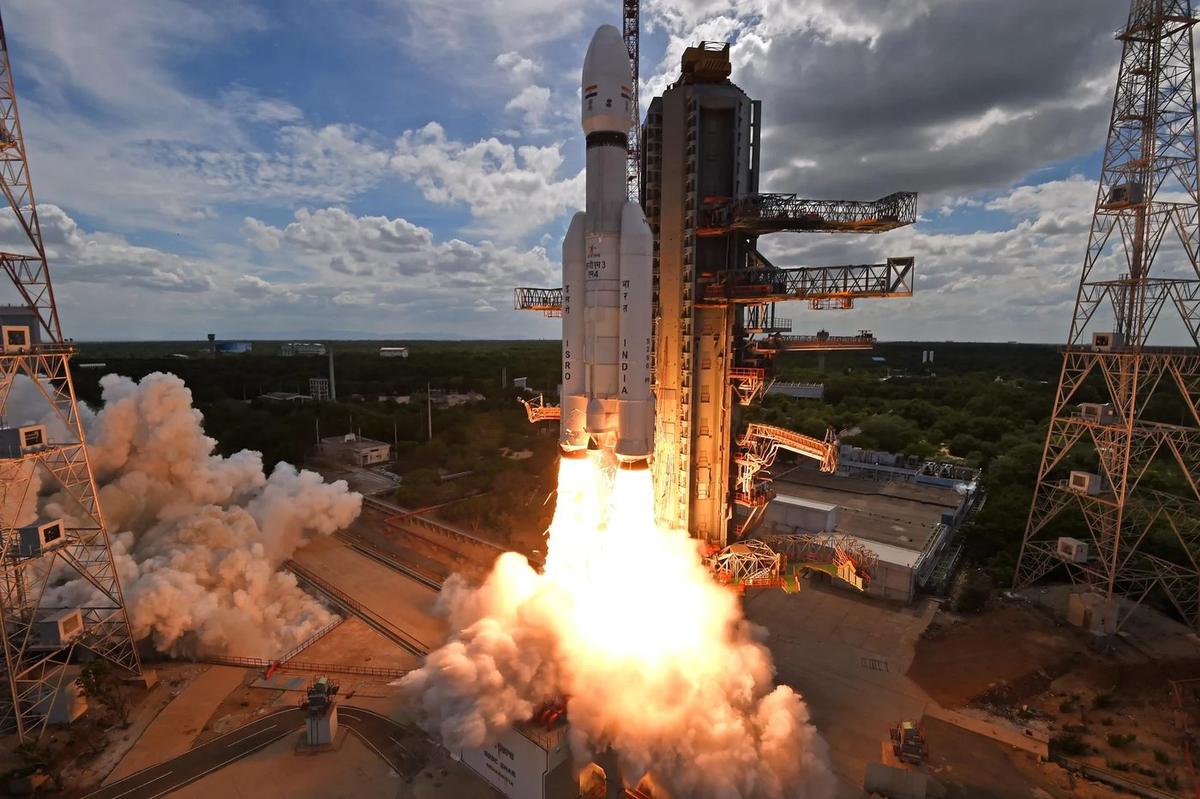
Photo: LVM3 launch, Sriharikota, ISRO, GODL-India

APPSC Group-I Mains 2023 · Paper V
2023 Paper V · Q6(b): model answer
Science, Technology & Environmental Issues · Pollution, waste and climate change. Held in June 2023 (Notification 28/2022).
Explain various challenges associated with disposing of massive amounts of Municipal solid waste. Discuss action plan for municipal solid waste management in India for cities generating waste > 500 tonnes per day.
Syllabus: Pollution, waste and climate change · Pollution and waste management
Municipal solid wasteSegregation at sourceWaste processingCPCB action plan
Municipal solid waste (MSW) is the everyday waste from homes, shops, markets and offices in towns. Urban India generates about 1.66 lakh tonnes a day (MoHUA, December 2025), and the share processed has risen from 16% in 2014 to about 80% under Swachh Bharat Mission–Urban. Yet big cities still struggle with mixed waste, overflowing dumps and fires. The Solid Waste Management Rules, 2026 (in force from 1 April 2026) now govern the system.
1. Challenges in disposing of massive amounts of MSW
- Mixed waste: without segregation at source, wet waste spoils recyclables, and wet, low-calorie waste burns poorly in waste-to-energy plants.
- Land and legacy dumps: cities are running out of landfill sites, and less than half of India's roughly 2,500 legacy dumpsites had been fully cleared by early 2026.
- Pollution and health: open dumps leak leachate into groundwater, emit methane, a potent greenhouse gas, and catch fire, as at Delhi's Ghazipur.
- Collection and transport: irregular door-to-door collection, open trucks and poorly kept bins.
- Finance and institutions: weak municipal finances, low user fees, loss-making plants and an informal recycling sector outside the system.
- Changing composition: more plastics, e-waste and sanitary waste.
2. Action plan for cities generating more than 500 tonnes a day
CPCB's Action Plan for Management of MSW, prepared on the National Green Tribunal's direction in the Almitra Patel case and aligned with the 2016 Rules, groups cities by waste quantity. For the largest (above 500 TPD, such as Delhi, Mumbai, Chennai, Hyderabad and Pune) it suggests:
| Component | Action | Indicative time |
|---|---|---|
| Planning | Waste survey and a detailed project report | 6 months |
| Segregation and collection | Mass awareness; door-to-door collection of segregated waste | 6 to 9 months |
| Storage and transport | Mechanised storage synchronised with covered transport; private operators | 9 to 18 months |
| Processing | A combination of composting, biomethanation, RDF and waste-to-energy | 36 months |
| Disposal | Only rejects and inert waste to sanitary landfills | New sites in 36 months |
| Old dumpsites | Reclamation, capping and plantation | 18 months |
- Combine technologies: a single technology cannot handle such quantities; cities above 1,000 TPD will need high-capacity options such as waste-to-energy, with segregation ensuring enough calorific value.
- Private participation and finance: private operators for collection and processing, with user fees, tipping fees and spot fines.
- Monitoring: committees at State, district and city levels review progress.
3. Strengthened framework: SWM Rules, 2026
- Four-stream segregation: wet, dry, sanitary and special-care waste.
- Bulk generators (for example, those producing 100 kg or more a day) must process wet waste on site or buy EBWGR certificates.
- Less landfill, more fuel: landfills take only inert rejects, and cement and other solid-fuel industries near RDF plants must replace a rising share of their fuel with RDF, reaching 15% within six years.
- Accountability: an online tracking portal and environmental compensation for violations.
AP angle: Vijayawada, Guntur and Tirupati entered the Super Swachh League (Swachh Survekshan 2024-25), and waste-to-energy plants at Visakhapatnam and Guntur and a legacy-waste clearance drive under Swachh Andhra show the plan at work.
For big cities the answer is to segregate, decentralise, process and landfill only the residue. The CPCB plan, the 2026 Rules, user fees and the inclusion of waste-pickers together can build a circular economy of urban waste.
The other choice in Q6
Answer either one in the exam.
- Q6(a)What are various mitigation activities by the Government of India to lower CO2 emission for trading of carbon credits in the international market under Paris Agreement?
10 marks · Pollution, waste and climate change · Climate change and sustainable development
Every model answer on these pages is free to read. The Tool Kit adds four PDF books for Mains Papers I–IV: every previous question sorted by syllabus, with practice questions. It is in the ₹149 All-in-One Pass, with every previous paper of every exam on the site, practice quizzes, timed tests, mock test series and study books.
₹149 · valid for 12 months from the day you pay, on every exam · pay by UPI, card or net banking