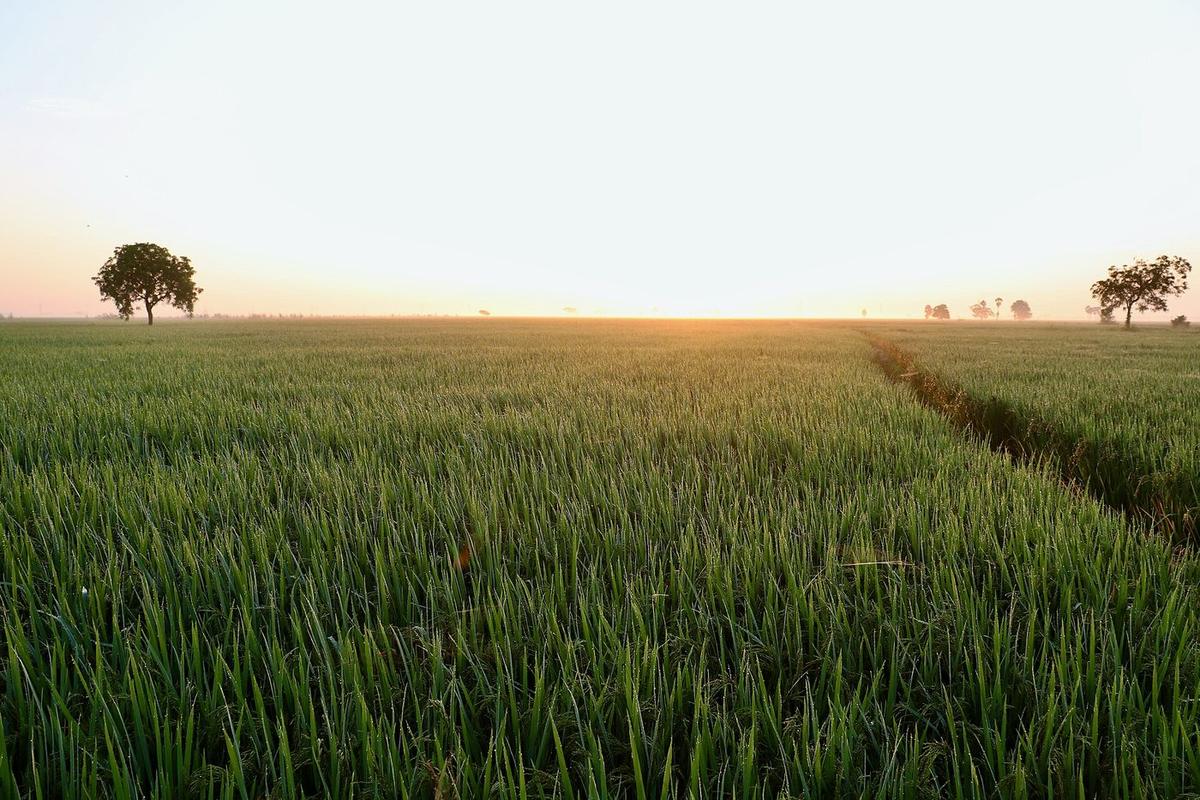
Photo: Paddy fields near Eluru, iMahesh, CC BY-SA 4.0

APPSC Group-I Mains 2023 · Paper IV
2023 Paper IV · Q8(a): model answer
Economy & Development of India and Andhra Pradesh · Farming and allied sectors (India and AP). Held in June 2023 (Notification 28/2022).
Explain the scope and benefits of farm mechanization. Discuss the implementation of farm mechanization schemes in Andhra Pradesh with special reference to Community Hiring Centres (CHCs).
Syllabus: Farming and allied sectors (India and AP) · AP agriculture: share in SGDP, irrigation, crops and schemes
Farm mechanisationCustom Hiring CentresYSR Yantra SevaSmall holdings
Farm mechanisation is the use of machines, from tractors and transplanters to combine harvesters and drones, to replace or supplement human and animal power in farm operations. India's mechanisation level is about 47%, well below that of developed countries. With small holdings, the Custom Hiring Centre (CHC) model, which rents machines rather than selling them, suits India and Andhra Pradesh best.
1. Scope and benefits
- Timeliness: faster sowing and harvesting allow multiple cropping and reduce weather risk at harvest.
- Input efficiency: precise placement saves seed, fertiliser and water; drones spray evenly and keep workers away from chemicals.
- Productivity: higher yields and a lower unit cost of cultivation.
- Labour: machines offset farm-labour scarcity caused by migration and MGNREGS, and reduce drudgery, especially for women.
- Lower losses and new enterprise: threshers, dryers and graders cut post-harvest losses, while custom hiring, repair and drone-pilot services create rural jobs.
| Operation | Machines | Benefit |
|---|---|---|
| Land preparation | Tractors, rotavators | Timely sowing |
| Sowing and transplanting | Seed drills, paddy transplanters | Saves seed and labour |
| Crop protection | Drones, power sprayers | Even, safer spraying |
| Harvesting | Combine harvesters, reapers | Saves time, cuts losses |
| Post-harvest | Threshers, dryers, graders | Better quality and prices |
2. Central support
The Sub-Mission on Agricultural Mechanisation (2014-15) funds Custom Hiring Centres, farm machinery banks and hi-tech hubs, and subsidises machines for individual farmers; Namo Drone Didi gives 15,000 drones to women SHGs for spraying services. Kisan drones and custom hiring through farmer producer organisations extend modern machines to small farmers.
3. Implementation in Andhra Pradesh
- YSR Yantra Seva Pathakam (2021): CHCs at every Rythu Bharosa Kendra (RBK) and cluster-level CHCs with combine harvesters in paddy areas. Farmer groups paid 10%, the State gave a 40% subsidy and banks lent 50%.
- Access: small farmers hire tractors, rotavators, sprayers and harvesters at notified rates, booked through the RBK, reducing dependence on private owners who charge high peak-season rents.
- After 2024: RBKs became Rythu Seva Kendras; mechanisation continues under SMAM and State plans, with subsidies to individuals and groups and drone-based CHCs for spraying.
4. Issues
- Small holdings: the average holding in AP is only 0.94 ha (Agriculture Census 2015-16), so individual ownership rarely pays.
- Peak demand: every farmer needs the same machine in the same fortnight.
- Operation: under-used equipment in the off-season, poor maintenance, scarce trained operators and slow group loan repayment.
- Fit: machines suited to tank-fed paddy, horticulture and dry-land crops in Rayalaseema are still limited.
CHCs suit AP's small-farm structure; digital booking, operator training, crop-specific machines and FPO-run hubs can make mechanisation affordable and sustainable.
The other choice in Q8
Answer either one in the exam.
- Q8(b)Explain the extent of marine fishery resources in Andhra Pradesh. Discuss the steps taken by the Andhra Pradesh Government in order to promote the welfare and development of fishermen in Andhra Pradesh.
10 marks · Farming and allied sectors (India and AP) · Fisheries, dairy, horticulture and the Rainbow revolution
Every model answer on these pages is free to read. The Tool Kit adds four PDF books for Mains Papers I–IV: every previous question sorted by syllabus, with practice questions. It is in the ₹149 All-in-One Pass, with every previous paper of every exam on the site, practice quizzes, timed tests, mock test series and study books.
₹149 · valid for 12 months from the day you pay, on every exam · pay by UPI, card or net banking