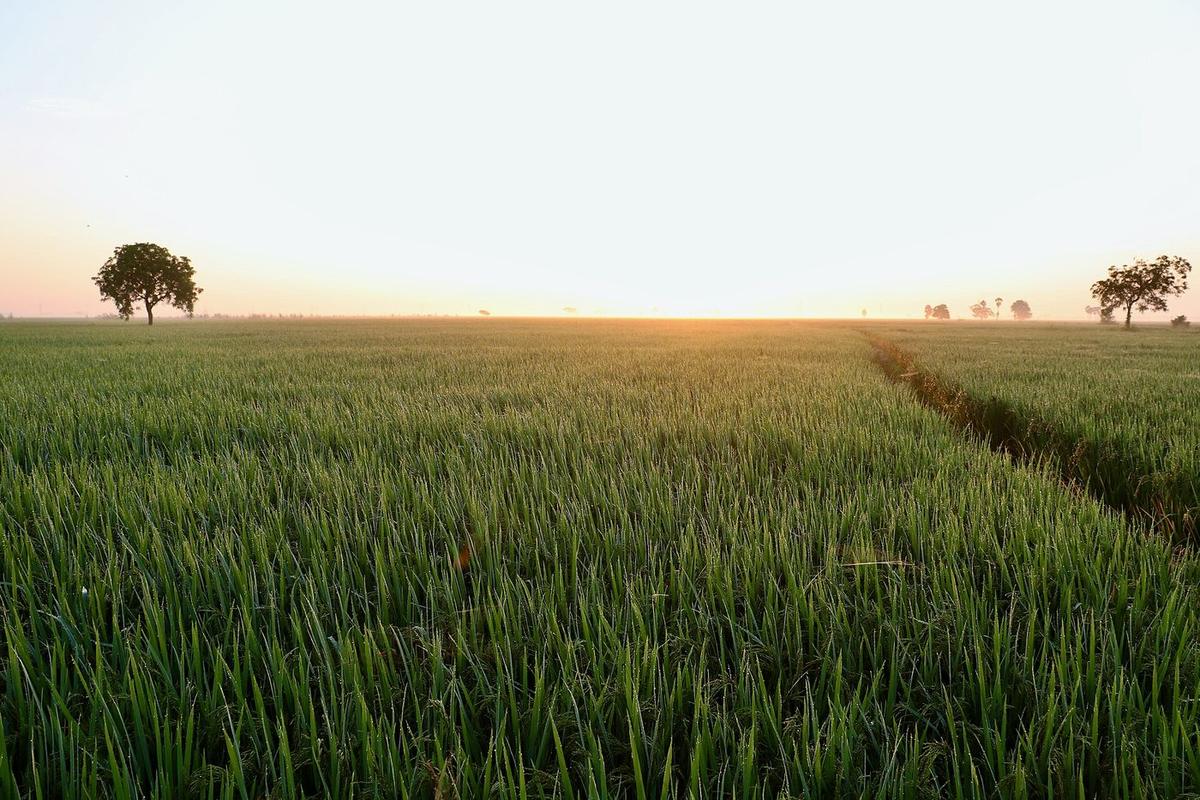
Photo: Paddy fields near Eluru, iMahesh, CC BY-SA 4.0

APPSC Group-I Mains 2023 · Paper IV
2023 Paper IV · Q7(b): model answer
Economy & Development of India and Andhra Pradesh · Farming and allied sectors (India and AP). Held in June 2023 (Notification 28/2022).
What is meant by sustainable agriculture? Discuss the sustainable agriculture practices and systems in India. Provide suggestions to improve agricultural incomes from sustainable agriculture.
Syllabus: Farming and allied sectors (India and AP) · From the green revolution to sustainable and organic farming
Sustainable agricultureNatural farmingSoil healthFarm incomes
Sustainable agriculture meets present food and income needs without degrading soil, water and biodiversity for future generations: it must be economically viable, ecologically sound and socially fair. In India it answers falling groundwater, fertiliser-driven soil fatigue and climate risk, the legacies of input-intensive Green Revolution farming in regions such as Punjab and Haryana.
1. Sustainable practices and systems in India
- Organic and natural farming: PKVY (2015), MOVCDNER in the North-East, and Sikkim as the first fully organic State (2016). The National Mission on Natural Farming (November 2024, ₹2,481 crore) targets 1 crore farmers on 7.5 lakh ha through 15,000 clusters.
- Resource conservation: micro-irrigation under PMKSY ('Per Drop More Crop'), zero tillage, crop-residue management, SRI in paddy and rainwater harvesting save water and energy.
- Soil health: Soil Health Cards (2015), neem-coated urea, integrated nutrient and pest management, and PM-PRANAM (2023) to cut chemical fertiliser use.
- Diversified systems: integrated crop-livestock-fish farming, agroforestry, millets (International Year of Millets 2023) and climate-resilient varieties (NICRA), under the National Mission for Sustainable Agriculture.
2. AP angle: Community-managed Natural Farming
- Model: Andhra Pradesh Community-managed Natural Farming (APCNF, since 2016), run by Rythu Sadhikara Samstha, uses bio-stimulants (jeevamrutham, beejamrutham), 365-day green cover and pre-monsoon dry sowing.
- Results: it has cut input costs, covers lakhs of farmers, is among the world's largest agroecology programmes, and won the Gulbenkian Prize for Humanity (2024).
- Transition challenges: possible yield dips in the first years, labour needed to prepare bio-inputs, and the lack of separate markets and prices for natural produce slow adoption.
3. Suggestions to improve incomes
- Certification and branding: low-cost PGS-India certification and branding open premium domestic and export markets.
- Collective marketing: FPOs can aggregate produce, add value through processing and sell directly to consumers.
- Lower costs: village bio-input enterprises can replace purchased chemicals and create rural jobs.
- New income streams: carbon credits and payments for ecosystem services can reward farmers for soil carbon and water conservation.
- Price support and risk cover: MSP and procurement for millets and pulses, crop insurance and MGNREGS-built farm ponds can protect farmers during the transition, when yields may dip.
Sustainable farming pays when lower costs, premium markets and risk cover come together; it is essential for SDG 2 (zero hunger) and for climate adaptation.
The other choice in Q7
Answer either one in the exam.
- Q7(a)Discuss the types and sources of agricultural credit in India. Explain the initiatives taken by the Indian Government in order to improve access to agricultural credit.
10 marks · Farming and allied sectors (India and AP) · Role of farming, productivity and farm credit
Every model answer on these pages is free to read. The Tool Kit adds four PDF books for Mains Papers I–IV: every previous question sorted by syllabus, with practice questions. It is in the ₹149 All-in-One Pass, with every previous paper of every exam on the site, practice quizzes, timed tests, mock test series and study books.
₹149 · valid for 12 months from the day you pay, on every exam · pay by UPI, card or net banking