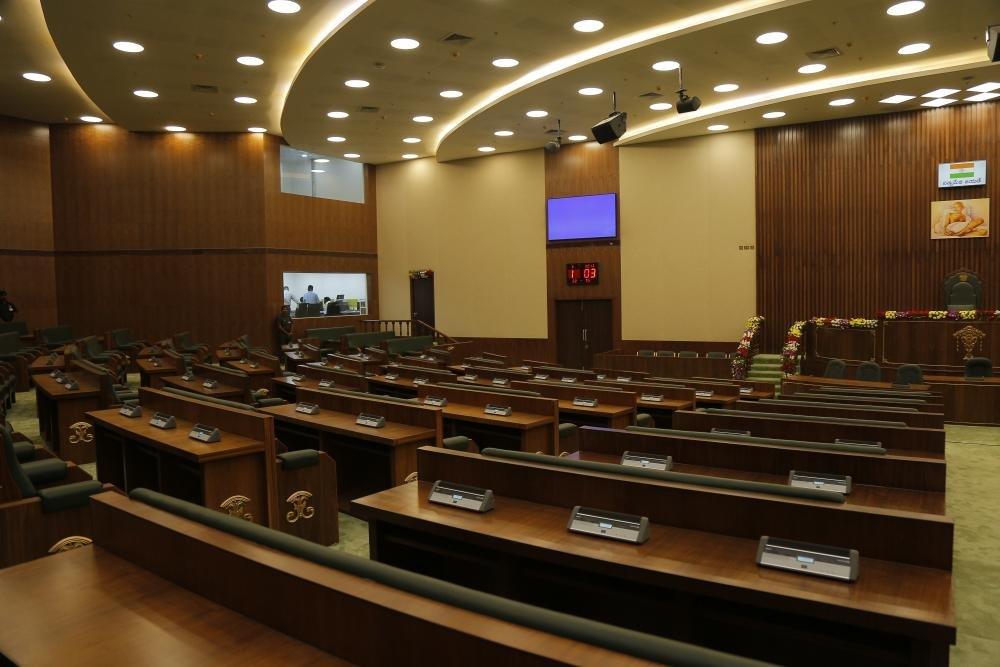
Photo: Andhra Pradesh Legislative Assembly, Kdslk, CC0

APPSC Group-I Mains 2023 · Paper III
2023 Paper III · Q10(b): model answer
Polity, Constitution, Governance, Law & Ethics · Good governance and the citizen's voice. Held in June 2023 (Notification 28/2022).
What are the different dimensions of governance? Briefly explain the administrative dimension of governance and its key components.
Syllabus: Good governance and the citizen's voice · Good governance, e-governance and Citizen's Charter
Dimensions of governanceAdministrative governanceAccountabilityCitizen-centricity
Governance is "the manner in which power is exercised in the management of a country's economic and social resources for development" (World Bank, 1992). It is wider than government, as it includes the market and civil society. UNDP (1997) identified three core dimensions: economic, political and administrative. Good governance adds normative qualities such as participation, transparency, equity and the rule of law. Of these dimensions, the administrative dimension is the machinery through which policies are turned into services for citizens.
1. Dimensions of governance
- Political: the process by which governments are chosen, held accountable and replaced; legitimacy, free elections and protection of rights.
- Economic: decision-making that affects economic activity, such as fiscal management, growth policy and regulation of markets.
- Administrative: the system of policy implementation through an efficient, independent and accountable public sector.
- Social and legal: participation, inclusion and equity involving civil society, and access to justice with impartial enforcement of laws.
- Newer dimensions: environmental governance of shared resources and digital governance of data and platforms.
| Cluster | Indicators |
|---|---|
| How governments are selected, monitored and replaced | Voice and accountability; political stability and absence of violence |
| Capacity to formulate and implement sound policies | Government effectiveness; regulatory quality |
| Respect of citizens and the State for institutions | Rule of law; control of corruption |
2. The administrative dimension
It is the machinery of the State that turns policy into services, through an efficient, accountable and responsive public administration. It decides whether a good law or scheme actually reaches the last citizen, and it is what citizens experience in a ration shop, a police station or a revenue office.
3. Key components
- Efficiency and effectiveness: outcome focus, timely delivery and performance measurement through dashboards and outcome budgets.
- Accountability and transparency: RTI, CAG audits, social audits and the Lokpal make officials answerable for their decisions and spending.
- Responsiveness: Citizen's Charters, grievance redress through CPGRAMS and Right to Services laws put the citizen at the centre.
- Capacity and integrity: merit-based recruitment, capacity building through Mission Karmayogi, and conduct rules and vigilance that keep discretion in check.
- Decentralisation and technology: functions, funds and functionaries devolved under the 73rd and 74th Amendments; DigiLocker, Direct Benefit Transfer and e-Office cut delays and leakages, while PM GatiShakti breaks departmental silos.
AP angle: Andhra Pradesh's village and ward secretariats (2019) bring administration to the doorstep, its Real Time Governance Society uses integrated data for monitoring, and the Mana Mitra WhatsApp service (2025) offers services online.
Administrative governance that is simple, moral, accountable, responsive and transparent (SMART) is the foundation of good governance, because it is where citizens actually meet the State.
The other choice in Q10
Answer either one in the exam.
- Q10(a)Discuss the Indian experience of Citizen Charter movement and suggest solutions to improve its impact in India.
10 marks · Good governance and the citizen's voice · Good governance, e-governance and Citizen's Charter
Every model answer on these pages is free to read. The Tool Kit adds four PDF books for Mains Papers I–IV: every previous question sorted by syllabus, with practice questions. It is in the ₹149 All-in-One Pass, with every previous paper of every exam on the site, practice quizzes, timed tests, mock test series and study books.
₹149 · valid for 12 months from the day you pay, on every exam · pay by UPI, card or net banking