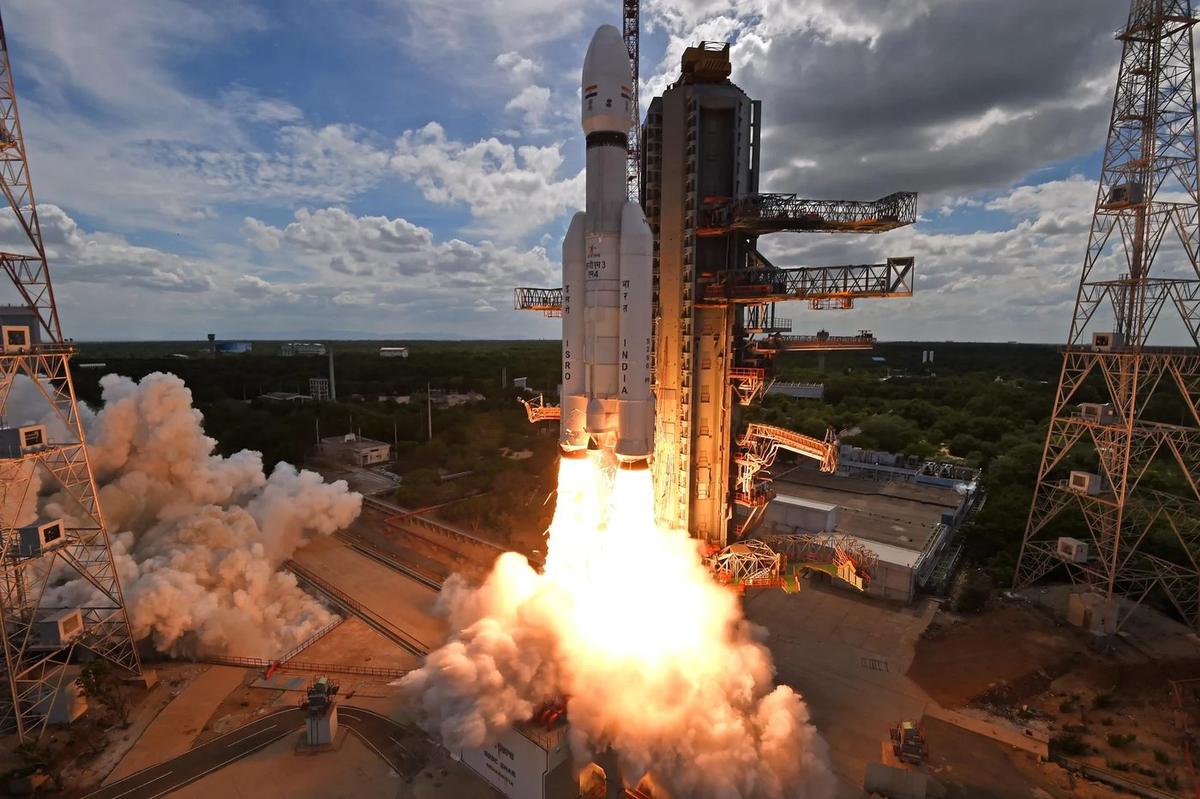
Photo: LVM3 launch, Sriharikota, ISRO, GODL-India

APPSC Group-I Mains 2020 · Paper V
2020 Paper V · Q11(b): model answer
Science, Technology & Environmental Issues · Energy: conventional and renewable. Held in December 2020 (Notification 27/2018).
What are biofuels and why are they important to India's economy? What do you know about the Indian National Policy on Biofuels?
Syllabus: Energy: conventional and renewable · Renewable energy
BiofuelsEthanol blending (E20)National Policy on BiofuelsEnergy security
Biofuels are liquid or gaseous fuels made from biomass, such as bioethanol, biodiesel, compressed biogas (CBG) and sustainable aviation fuel. Unlike fossil fuels they are renewable, since they recycle carbon that plants absorbed recently. For India, which imports about 89% of its crude oil, they are a home-grown substitute; ethanol blending in petrol reached E20 (20%) in 2025.
1. Types of biofuels
| Generation | Feedstock | Examples |
|---|---|---|
| First (1G) | Sugarcane, molasses, grains, edible oils | Ethanol from cane juice and maize; biodiesel |
| Second (2G) | Crop residue, bamboo and other non-food biomass | 2G ethanol plants at Panipat (rice straw) and Numaligarh (bamboo) |
| Third (3G) | Algae | Algal biodiesel (research stage) |
| Fourth (4G) | Engineered microbes with carbon capture | Experimental |
- Gaseous biofuels: biogas and CBG from cattle dung, press mud, crop residue and city waste (GOBARdhan, SATAT).
2. Importance to India's economy
- Energy security and foreign exchange: blending since 2014 has saved about ₹1.4 lakh crore of foreign exchange, a cushion during oil shocks such as the 2026 Hormuz crisis.
- Farm incomes: farmers have received about ₹1.2 lakh crore, and sugar mills earn from surplus cane and molasses, which eases cane-price arrears.
- Waste to wealth: 2G ethanol and CBG turn stubble, dung and urban waste into fuel, reducing stubble burning and methane.
- Rural jobs and investment: distilleries and CBG plants (over 130 commissioned by November 2025, against a target of 5,000) create rural employment.
- Climate and clean air: lower carbon emissions support the Panchamrit goals; India also launched the Global Biofuels Alliance during its G20 presidency (2023).
3. National Policy on Biofuels, 2018 (amended 2022)
- Categories: "basic" biofuels (1G ethanol, biodiesel) and "advanced" biofuels (2G ethanol, CBG, drop-in fuels), with extra incentives for the latter.
- Wider feedstocks: cane juice, B-heavy molasses, damaged grains, maize and cassava; surplus food grains only with the approval of the National Biofuel Coordination Committee.
- Targets: the 2022 amendment advanced E20 from 2030 to 2025-26, and it was achieved in 2025; the 2018 policy also aimed at 5% biodiesel in diesel by 2030.
- Support: PM JI-VAN (2019) funds 2G bio-refineries and SATAT (2018) assures purchase of CBG; the amendment also allows production in SEZs and export units.
- Next steps: standards for E22–E30 petrol were notified in May 2026, though no higher blending target had been fixed by October 2026; sustainable aviation fuel is to make up 1% of fuel for international flights by 2027.
- 2003 Ethanol Blended Petrol programme begins
- 2009 First National Policy on Biofuels
- 2018 National Policy on Biofuels; SATAT
- 2022 Amendment advances E20 to 2025-26; Panipat 2G plant
- 2023 Global Biofuels Alliance launched at the G20
- 2025 E20 achieved
- Concerns: food-versus-fuel trade-offs, water-hungry sugarcane and mileage complaints from older vehicles call for a faster shift to 2G feedstocks and flex-fuel vehicles.
AP angle: Reliance laid the foundation of the first of 500 planned CBG plants in Andhra Pradesh in the Kanigiri area of Prakasam district (April 2025), a ₹65,000-crore programme using Napier grass grown on wasteland.
Balanced with food and water security, biofuels can turn farm and urban waste into energy self-reliance.
The other choice in Q11
Answer either one in the exam.
- Q11(a)What do you know about the NeGP (National e-Governance Action Plan) operating under the aegis of Digital India? Explain about the role of any three of the following projects in this plan: 1. Jan-Dhan Yojana; 2. Digital Locker; 3. National Digital Literacy Mission; 4. E-Bhasha; and 5. BharatNet (National Optical Fibre Network).
10 marks · Emerging technologies, ICT and cyber security · ICT, e-governance and cyber security
Every model answer on these pages is free to read. The Tool Kit adds four PDF books for Mains Papers I–IV: every previous question sorted by syllabus, with practice questions. It is in the ₹149 All-in-One Pass, with every previous paper of every exam on the site, practice quizzes, timed tests, mock test series and study books.
₹149 · valid for 12 months from the day you pay, on every exam · pay by UPI, card or net banking