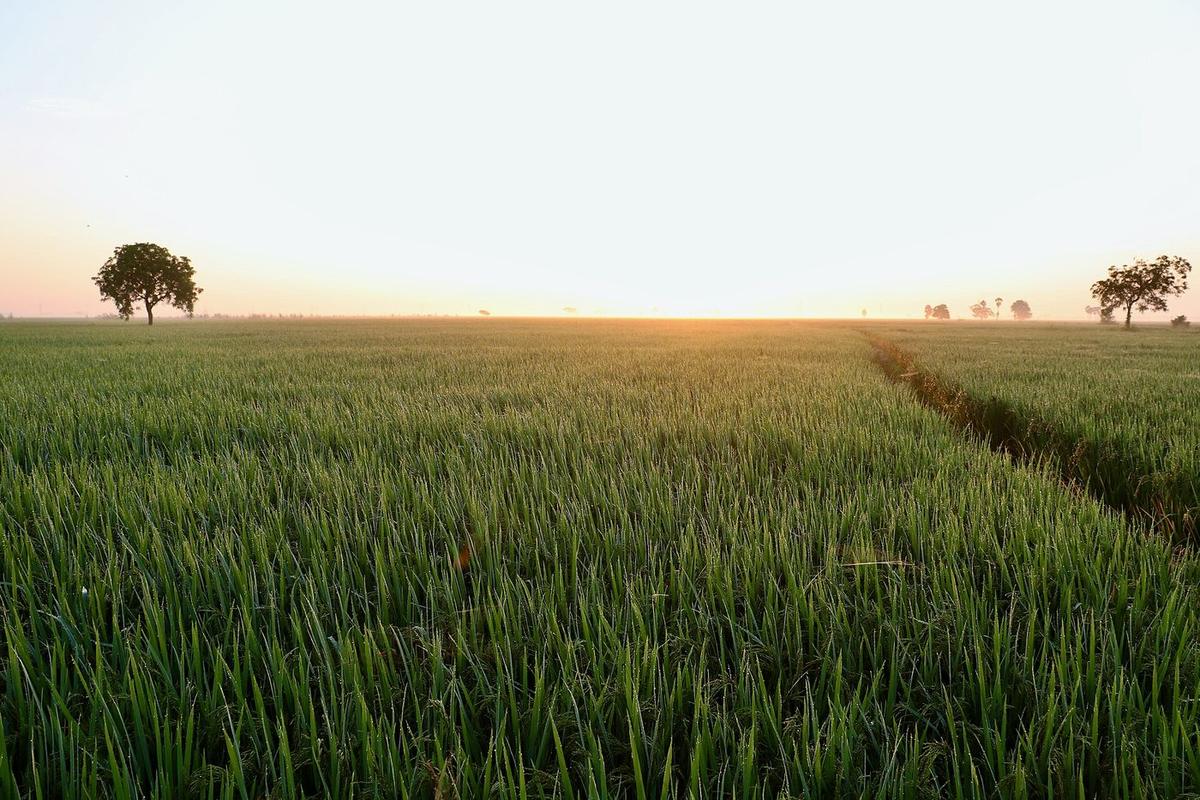
Photo: Paddy fields near Eluru, iMahesh, CC BY-SA 4.0

APPSC Group-I Mains 2020 · Paper IV
2020 Paper IV · Q11(a): model answer
Economy & Development of India and Andhra Pradesh · Industry and business (India and AP). Held in December 2020 (Notification 27/2018).
Describe some of the key initiatives taken and incentives provided by the government of Andhra Pradesh to promote agro and food processing industry.
Syllabus: Industry and business (India and AP) · AP's industrial policy, incentives, corridors, MSMEs and exports
Food processingValue additionFarm-to-fork chainsFiscal incentives
Andhra Pradesh produces surpluses of rice, fruits, chillies, oil palm, milk and shrimp, but only a small share is processed, so farmers lose value and post-harvest losses stay high. Food processing links agriculture with industry: it raises value addition, stabilises farm prices and creates rural jobs. The State has therefore made it a thrust sector, with the AP Food Processing Society as the nodal agency.
1. Policy and incentives
- Policy continuity: the AP Food Processing Policy 2015-20, followed by the 2020-25 policy and now the Food Processing Policy 2024-29.
- Fiscal incentives: capital subsidy on plant and machinery, interest subvention, and reimbursement of stamp duty, power cost and SGST, with extra support for SC/ST, BC and women entrepreneurs.
- Non-fiscal support: single-desk clearances, land in industrial and food parks, and private "plug-and-play" parks where small units can start quickly.
2. Infrastructure and value chains
- Mega food parks under the PM Kisan SAMPADA Yojana, such as Srini Food Park (Chittoor), plus food processing parks with common facilities.
- Farm-gate infrastructure: primary processing centres, cold storages and pack-houses, partly financed by the Agriculture Infrastructure Fund (2020), which offers loans with interest subvention.
- Aggregation: Rythu Seva Kendras (formerly Rythu Bharosa Kendras) and FPOs aggregate produce for processors, so small farmers can supply in bulk.
3. Sector-specific initiatives
- Aquaculture: the AP State Aquaculture Development Authority Act, 2020 regulates farms, seed and feed, supporting shrimp processing and exports.
- Micro units: PMFME (2020) gives a 35% credit-linked subsidy, up to ₹10 lakh, under "One District One Product".
- Natural farming (APCNF): chemical-free produce for premium domestic and export markets.
- Exports: mango pulp, chillies, shrimp and spices, which need certification and traceability.
- Oil palm and horticulture: AP leads India in oil palm, so crushing mills and pack-houses near plantations and orchards keep value within the State.
| Support | Source | Benefit |
|---|---|---|
| Capital subsidy, SGST and power reimbursement | AP Food Processing Policy | Lower project cost |
| Mega food parks | PM Kisan SAMPADA Yojana | Shared infrastructure |
| Agriculture Infrastructure Fund (2020) | Union Government | Cheaper loans for cold storage and pack-houses |
| PMFME (2020) | Union and State | 35% subsidy for micro units, up to ₹10 lakh |
| Aquaculture Development Authority Act, 2020 | State | Quality seed and feed for shrimp exports |
4. Challenges
- Fragmented supply: small, scattered farms make steady, uniform supply difficult.
- Cold-chain gaps: too few reefer vehicles and cold storages near farms.
- Incentive delays: late payment of incentives hurts small processors.
- Export standards: certification, residue limits and traceability for global markets, where shrimp consignments face strict testing.
- Credit and skills: small processors find it hard to raise working capital and to meet food-safety (FSSAI) norms.
Linking farmers, FPOs and processors in farm-to-fork chains can raise incomes, cut wastage and create rural jobs, as Swarna Andhra@2047 envisages.
The other choice in Q11
Answer either one in the exam.
- Q11(b)Explain the Marginal Cost Pricing Rule for Public Utilities. What are the problems associated with this rule?
10 marks · Infrastructure: roads, power, digital and cities · Paying for infrastructure: PPP and pricing of public utilities
Every model answer on these pages is free to read. The Tool Kit adds four PDF books for Mains Papers I–IV: every previous question sorted by syllabus, with practice questions. It is in the ₹149 All-in-One Pass, with every previous paper of every exam on the site, practice quizzes, timed tests, mock test series and study books.
₹149 · valid for 12 months from the day you pay, on every exam · pay by UPI, card or net banking