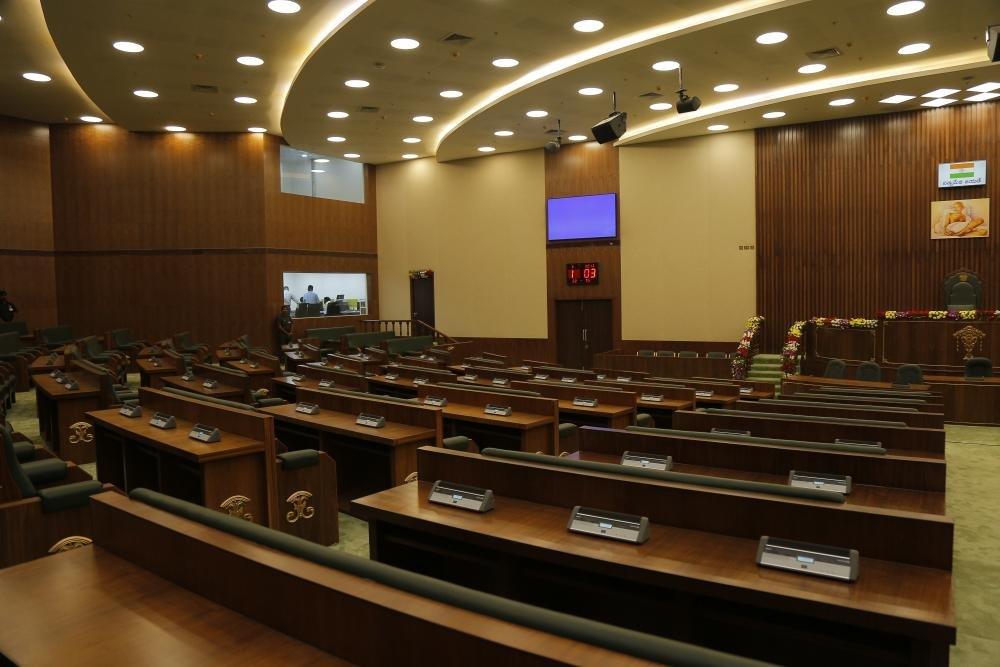
Photo: Andhra Pradesh Legislative Assembly, Kdslk, CC0

APPSC Group-I Mains 2020 · Paper III
2020 Paper III · Q14(a): model answer
Polity, Constitution, Governance, Law & Ethics · Ethics for public servants. Held in December 2020 (Notification 27/2018).
Define public service broadly. How do the virtues of trustworthiness and fortitude get manifested in public service? Explain with examples. Suggest three preventive measures of corruption.
Syllabus: Ethics for public servants · Public-service ethics: codes, leadership, corruption, Lokpal, international ethics
Public servicePublic trustTrustworthiness and fortitudePreventive vigilance
Broadly, public service means any activity done in the public interest by a person holding public office or performing a public duty: government employees, elected representatives, judges, public sector employees and others paid from public funds, as the Prevention of Corruption Act, 1988 recognises in defining a "public servant". The guiding idea is that public office is a public trust, held on behalf of the people.
| Virtue | Meaning | How it shows in public service |
|---|---|---|
| Trustworthiness | Honesty, reliability, keeping promises and confidentiality | Declaring conflicts of interest, refusing gifts, keeping honest records, delivering entitlements on time |
| Fortitude | Moral courage and endurance under pressure or danger | Resisting political or criminal pressure, exposing wrongdoing, standing by lawful decisions |
1. Trustworthiness in public service
- Meaning: honesty, reliability, keeping promises, confidentiality and using public resources only for public purposes.
- Confidentiality: guarding official information and citizens' personal data, as conduct rules require.
- In practice: an officer declares conflicts of interest, refuses gifts, keeps records honest and delivers entitlements on time without bribes.
- Example: Lal Bahadur Shastri resigned as Railway Minister (1956), owning moral responsibility for a rail accident.
- AP example: S.R. Sankaran, an AP-cadre IAS officer, earned people's trust through simple living and commitment to SCs, STs and bonded labourers.
2. Fortitude in public service
- Meaning: the moral courage and endurance to do what is right under pressure, threats or adversity.
- Whistle-blowers: Satyendra Dubey, an NHAI engineer, exposed corruption in the Golden Quadrilateral project and was killed in 2003; S. Manjunath of Indian Oil was killed in 2005 for sealing a pump selling adulterated fuel.
- Institutional courage: T.N. Seshan, as Chief Election Commissioner (1990–96), firmly enforced the Model Code of Conduct.
- Everyday fortitude: an officer who refuses an illegal order or stands by a fair decision despite transfer threats.
- Institutional support: the Government's whistle-blower resolution of 2004 (PIDPI), which made the CVC the designated agency after Dubey's murder, and the Whistle Blowers Protection Act, 2014 aim to protect those who expose corruption.
3. Three preventive measures against corruption
Robert Klitgaard's formula, Corruption = Monopoly + Discretion − Accountability, suggests where prevention should aim.
| Klitgaard factor | Preventive measure | Examples |
|---|---|---|
| Monopoly | Give citizens alternatives | Online and single-window services, GeM |
| Discretion | Reduce discretion through rules and technology | DBT, e-procurement, online land records |
| Accountability | Strengthen institutions and laws | Lokpal, CVC, Anti-Corruption Bureaux, RTI, social audit |
- Reduce discretion through technology: DBT, e-procurement, GeM, online land records and single-window services remove face-to-face contact and middlemen.
- Strengthen institutions and laws: Lokpal and Lokayuktas, the CVC and State Anti-Corruption Bureaux; the Prevention of Corruption (Amendment) Act, 2018 made bribe-giving an offence; whistle-blowers need protection.
- Build an ethical culture: codes of conduct, value-based training (Mission Karmayogi), asset declarations, Citizens' Charters and social audit.
In conclusion, when trustworthiness and fortitude are backed by strong systems, public office becomes a genuine trust for the people.
The other choice in Q14
Answer either one in the exam.
- Q14(b)What is the role of family, society and educational institutions in inculcating values?
10 marks · Ethics for public servants · Human values: family, education, gender equality, great leaders
Every model answer on these pages is free to read. The Tool Kit adds four PDF books for Mains Papers I–IV: every previous question sorted by syllabus, with practice questions. It is in the ₹149 All-in-One Pass, with every previous paper of every exam on the site, practice quizzes, timed tests, mock test series and study books.
₹149 · valid for 12 months from the day you pay, on every exam · pay by UPI, card or net banking