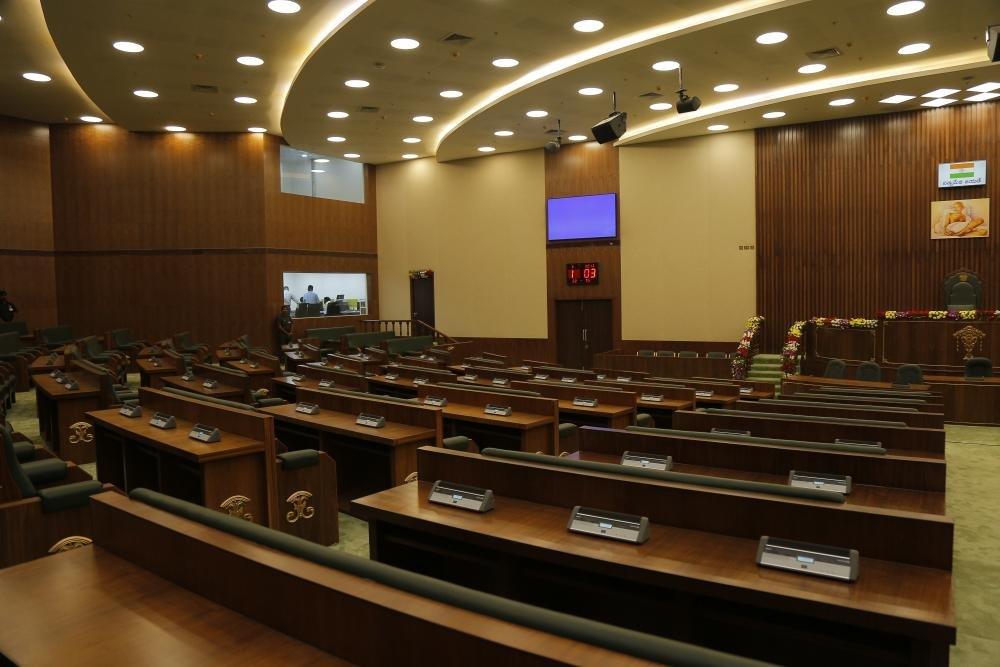
Photo: Andhra Pradesh Legislative Assembly, Kdslk, CC0

APPSC Group-I Mains 2020 · Paper III
2020 Paper III · Q12(b): model answer
Polity, Constitution, Governance, Law & Ethics · Ethics for public servants. Held in December 2020 (Notification 27/2018).
Explain the Lokpal and Lokyukta Act.
Syllabus: Ethics for public servants · Public-service ethics: codes, leadership, corruption, Lokpal, international ethics
LokpalLokayuktaOmbudsmanAnti-corruption
The Lokpal and Lokayuktas Act, 2013 (in force from 16 January 2014) created an independent anti-corruption ombudsman: the Lokpal for the Union and Lokayuktas for the States. The idea, inspired by the Scandinavian ombudsman, was recommended by the First Administrative Reforms Commission (1966), and the Act followed a mass anti-corruption movement in 2011.
- 1966 First ARC recommends a Lokpal and Lokayuktas
- 1971 Maharashtra sets up the first Lokayukta
- 1983 AP Lokayukta and Upa-Lokayukta Act
- 2011 Anti-corruption movement demands a strong Lokpal
- 2013 Lokpal and Lokayuktas Act passed
- 2019 First Lokpal, Justice Pinaki Chandra Ghose
1. Composition and appointment
- Structure: a chairperson and up to eight members; half are judicial members, and at least half are from SCs, STs, OBCs, minorities and women.
- Term: five years or until the age of 70.
- Selection committee: the Prime Minister, the Lok Sabha Speaker, the Leader of the Opposition in the Lok Sabha, the Chief Justice of India or a nominated judge, and an eminent jurist; appointment is by the President.
2. Jurisdiction
- Prime Minister: covered, except on international relations, security, public order, atomic energy and space; an inquiry needs the approval of two-thirds of the full bench and is held in camera.
- Ministers, MPs and officials: all Group A, B, C and D officials of the Union.
- Other bodies: officers of government-funded bodies and of societies and trusts receiving foreign donations above ₹10 lakh a year, for offences under the Prevention of Corruption Act, 1988.
3. Powers and procedure
- Own wings: the Lokpal has its own Inquiry and Prosecution Wings and superintendence over the CBI in cases it refers.
- Attachment of property: it can attach and confiscate property acquired by corrupt means.
- Protection of honest officials: false and frivolous complaints are punishable.
- Independence: the chairperson and members can be removed for misbehaviour only by the President after an inquiry by the Supreme Court, and they cannot be reappointed.
4. Lokayuktas
Section 63 required every State to set up a Lokayukta within a year, leaving its structure to State law. Andhra Pradesh already had its Lokayukta and Upa-Lokayukta Act, 1983.
5. Limitations
- Delays: the first Lokpal was appointed only in 2019, five years after the Act came into force.
- Few prosecutions: dependence on the CBI and other agencies for investigation.
- Weak whistle-blower protection: complainants and witnesses remain vulnerable.
In conclusion, independent, well-staffed ombudsmen with timely appointments can make the Act a real deterrent to corruption.
The other choice in Q12
Answer either one in the exam.
- Q12(a)What do you understand by the values of an entity? What is the need for value education? Discuss how gender inequality came to be recognised as inequality in the Indian context and the kind of responses that this recognition produced.
10 marks · Ethics for public servants · Human values: family, education, gender equality, great leaders
Every model answer on these pages is free to read. The Tool Kit adds four PDF books for Mains Papers I–IV: every previous question sorted by syllabus, with practice questions. It is in the ₹149 All-in-One Pass, with every previous paper of every exam on the site, practice quizzes, timed tests, mock test series and study books.
₹149 · valid for 12 months from the day you pay, on every exam · pay by UPI, card or net banking