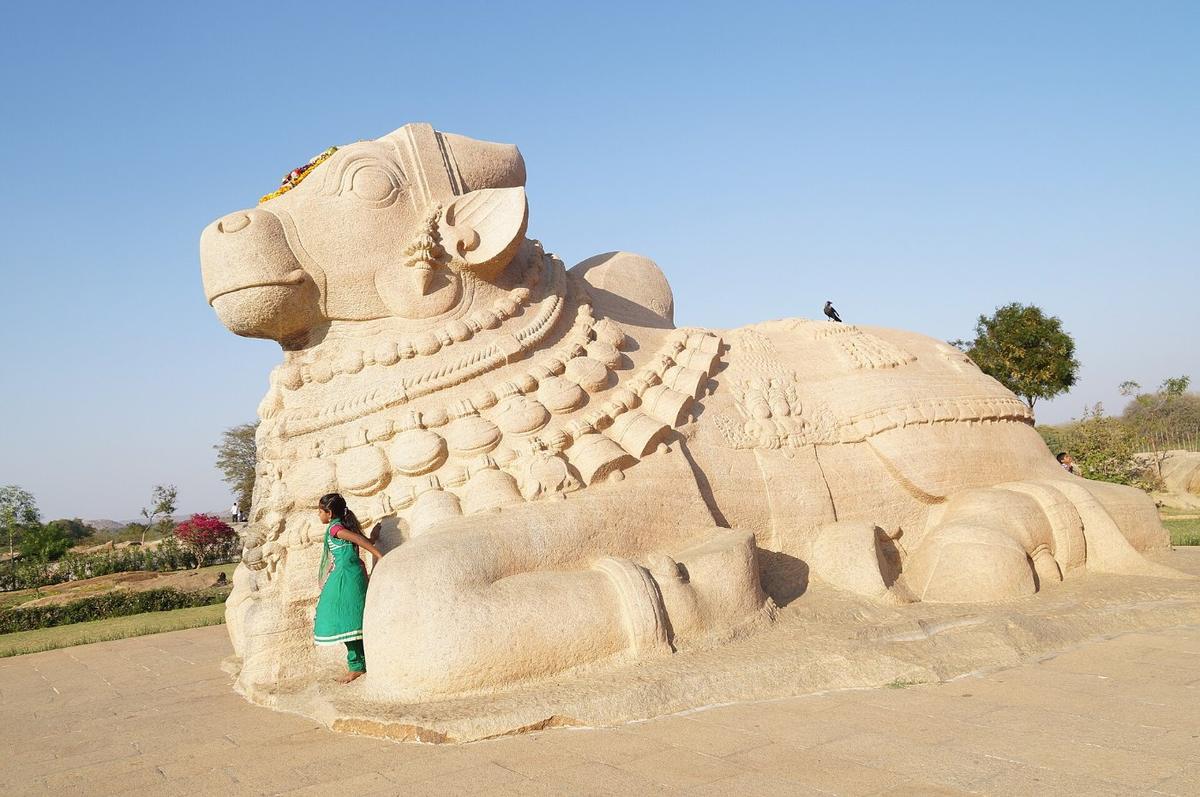
Photo: Lepakshi Nandi, Rahmanuddin, CC BY-SA 4.0

APPSC Group-I Mains 2020 · Paper II
2020 Paper II · Q6(a): model answer
History, Culture & Geography of India and Andhra Pradesh · Ancient and Medieval Andhra. Held in December 2020 (Notification 27/2018).
Discuss salient features of the Agrarian system under the Satavahanas.
Syllabus: Ancient and Medieval Andhra · Early Andhra kingdoms (Satavahanas to Vishnukundins)
Agrarian expansionLand grantsBhagaKrishna–Godavari delta
The Satavahanas (c. 1st century BCE to 3rd century CE), the first great Andhra dynasty, ruled the Deccan from Pratishthana and Dhanyakataka (Amaravati). The Nasik, Karle and Naneghat inscriptions and Hala's Gathasaptasati reveal a well-developed agrarian economy that supported towns, Buddhist monasteries and Roman trade, and introduced the practice of land grants.
1. Crops and techniques
- Rice bowl: the Krishna–Godavari deltas formed a great rice-growing region, while cotton (Andhra cotton was noted in foreign accounts), millets, pulses and sugarcane were grown elsewhere.
- Better techniques: iron ploughshares and paddy transplantation raised output.
- Irrigation: tanks, wells and cisterns supported cultivation; inscriptions record donations of wells by pious individuals.
2. Land ownership and labour
- Crown and private land: the king held crown lands, while gahapatis (householders) and kutumbikas (cultivating families) held private land.
- Labour: halikas (ploughmen) and hired labourers worked the fields of the larger landholders.
- Village life: Hala's Gathasaptasati portrays farming villages, festivals and rural life in Prakrit verse.
3. Revenue and administration
- Bhaga: the king's share, traditionally one-sixth of the produce, was collected in cash and kind, besides dues on salt and other items.
- Measurement: land was measured in nivartanas.
- Administrative units: the ahara (district) was under an amatya and the village under a gramika, who looked after revenue and order.
4. Land grants
- First of their kind: the Satavahanas were the first rulers to grant tax-free villages to Brahmanas and Buddhist monks; Gautamiputra Satakarni's Nasik grants are examples.
- Immunities: royal troops and officials could not enter the granted land, and it could not be dug for salt, a royal monopoly.
- Agrarian frontier: grants carried cultivation into forest areas and spread Brahmanical and Buddhist culture.
5. Links with trade
- Surplus for exchange: agrarian surplus fed Roman trade and craft guilds (srenis), which also acted as banks accepting permanent deposits.
- Money economy: Satavahana lead and copper coins, including ship-type coins, show the commercialisation of agrarian products.
- Agrarian towns: the surplus sustained urban centres such as Dhanyakataka and Pratishthana, and the ports of the Krishna–Godavari coast exported rice, cotton and textiles.
Assessment: Land grants extended cultivation, but by transferring revenue and administrative rights they planted the seeds of feudalism, as R.S. Sharma argues. The Satavahana agrarian base sustained the Amaravati Buddhist culture and shaped Andhra's village economy for centuries.
The other choice in Q6
Answer either one in the exam.
- Q6(b)Write a note on art and architecture under the Pallavas.
10 marks · Ancient and Medieval Andhra · Early Andhra kingdoms (Satavahanas to Vishnukundins)
Every model answer on these pages is free to read. The Tool Kit adds four PDF books for Mains Papers I–IV: every previous question sorted by syllabus, with practice questions. It is in the ₹149 All-in-One Pass, with every previous paper of every exam on the site, practice quizzes, timed tests, mock test series and study books.
₹149 · valid for 12 months from the day you pay, on every exam · pay by UPI, card or net banking