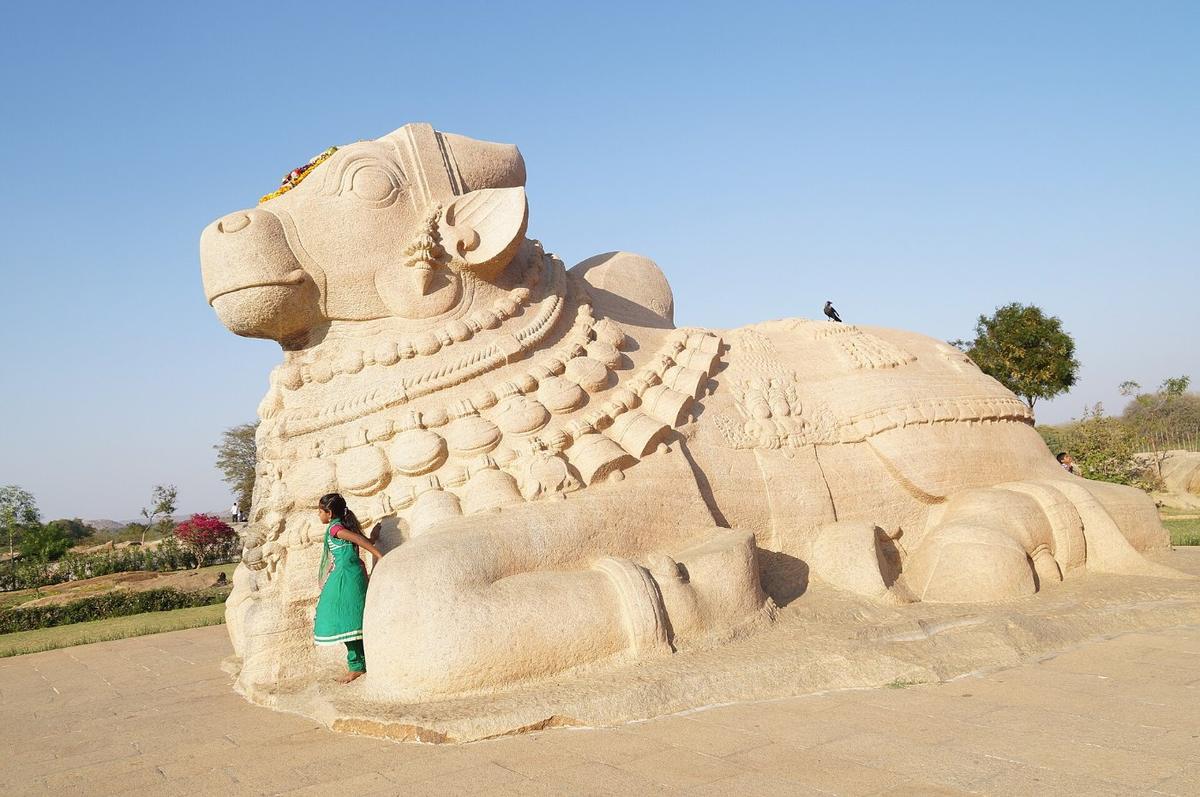
Photo: Lepakshi Nandi, Rahmanuddin, CC BY-SA 4.0

APPSC Group-I Mains 2020 · Paper II
2020 Paper II · Q2(b): model answer
History, Culture & Geography of India and Andhra Pradesh · Medieval India. Held in December 2020 (Notification 27/2018).
Vividly examine the impact of Bhakti Movement during medieval India.
Syllabus: Medieval India · Bhakti and Sufi movements; regional languages and arts
BhaktiSaguna and nirgunaVernacular literatureSocial equality
The Bhakti movement began with the Alvars and Nayanars of the Tamil country (6th–9th centuries) and spread across India between the 12th and 17th centuries through saints such as Ramanuja, Basavanna, Kabir, Nanak, Chaitanya and Tukaram. It preached personal devotion to God as the path to salvation, cutting across caste, gender and ritual, and left a deep imprint on religion, society and culture.
1. Religious impact
- Simplified religion: devotion, the guru and the chanting of God's name replaced costly rituals and priestly mediation, bringing religion within reach of ordinary people.
- Two streams: saguna saints such as Tulsidas, Surdas and Mirabai worshipped Rama or Krishna, while nirguna saints such as Kabir and Guru Nanak stressed one formless God; Nanak's teachings gave rise to Sikhism.
- Composite culture: interaction with Sufi orders such as the Chishtis promoted Hindu–Muslim understanding; Kabir's dohas are revered by both communities.
2. Social impact
- Challenge to caste: saints came from all castes, such as Kabir (weaver), Ravidas (leather worker) and Namdev (tailor), and Basavanna's Virashaivism rejected caste and ritual.
- Space for women: Andal, Akka Mahadevi, Lal Ded and Mirabai found spiritual expression and defied social convention.
- Collective worship: the langar of the Sikh Gurus and Sankardev's namghars in Assam encouraged worship and dining across caste lines.
3. Literary and cultural impact
- Regional languages flowered: saints wrote in the people's languages rather than Sanskrit, creating lasting classics (see table).
- Music and dance: bhajans, kirtans and abhangs enriched devotional music, and Siddhendra Yogi's Bhama Kalapam shaped Kuchipudi.
- Shared identities: pilgrimages such as the Warkari yatra to Pandharpur created a common regional culture across castes.
| Saint | Language | Contribution |
|---|---|---|
| Tulsidas | Awadhi | Ramcharitmanas |
| Surdas | Braj | Sursagar |
| Tukaram | Marathi | Abhangs of the Warkari tradition |
| Chaitanya | Bengali | Kirtans and Gaudiya Vaishnavism |
| Sankardev | Assamese | Borgeets and namghars |
| Annamacharya | Telugu | Sankirtanas on Lord Venkateswara |
4. In Andhra
- Devotional literature: Annamacharya's thousands of sankirtanas, Bammera Potana's Telugu Bhagavatam and Bhadrachala Ramadasu's keertanas carried devotion to the masses.
- Voice of protest: Vemana's verses and Pothuluri Veerabrahmam's Kalagnanam attacked caste, idol worship and superstition in simple Telugu.
5. Limitations
- Caste survived: the caste system was not dismantled, and many sects later became ritualistic and caste-based themselves.
- Limited change for women: the status of women in society changed little outside the devotional sphere.
- Non-political: the movement largely accepted the existing social and political order.
The Bhakti movement thus democratised religion, enriched vernacular culture and spread the values of equality and tolerance that the Constitution later embodied; its legacy of composite culture remains a resource for social harmony.
The other choice in Q2
Answer either one in the exam.
- Q2(a)Draw an outline of society under the Eastern Chalukyas.
10 marks · Medieval India · South Indian kingdoms (Pallavas, Chalukyas, Cholas and others)
Every model answer on these pages is free to read. The Tool Kit adds four PDF books for Mains Papers I–IV: every previous question sorted by syllabus, with practice questions. It is in the ₹149 All-in-One Pass, with every previous paper of every exam on the site, practice quizzes, timed tests, mock test series and study books.
₹149 · valid for 12 months from the day you pay, on every exam · pay by UPI, card or net banking