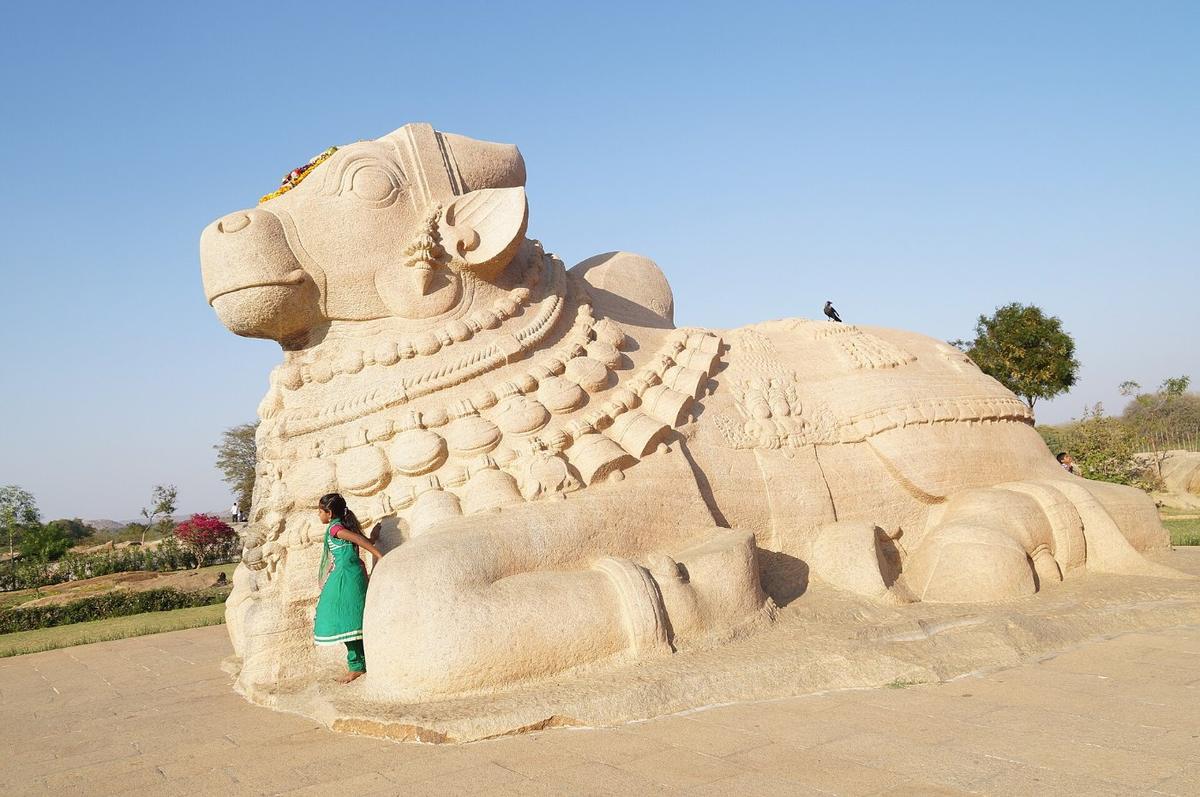
Photo: Lepakshi Nandi, Rahmanuddin, CC BY-SA 4.0

APPSC Group-I Mains 2020 · Paper II
2020 Paper II · Q2(a): model answer
History, Culture & Geography of India and Andhra Pradesh · Medieval India. Held in December 2020 (Notification 27/2018).
Draw an outline of society under the Eastern Chalukyas.
Syllabus: Medieval India · South Indian kingdoms (Pallavas, Chalukyas, Cholas and others)
Vengi ChalukyasAgraharasTemple cultureRise of Telugu
The Eastern Chalukyas (Chalukyas of Vengi) ruled coastal Andhra for over four centuries from c. 624 CE, when Kubja Vishnuvardhana, brother of Pulakesin II, founded the dynasty at Vengi (Pedavegi, near Eluru); Rajamahendravaram later became the capital. Their copper-plate grants, inscriptions and literature show a society that was hierarchical yet creative, marked by agraharas, temples and the rise of Telugu.
1. Social structure
- Chaturvarna with sub-castes: society followed the four-varna order, but many sub-castes and occupational groups emerged as the economy grew.
- Brahmanas: enjoyed the highest status, receiving agraharas and tax-free land grants and serving as priests, ministers and teachers; agraharas were centres of Vedic and Sanskrit learning.
- Landed aristocracy: rulers, military chiefs and feudatories (samantas) held land in return for service, while cultivators formed the backbone of village society.
- Guilds: artisans and merchants were organised in guilds, which regulated crafts and trade and made gifts to temples.
2. Religion and temple culture
- Shift in faiths: Buddhism declined, and Jainism, though patronised by some kings, lost ground; Shaivism (Pasupata and Kalamukha sects) and Vaishnavism flourished.
- Temples as social centres: temples were places of worship, learning, music, dance, charity and festivals, and employed priests, artisans and servants.
- Royal temple building: Chalukya Bhima I is credited with the Bhimeswara temples at Draksharamam and Samalkot (Kumararamam), two of the Pancharamas.
3. Language and literature
- Telugu in inscriptions: the Addanki inscription of Pandaranga, general of Gunaga Vijayaditya III (9th century), is the earliest Telugu verse inscription, in the tharuvoja metre.
- Literary Telugu: under Rajaraja Narendra (1019–1061), Nannaya began the Andhra Mahabharatam, earning the title Adikavi and giving Telugu a polished literary standard.
- Sanskrit learning: agraharas and temple schools kept Sanskrit scholarship alive alongside the new Telugu literature.
Shaded: Vengi, the Krishna–Godavari doab and core of the kingdom (which stretched further along the coast)
Schematic map of Andhra Pradesh (2011 census district outlines), not to scale; for study only.
4. Women, customs and daily life
- Royal women: queens and princesses made grants to temples and Brahmanas, showing their access to property and patronage.
- Temple dancers: dancers attached to temples appear in inscriptions as temple culture grew.
- Community life: festivals, fairs and temple-centred gatherings bound village society together.
- c. 624 Kubja Vishnuvardhana founds the dynasty at Vengi
- 9th century Addanki inscription: earliest Telugu verse
- 1019–1061 Rajaraja Narendra; Nannaya begins the Andhra Mahabharatam
- 1070 Kulottunga I unites Vengi with the Chola throne
Assessment: Society was hierarchical and Brahmana-dominated, with caste privileges sanctioned by royal grants. Yet it laid the foundations of Telugu literature and temple culture, and the union with the Chola throne brought Tamil influences into Andhra society, making this age the cradle of a distinct Andhra identity.
The other choice in Q2
Answer either one in the exam.
- Q2(b)Vividly examine the impact of Bhakti Movement during medieval India.
10 marks · Medieval India · Bhakti and Sufi movements; regional languages and arts
Every model answer on these pages is free to read. The Tool Kit adds four PDF books for Mains Papers I–IV: every previous question sorted by syllabus, with practice questions. It is in the ₹149 All-in-One Pass, with every previous paper of every exam on the site, practice quizzes, timed tests, mock test series and study books.
₹149 · valid for 12 months from the day you pay, on every exam · pay by UPI, card or net banking