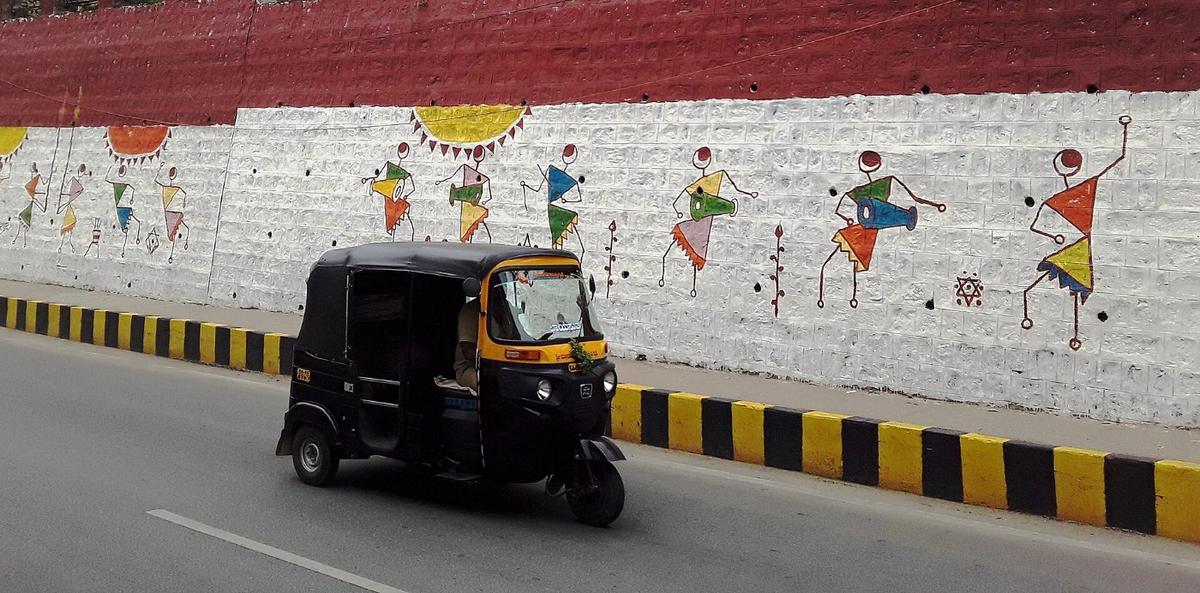
Photo: Warli paintings, Mysuru, Prof tpms, CC BY-SA 4.0

UPSC Civil Services (Main) 2024 · Paper II
UPSC Anthropology Optional 2024 Paper 2 · Q1(d): model answer
Anthropology Paper II: Indian Anthropology: Indian Society, Caste, Village and Tribal India · Tribal Situation in India.
Artisan tribes of Jharkhand
Syllabus: Tribal Situation in India · Linguistic and socio-economic characteristics
Simple artisan tribesAsur iron-smeltingInter-tribal exchangeCraft revival
In Census 2011, Jharkhand's 32 Scheduled Tribes formed 26.2% of its population (the list was widened in 2022, adding the Puran). Besides large cultivating tribes such as the Santhal, Munda, Oraon and Ho, some small communities specialised in crafts. L.P. Vidyarthi and B.K. Rai (The Tribal Culture of India, 1977) placed such groups in a separate simple artisan type of tribal economy, which shows that tribal economies were never purely subsistence-based.
| Tribe | Traditional craft | Remarks |
|---|---|---|
| Asur (PVTG) | Smelting iron ore in clay furnaces | Netarhat plateau; figure in Munda myths |
| Lohra, Karmali | Blacksmithy: ploughshares, sickles, axes | Serve cultivating villages |
| Mahli | Bamboo baskets, winnowing fans, mats | Spread across Chotanagpur |
| Chik Baraik | Weaving cloth | Supplied Munda and Oraon villages |
| Birhor (PVTG) | Rope-making from forest fibre | Semi-nomadic; studied by S.C. Roy (1925) |
1. Features of the artisan economy
- Symbiotic exchange: artisan families lived in or near Munda and Oraon villages and exchanged tools, cloth and baskets for grain at harvest, a customary system resembling jajmani ties.
- Myth and memory: Munda origin myths speak of the sun-god Singbonga overcoming the Asur iron-smelters, which hints at old links between iron-working and cultivating peoples.
- Technical knowledge: they hold specialised knowledge of ores, charcoal, bamboo and fibres, passed down within families; the Birhor of S.C. Roy's The Birhors (1925) combined hunting with rope-making for sale in markets.
2. Problems and change
- Decline of crafts: colonial forest laws restricted charcoal-making and bamboo cutting, while cheap factory iron and, later, plastic goods destroyed markets for smelted iron and baskets.
- Shift to wage work: many artisans have become cultivators, mine and construction labourers or seasonal migrants; bauxite mining in the Asur hill country adds pressure on their land.
- Marginality: small numbers, low literacy and weak bargaining power keep them dependent on traders and middlemen.
3. Efforts at revival
- Markets and design: Jharcraft (a State undertaking), TRIFED's Tribes India outlets and Van Dhan Vikas Kendras help artisans reach urban buyers.
- Skills and credit: PM Vishwakarma (2023) supports trades such as blacksmithy and basket-making with training, tool kits and loans, and PM-JANMAN covers the PVTGs among them.
The artisan tribes of Jharkhand show occupational specialisation and exchange within tribal society. Protecting their traditional knowledge through design support, fair markets and recognition of their crafts can turn heritage into a secure livelihood.
The other parts of Q1
- Q1(a)Digitisation of rural economy
10 marks · 150 words · Indian Village and Peasantry · Globalisation and rural change
- Q1(b)Origin of State Societies
10 marks · 150 words · Evolution of Indian Culture and Civilisation · Protohistoric and Harappan civilisation
- Q1(c)Syro-Malabar Christians
10 marks · 150 words · Religion and the Sacred Complex in India · Impact of Buddhism, Jainism, Islam and Christianity
- Q1(e)Causes of stunting and wasting among tribal children
10 marks · 150 words · Problems of Tribal Communities · Health, nutrition and education
The ₹149 All-in-One Pass opens the rest of the site for 12 months: UPSC Prelims GS Paper I and CSAT with explanations, practice quizzes and timed tests, UPSC CAPF and EPFO, the previous papers of every APPSC, TSPSC, police and SSC exam, every mock test series and the study books.
₹149 · valid for 12 months from the day you pay, on every exam · pay by UPI, card or net banking