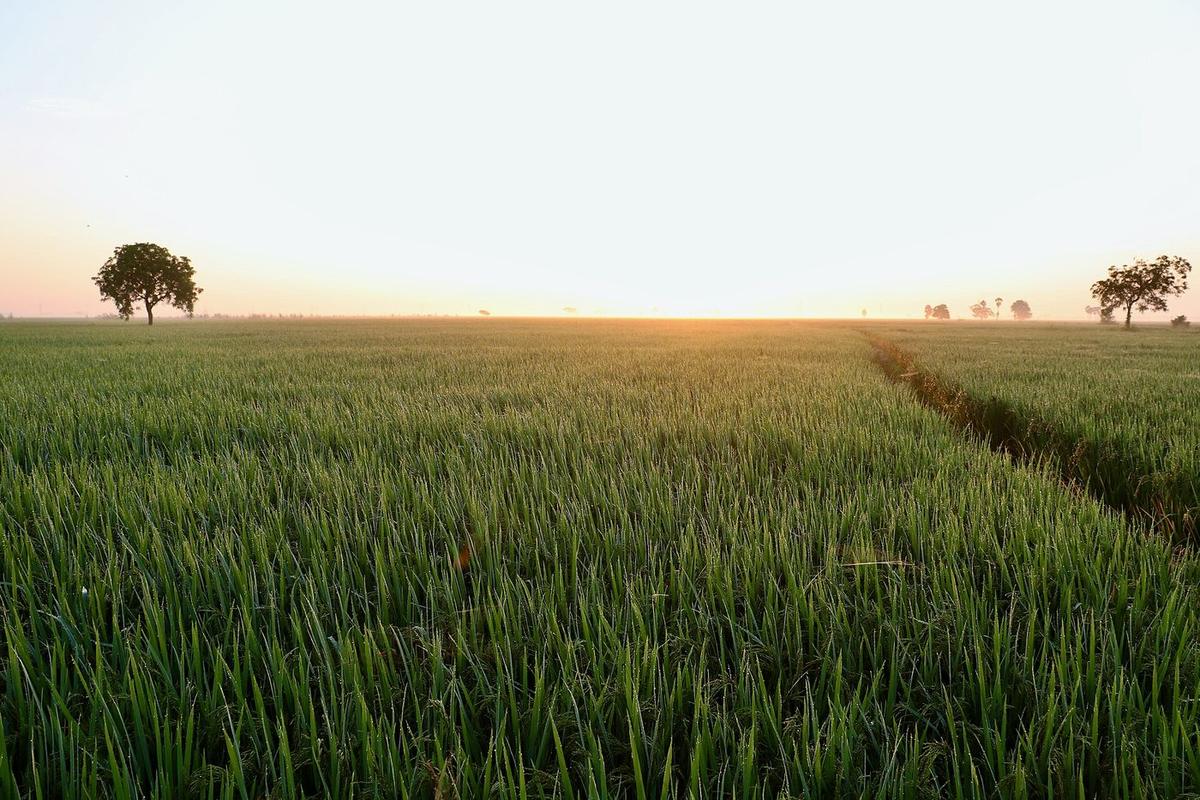
Photo: Paddy fields near Eluru, iMahesh, CC BY-SA 4.0

APPSC Group-I Mains 2025 · Paper IV
2025 Paper IV · Q7(a): model answer
Economy & Development of India and Andhra Pradesh · Growth for everyone (inclusive growth). Held in May 2025 (Notification 12/2023).
Critically examine the major poverty alleviation and employment generation programmes in India. How effective have they been in addressing rural and urban poverty ?
Syllabus: Growth for everyone (inclusive growth) · Poverty and job programmes
Poverty alleviationWage employmentSelf-employmentRural and urban poverty
India's anti-poverty strategy has moved from 'trickle-down' growth to direct wage-employment, self-employment, food-security and social-security programmes, now delivered largely through Direct Benefit Transfer. The World Bank estimates that extreme poverty (at its new US$3-a-day line) fell from 27.1% in 2011-12 to 5.3% in 2022-23, though vulnerability, informality and urban deprivation remain serious concerns.
1. Major programmes
- Wage employment: MGNREGA (2005) guaranteed 100 days of work on demand; since 1 July 2026 it has been replaced by the VB-G RAM G Act, 2025 (125 days; Centre–State funding of 60:40).
- Self-employment and livelihoods: IRDP (1978) gave way to SGSY (1999) and then DAY-NRLM (2011), which organises about 10 crore women in SHGs; PMEGP (2008) and Mudra (2015) fund micro-enterprises.
- Skilling: DDU-GKY for rural youth and PMKVY link the poor to wage jobs.
- Urban: DAY-NULM (2013), PM SVANidhi for street vendors (2020) and PMAY-Urban 2.0.
- Food and housing security: the NFSA, 2013 and PMGKAY (free grains for over 80 crore people), and PMAY-Gramin.
- 1978 IRDP: assets and credit for poor rural families
- 1999 SGSY: SHG-based self-employment
- 2005 MGNREGA: 100 days of guaranteed wage work
- 2011 DAY-NRLM (Aajeevika): federations of women's SHGs
- 2013 DAY-NULM for the urban poor; National Food Security Act
- 2015 PM Mudra Yojana: collateral-free micro-loans
- 2020 PM SVANidhi: working capital for street vendors
- 2025 VB-G RAM G Act: 125 days of work (in force 1 July 2026)
2. Effectiveness against rural poverty
- Safety net: MGNREGA cushioned rural households during droughts and the COVID-19 lockdown, raised rural wages and created water and land assets.
- Women's gains: women did over half of MGNREGA person-days, and NRLM SHGs improved women's incomes and access to credit.
- Outcome: at the World Bank's older US$2.15 line, rural extreme poverty fell from 18.4% to 2.8% between 2011-12 and 2022-23.
3. Effectiveness against urban poverty
- Outcome: urban extreme poverty fell from 10.7% to 1.1% over the same period (same line).
- Formal credit: PM SVANidhi brought street vendors into formal credit and digital payments.
- Gaps: informal jobs, slums, high rents and the lack of an urban employment guarantee leave many urban poor vulnerable.
4. Limitations
- Delivery problems: delayed and low wages, fake job cards and poor quality of assets.
- Exclusion: authentication failures and missing documents keep some of the poorest out.
- Weak graduation: skill–job mismatch and small, low-productivity enterprises mean many families stay just above the poverty line and slip back after shocks such as illness or crop failure.
AP angle: AP's Velugu/Indira Kranthi Patham (2000) SHG model inspired NRLM; NTR Bharosa pensions (₹27,719 crore, 2026-27 BE) and the P4 zero-poverty initiative (2025) target the poorest families.
Convergence of schemes, non-farm skills, urban livelihood support and outcome monitoring can end extreme poverty and reduce vulnerability.
The other choice in Q7
Answer either one in the exam.
- Q7(b)Discuss the significance of Social Welfare Schemes in promoting inclusive growth in India. Analyse the key objectives and features of some major social welfare schemes and evaluate their effectiveness in reaching vulnerable populations and reducing inequalities.
10 marks · Growth for everyone (inclusive growth) · Health, education, women's empowerment and welfare schemes
Every model answer on these pages is free to read. The Tool Kit adds four PDF books for Mains Papers I–IV: every previous question sorted by syllabus, with practice questions. It is in the ₹149 All-in-One Pass, with every previous paper of every exam on the site, practice quizzes, timed tests, mock test series and study books.
₹149 · valid for 12 months from the day you pay, on every exam · pay by UPI, card or net banking