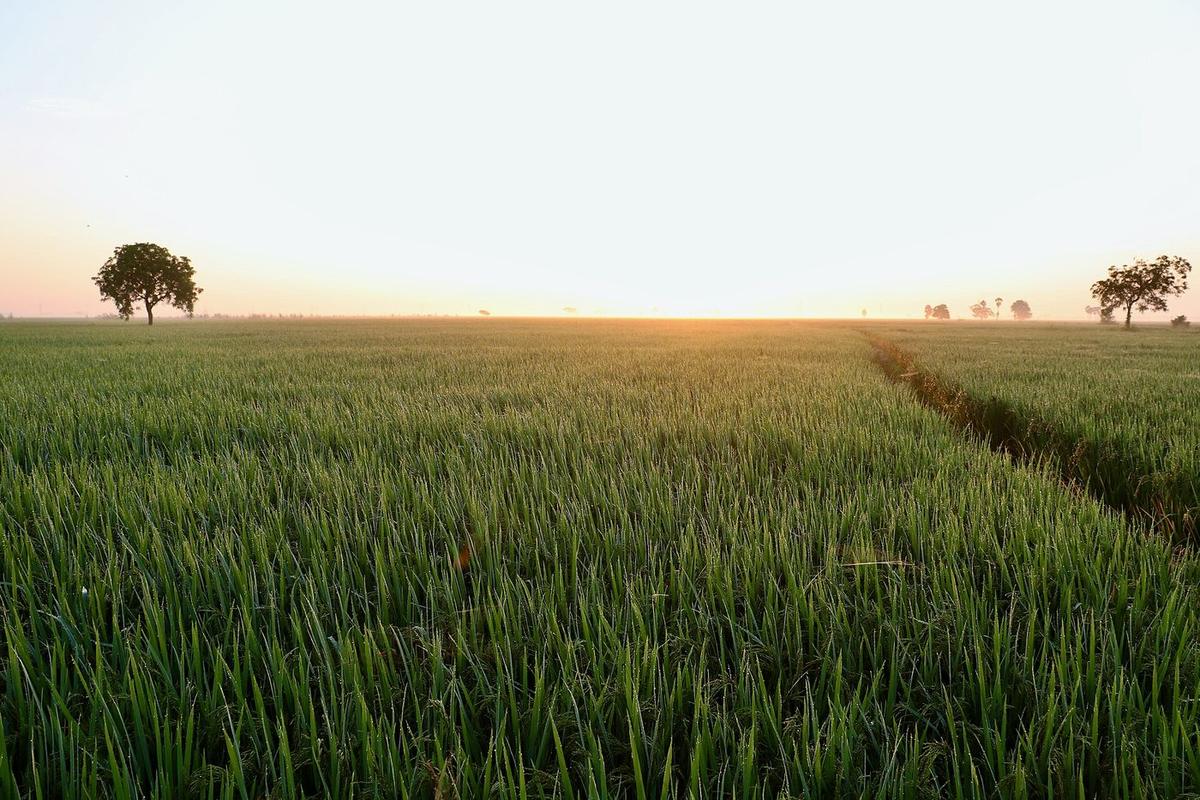
Photo: Paddy fields near Eluru, iMahesh, CC BY-SA 4.0

APPSC Group-I Mains 2025 · Paper IV
2025 Paper IV · Q10(b): model answer
Economy & Development of India and Andhra Pradesh · Farming and allied sectors (India and AP). Held in May 2025 (Notification 12/2023).
Discuss the role of agriculture in the economic development of Andhra Pradesh. How has agriculture contributed to the State Gross Domestic Product (SGDP) in recent years? Identify the key drivers influencing its performance.
Syllabus: Farming and allied sectors (India and AP) · AP agriculture: share in SGDP, irrigation, crops and schemes
Primary sectorGSVA shareIrrigationAllied sectors
Agriculture and allied activities are the backbone of Andhra Pradesh's economy and its largest employer. The primary sector (agriculture, allied activities and mining) formed about 35% of AP's GSVA in 2025-26 at current prices (MoSPI data), nearly double the all-India farm share. Unlike the national trend, its share has risen since 2011-12, driven mainly by fisheries, livestock and horticulture.
1. Role in AP's economic development
- Food security: the Godavari and Krishna deltas make AP a 'rice bowl'; it is also a major producer of chillies, tobacco, cotton, groundnut and oil palm.
- Allied sectors: AP leads India in fish and shrimp production, is a top egg producer and a leading horticulture State (mango, banana, papaya, tomato).
- Linkages: farming supplies raw material for agro-processing and seafood exports, and rural incomes create demand for industry and services.
- Livelihoods: most rural households depend on farming, so farm incomes largely decide rural poverty and welfare.
- Exports: shrimp, chillies, tobacco and fruits earn foreign exchange; marine products alone formed 18% of AP's exports in 2025-26.
Shaded: Godavari–Krishna delta districts (paddy and aquaculture)
Schematic map of Andhra Pradesh (2011 census district outlines), not to scale; for study only.
2. Contribution to SGDP in recent years
- Rising share: the primary sector's share of GSVA rose from 30.9% in 2011-12 to about 35.3% in 2025-26 (current prices), while the secondary sector's share fell from 28.2% to 21.6%.
- Growth engine: unlike the all-India pattern of a falling farm share, agriculture and allied activities remain a growth engine in AP.
- Allied-led growth: aquaculture, livestock and horticulture drive much of the growth, while crop output swings with the monsoon and prices.
- Volatility: because of agriculture's large weight, a single drought or cyclone year can noticeably slow the State's overall growth.
3. Key drivers of performance
- Irrigation: delta canal systems, the Pattiseema lift scheme, the Polavaram national project (₹6,105 crore in 2026-27 BE) and micro-irrigation.
- Support systems: Rythu Seva Kendras, Annadata Sukhibhava (₹20,000 a year including PM-KISAN), crop insurance and natural farming (APCNF).
- Markets: aquaculture exports, food processing and Rythu Bazaars.
- Constraints: drought-prone Rayalaseema, coastal cyclones, high farm debt (93.2% of farm households indebted, NSO SAS 2019), insecure tenancy, price volatility and US tariffs on shrimp.
Food processing, crop diversification, climate-resilient practices and secure tenancy can turn AP's farm strength into rising rural incomes, in line with Swarna Andhra@2047.
The other choice in Q10
Answer either one in the exam.
- Q10(a)What are the key drivers for the growth of the fisheries sector? What are the schemes undertaken by the fisheries department for the growth of this sector ?
10 marks · Farming and allied sectors (India and AP) · Fisheries, dairy, horticulture and the Rainbow revolution
Every model answer on these pages is free to read. The Tool Kit adds four PDF books for Mains Papers I–IV: every previous question sorted by syllabus, with practice questions. It is in the ₹149 All-in-One Pass, with every previous paper of every exam on the site, practice quizzes, timed tests, mock test series and study books.
₹149 · valid for 12 months from the day you pay, on every exam · pay by UPI, card or net banking