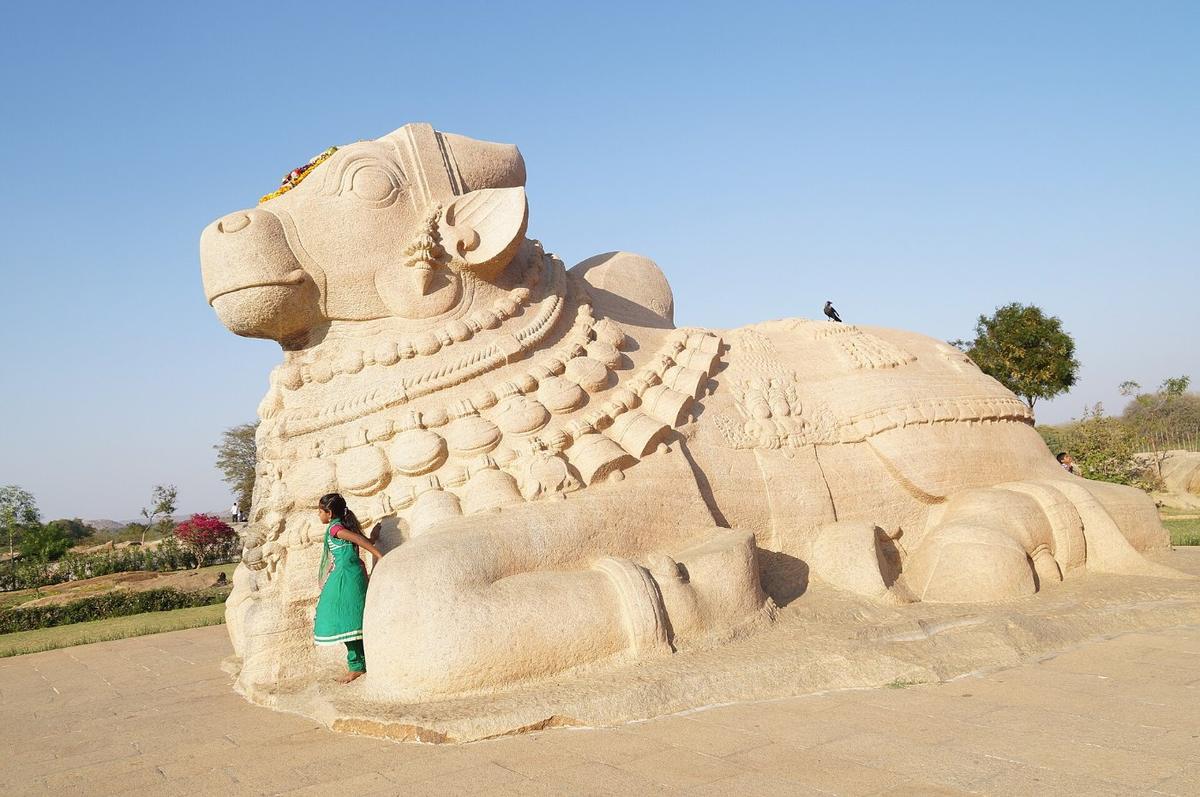
Photo: Lepakshi Nandi, Rahmanuddin, CC BY-SA 4.0

APPSC Group-I Mains 2025 · Paper II
2025 Paper II · Q2(a): model answer
History, Culture & Geography of India and Andhra Pradesh · Medieval India. Held in May 2025 (Notification 12/2023).
Describe the contributions of the Chalukya rulers of Kalyani in the fields of sculpture, architecture, and literature.
Syllabus: Medieval India · South Indian kingdoms (Pallavas, Chalukyas, Cholas and others)
Kalyani ChalukyasVesara styleSoapstone templesKannada literature
The Chalukyas of Kalyani (Western or Later Chalukyas, 973–1189 CE) were founded by Tailapa II, who overthrew the Rashtrakutas. Someshvara I made Kalyani (Basavakalyan, Bidar) the capital, and Vikramaditya VI (1076–1126) was the greatest ruler. Their two centuries of rule produced a refined temple style, often called the Kalyani Chalukya or Gadag style, and a golden age of Kannada and Sanskrit literature.
1. Architecture
- Bridge between styles: their temples link the early Chalukya (Badami) and Rashtrakuta traditions to the later Hoysala style.
- New material: fine-grained soapstone replaced sandstone, allowing sharper and more intricate work.
- Plans and towers: stepped and star-shaped (stellate) plans, vesara towers mixing Dravida and Nagara features, and lathe-turned, bell-shaped pillars.
- Major temples: the Mahadeva temple at Itagi (1112), praised as "Devalaya Chakravarti" (emperor among temples); the Kasivisvesvara temple and the Brahma Jinalaya (built by Attimabbe) at Lakkundi; the Doddabasappa temple at Dambal (stellate plan); the Siddhesvara temple at Haveri; and the Trikuteshwara temple at Gadag.
- Stepwells: ornamental stepped tanks at Lakkundi show their skill in civic architecture too.
2. Sculpture
- Ornate doorways and screens: richly carved doorframes, pierced window screens, makara toranas and kirtimukha (face of glory) motifs.
- Figure sculpture: bracket figures of dancers (madanikas) and deities placed in miniature shrines on the outer walls.
- Delicacy: the soft soapstone allowed jewellery-like detail, a delicacy later perfected by the Hoysalas.
3. Literature
- Kannada: Ranna (Gadayuddha, Ajitapurana), one of the "three gems" of Kannada poetry; Nagavarma II (Kavyavalokana, Karnataka Bhashabhushana); Durgasimha's Kannada Panchatantra.
- Sanskrit history and law: Bilhana's Vikramankadevacharita, a biography of Vikramaditya VI; Vijnaneshwara's Mitakshara, a commentary on the Yajnavalkya Smriti that became the basis of Hindu inheritance law in most of India.
- Encyclopaedic works: Someshvara III's Manasollasa covers polity, arts, music, food and sports.
- Religious ferment: the Vachana movement of Basavanna arose at Kalyani soon after, under the Kalachuri Bijjala, a former Chalukya feudatory.
AP angle: The Kalyani Chalukyas fought the Cholas for control of Vengi (coastal Andhra), and the Kakatiyas began as their feudatories; Kakatiya temples such as the Thousand Pillar temple at Hanamkonda carry forward their pillared, ornate style.
The Kalyani Chalukyas thus left a refined architectural idiom that shaped Hoysala and Kakatiya art, and a body of Kannada and Sanskrit learning; their Mitakshara shaped Hindu inheritance law into modern times.
The other choice in Q2
Answer either one in the exam.
- Q2(b)Describe the characteristics of the Sufi movement and assess its impact on Indian culture.
10 marks · Medieval India · Bhakti and Sufi movements; regional languages and arts
Every model answer on these pages is free to read. The Tool Kit adds four PDF books for Mains Papers I–IV: every previous question sorted by syllabus, with practice questions. It is in the ₹149 All-in-One Pass, with every previous paper of every exam on the site, practice quizzes, timed tests, mock test series and study books.
₹149 · valid for 12 months from the day you pay, on every exam · pay by UPI, card or net banking