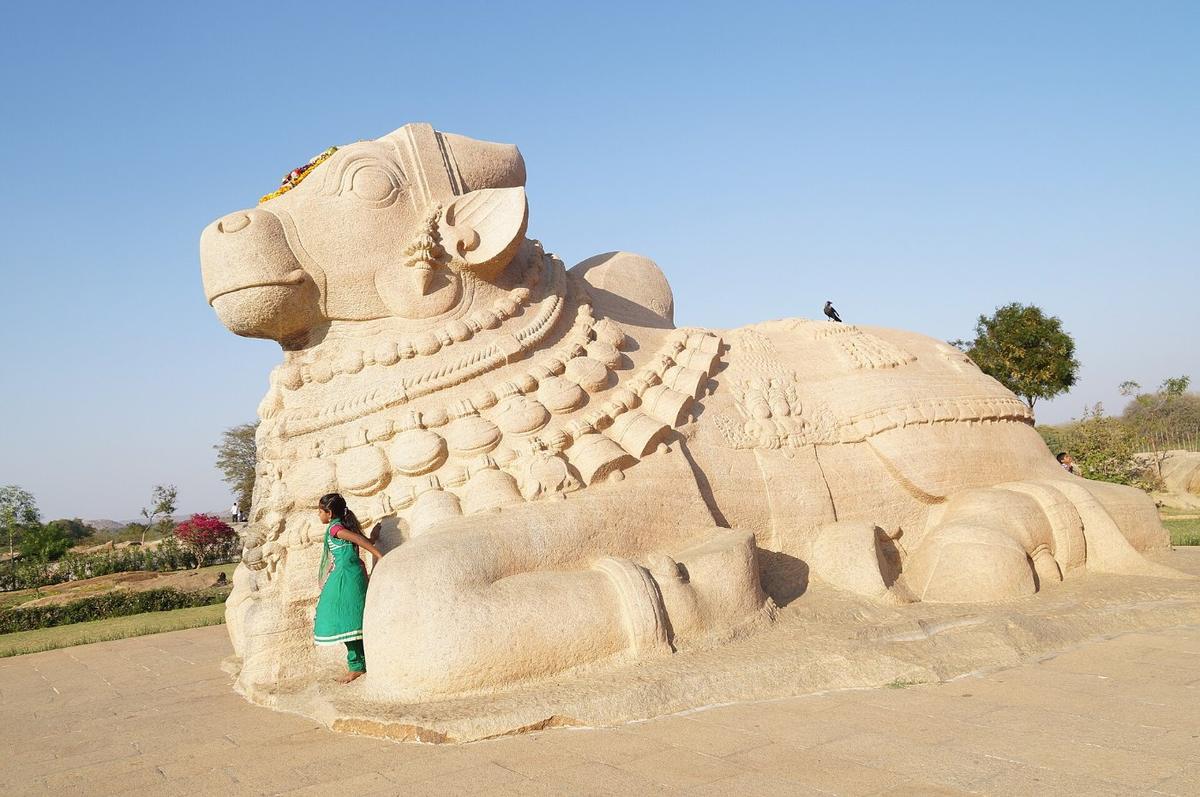
Photo: Lepakshi Nandi, Rahmanuddin, CC BY-SA 4.0

APPSC Group-I Mains 2025 · Paper II
2025 Paper II · Q11(b): model answer
History, Culture & Geography of India and Andhra Pradesh · Land, Climate, Rivers and Natural Resources. Held in May 2025 (Notification 12/2023).
Examine the features and importance of the major landforms of Andhra Pradesh with special reference to the Coastal Plains, Eastern Ghats, and Deccan Plateau.
Syllabus: Land, Climate, Rivers and Natural Resources · Landforms of India and Andhra Pradesh
Coastal PlainsEastern GhatsDeccan PlateauRegional planning
Andhra Pradesh's relief has three belts running roughly north-east to south-west: the Coastal Plains along the Bay of Bengal, the discontinuous Eastern Ghats, and the Deccan Plateau of Rayalaseema and Palnadu in the west. Each belt has its own rocks, soils, water and vegetation, and therefore its own pattern of farming, industry, settlement and hazards, which explains much of AP's regional diversity.
1. Coastal Plains
- Features: a 1,053 km coastline, widest in the Godavari–Krishna deltas; alluvial soils, beaches, Kolleru lake, Pulicat lagoon and the Coringa mangroves; the oil- and gas-rich Krishna–Godavari (KG) basin offshore and onshore.
- Agriculture and fisheries: the deltas are the "rice bowl" of AP, and the plains make AP India's leading producer of fish and shrimp.
- Trade and industry: ports at Visakhapatnam, Kakinada, Gangavaram and Krishnapatnam; the Sriharikota spaceport; beach-sand minerals and coastal tourism.
- Challenges: dense population and major cities, but high exposure to cyclones, storm surges and coastal erosion.
2. Eastern Ghats
- Features: discontinuous, eroded hills of ancient khondalites and charnockites, with the Araku–Paderu hills in the north and the Nallamala, Velikonda, Seshachalam and Lankamala ranges in the south; the Godavari cuts through them at Papikondalu.
- Ecology: AP's main forests and biodiversity, including the Nagarjunasagar–Srisailam Tiger Reserve, the Seshachalam Biosphere Reserve and endemic red sanders.
- Economy and people: home of tribal communities; bauxite deposits; Araku coffee (GI tag); hydropower at Sileru and Machkund; pilgrimage and tourism at Tirumala, Srisailam and Araku.
- Water: the hills feed streams such as the Sileru (in the Godavari basin), and their forests protect river catchments.
3. Deccan Plateau
- Features: granite-gneiss uplands and the Cuddapah basin; red and black soils; low, erratic rainfall; tank and groundwater irrigation.
- Agriculture: dry crops (groundnut, millets, pulses) and horticulture (mango, sweet orange, tomato).
- Minerals and energy: limestone for cement, barytes at Mangampeta and uranium at Tummalapalle; large solar parks in Kurnool and Ananthapuramu; industrial nodes at Orvakal and Kopparthy.
- Challenges: drought, groundwater depletion and land degradation.
| Feature | Coastal Plains | Eastern Ghats | Deccan Plateau |
|---|---|---|---|
| Rocks and soils | Alluvium, coastal sands | Khondalite, charnockite | Granite-gneiss; red and black soils |
| Water | Delta canals | Hill streams, hydropower | Tanks, borewells |
| Economy | Rice, aquaculture, ports | Forests, coffee, bauxite, pilgrimage | Groundnut, horticulture, minerals, solar |
| Main risk | Cyclones, storm surges | Forest loss, mining pressure | Drought |
Shaded: Rayalaseema, largely on the Deccan Plateau
Schematic map of Andhra Pradesh (2011 census district outlines), not to scale; for study only.
The three landforms complement one another: the coast feeds and trades, the Ghats conserve water and biodiversity, and the plateau offers minerals and space for industry and renewable energy. Region-specific planning is therefore essential.
The other choice in Q11
Answer either one in the exam.
- Q11(a)Explain the physical features of India and Andhra Pradesh, especially the major landforms and geographical characteristics.
10 marks · Land, Climate, Rivers and Natural Resources · Landforms of India and Andhra Pradesh
Every model answer on these pages is free to read. The Tool Kit adds four PDF books for Mains Papers I–IV: every previous question sorted by syllabus, with practice questions. It is in the ₹149 All-in-One Pass, with every previous paper of every exam on the site, practice quizzes, timed tests, mock test series and study books.
₹149 · valid for 12 months from the day you pay, on every exam · pay by UPI, card or net banking