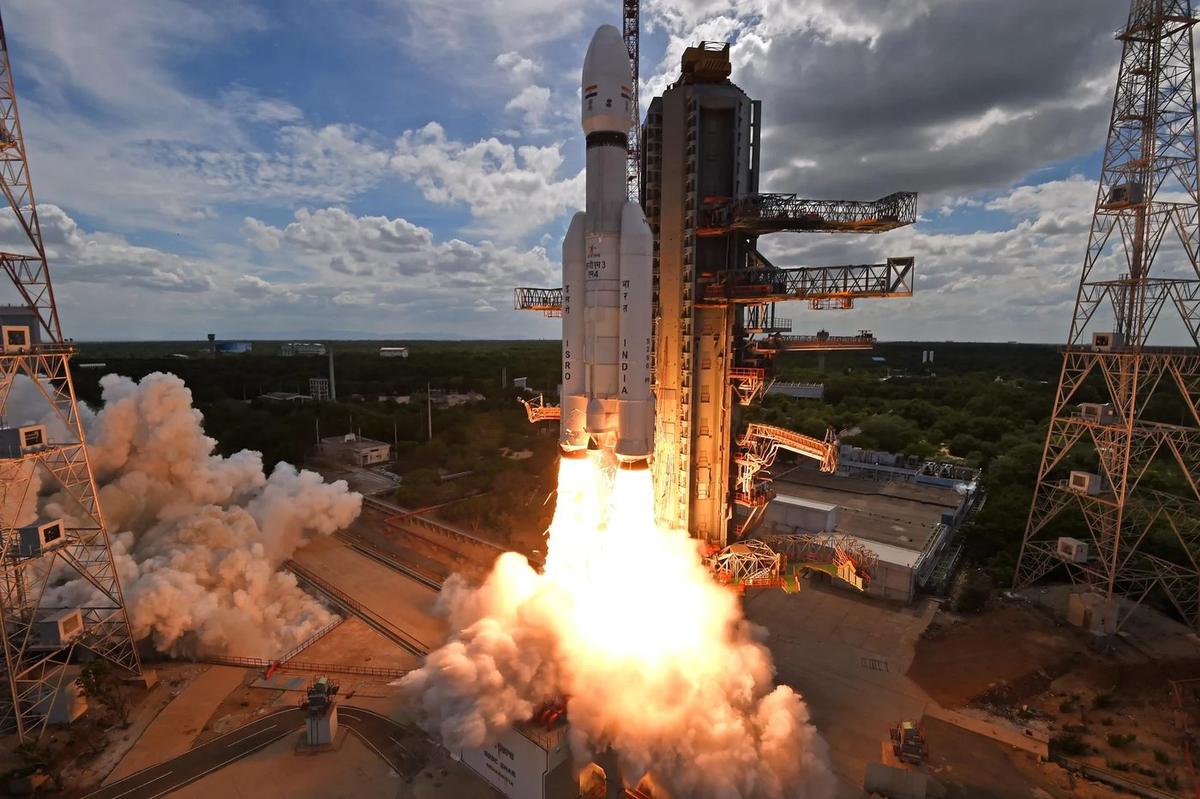
Photo: LVM3 launch, Sriharikota, ISRO, GODL-India

APPSC Group-I Mains 2023 · Paper V
2023 Paper V · Q5(b): model answer
Science, Technology & Environmental Issues · Ecology, biodiversity and natural resources. Held in June 2023 (Notification 28/2022).
What is meant by open cast mining? Discuss the impacts of open cast mining on environment and solutions to overcome them. Add a note on the importance of post mining reclamation.
Syllabus: Ecology, biodiversity and natural resources · Natural resources, forests and mining
Open-cast miningOverburdenEnvironmental impactsMine reclamation
Open-cast (surface) mining extracts minerals lying close to the surface by removing the soil and rock above them, the overburden, to create large stepped pits. It is used for coal, iron ore, bauxite, limestone and other bulk minerals; about 96% of India's coal in 2023-24 came from open-cast mines (Ministry of Coal). It is cheaper, safer for workers and recovers more of the deposit than underground mining, but leaves a heavy environmental footprint.
1. Impacts on the environment
- Land and forests: clearing destroys forests, habitats and elephant corridors (as feared in Chhattisgarh's Hasdeo Arand), and overburden dumps bury still more land.
- Air: blasting, hauling and crushing raise dust that causes respiratory disease and silicosis; coal fires, as at Jharia, release toxic gases.
- Water: deep pits cut aquifers and lower water tables, while acid mine drainage and silt pollute streams.
- Soil and landscape: fertile topsoil is lost, erosion rises, unstable dumps slide, and abandoned pits become hazards.
- Noise and people: blasting shakes houses, and Adivasi communities in Fifth Schedule areas lose land and livelihoods.
2. Solutions to overcome them
- Better planning: environmental impact assessment before approval, Gram Sabha consent under PESA and the Forest Rights Act, and no mining in dense forests and wildlife corridors.
- Pollution control: water sprinklers and fog cannons, covered conveyors, green belts and controlled blasting.
- Water management: garland drains, settling ponds, and treatment and reuse of mine water for nearby villages and farms.
- Benefit sharing: District Mineral Foundations receive 30% (older leases) or 10% (auctioned leases) of royalty for health, water and livelihoods under PMKKKY.
- Monitoring: satellite and drone surveillance against illegal mining, and environmental compensation for violations.
3. Importance of post-mining reclamation
Reclamation restores mined land to a safe, stable and productive state.
- Ecological recovery: backfilling pits, spreading stored topsoil and planting native species bring back vegetation, soil life and wildlife.
- Economic and social use: reclaimed land can return to farming, forestry, fish ponds, eco-parks or solar farms, and pit lakes store water; Coal India companies have turned exhausted pits into eco-parks and water bodies.
- Legal duty: progressive and final mine closure plans with financial assurance are mandatory, and coal mines keep an escrow fund for closure.
- Climate and safety: new forests store carbon, and stabilised dumps prevent landslides and fires.
Schematic map of Andhra Pradesh (2011 census district outlines), not to scale; for study only.
AP angle: AP's open-cast mining is mainly of barytes at Mangampet (the world's largest single deposit), limestone for cement in the Kurnool–Kadapa–Anantapur belt (Tadipatri) and Palnadu (Piduguralla), and granite at Chimakurthi; the Eastern Ghats bauxite lease was cancelled in 2019 after Adivasi opposition.
Open-cast mining is unavoidable for India's energy and infrastructure needs, but mine, restore and return must be the rule: progressive reclamation and fair benefit-sharing can make mining sustainable.
The other choice in Q5
Answer either one in the exam.
- Q5(a)Climate change is a global concern which needs urgent intervention to combat it - Explain why. Discuss how climate smart agriculture mitigates the devastating effects of climate change.
10 marks · Pollution, waste and climate change · Climate change and sustainable development
Every model answer on these pages is free to read. The Tool Kit adds four PDF books for Mains Papers I–IV: every previous question sorted by syllabus, with practice questions. It is in the ₹149 All-in-One Pass, with every previous paper of every exam on the site, practice quizzes, timed tests, mock test series and study books.
₹149 · valid for 12 months from the day you pay, on every exam · pay by UPI, card or net banking