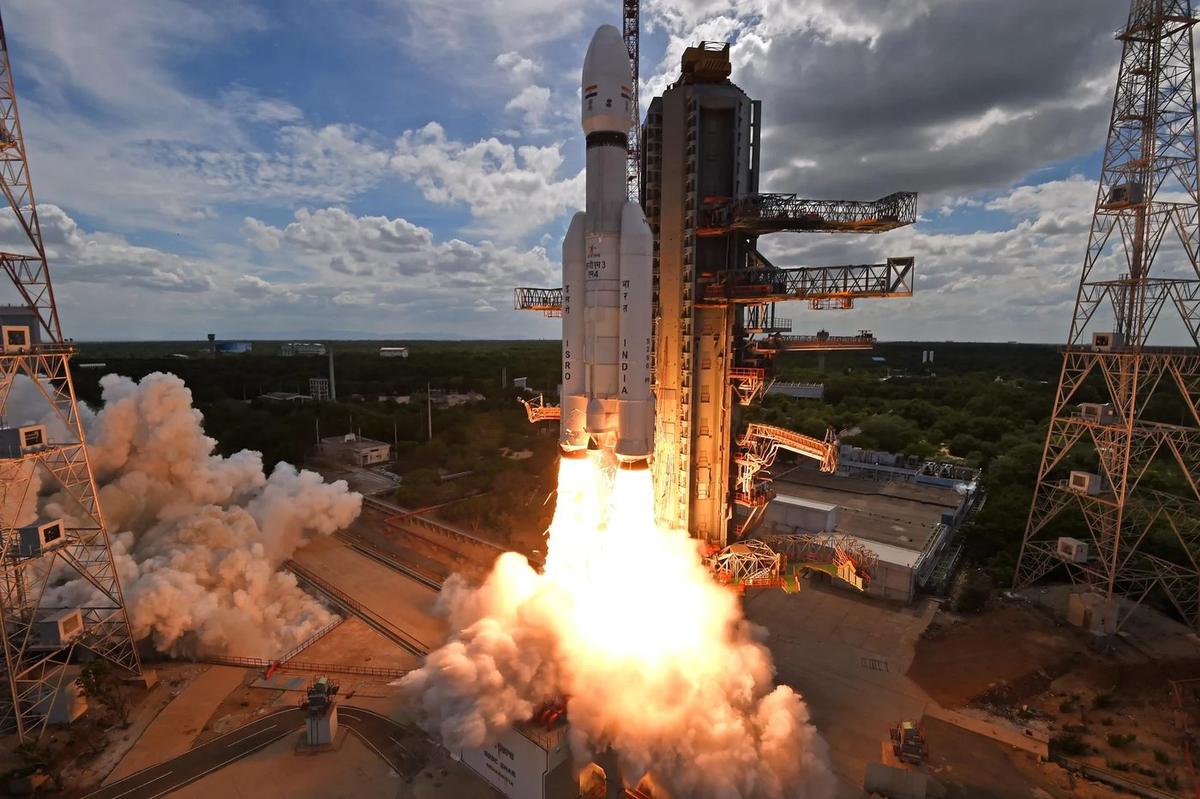
Photo: LVM3 launch, Sriharikota, ISRO, GODL-India

APPSC Group-I Mains 2023 · Paper V
2023 Paper V · Q15(a): model answer
Science, Technology & Environmental Issues · Pollution, waste and climate change. Held in June 2023 (Notification 28/2022).
Discuss why India did not sign the COP26 pledge to stop deforestation and cut methane gas emission by 2030.
Syllabus: Pollution, waste and climate change · Climate change and sustainable development
COP26 pledgesGlobal Methane PledgeForests and Land Use DeclarationClimate justice
At COP26 (Glasgow, 2021), over 100 countries joined two voluntary pledges: the Glasgow Leaders' Declaration on Forests and Land Use, to halt and reverse forest loss and land degradation by 2030, and the Global Methane Pledge, to cut global methane emissions at least 30% below 2020 levels by 2030. India signed neither. Instead it announced its own Panchamrit, including 500 GW of non-fossil capacity by 2030 and net zero by 2070.
1. Why India stayed out of the methane pledge
- Farm-based methane: most of India's methane comes from livestock (enteric fermentation) and flooded paddy fields, the base of food security and of the incomes of small and marginal farmers.
- Survival versus luxury emissions: methane from a poor farmer's cattle or rice field is not comparable to leaks from oil and gas operations in rich countries.
- Shifting the burden: the pledge moves attention from carbon dioxide, the long-lived gas emitted mostly by developed countries, to a short-lived gas, against the principle of common but differentiated responsibilities (CBDR-RC).
- Livelihoods and trade: India has about 536 million livestock (2019 census) and is the world's largest milk producer (247.87 million tonnes in 2024-25), so targets could hurt rural incomes and invite trade pressure.
- No sectoral targets: India's NDC sets an economy-wide intensity goal and avoids sector-specific obligations, especially in agriculture.
2. Why India stayed out of the forest declaration
- Trade linkage: the text tied forest goals to trade and commodity policies; India opposes bringing trade, a WTO matter, into climate pledges and fears non-tariff barriers.
- Development space: a fixed 2030 halt to forest loss could restrict land for roads, railways, power lines, mining and housing that a developing country still needs.
- Already a net gainer: forest and tree cover is about 25% of India's area (ISFR 2023) and rising, and the NDC promises an additional carbon sink of 2.5–3 billion tonnes of CO₂ equivalent by 2030 (3.5–4 billion tonnes by 2035).
| Pledge | Commitment | India's concern | India's own path |
|---|---|---|---|
| Global Methane Pledge | Cut methane 30% below 2020 by 2030 | Hits small farmers; shifts focus from CO₂ | Harit Dhara cattle feed, biogas (GOBARdhan, SATAT), better paddy practices |
| Forests and Land Use Declaration | Halt and reverse forest loss by 2030 | Trade linkage; limits land for development | Green India Mission, CAMPA, 2.5–3 billion tonne sink |
3. Assessment
- Criticism: cutting methane is the fastest way to slow near-term warming, and staying out may weaken India's climate diplomacy.
- India's answer: voluntary action without binding sector targets: direct-seeded rice and alternate wetting and drying in paddy, anti-methane feed, biogas from dung, compressed biogas plants, and afforestation under the Green India Mission and CAMPA.
- Ambition remains: NDC 3.0 (March 2026) targets a 47% cut in emissions intensity and 60% non-fossil capacity by 2035.
AP angle: paddy in the Godavari–Krishna deltas and the livestock incomes of AP's small farmers would bear any methane target; natural farming (APCNF) and biogas from dung are better voluntary paths.
India's refusal reflects climate justice and food security, not climate denial; finance-backed, voluntary action on methane and forests fits its path to net zero by 2070.
The other choice in Q15
Answer either one in the exam.
- Q15(b)What are Gene Sanctuaries? How do they protect the genetic diversity of plants in India?
10 marks · Ecology, biodiversity and natural resources · Ecology and biodiversity
Every model answer on these pages is free to read. The Tool Kit adds four PDF books for Mains Papers I–IV: every previous question sorted by syllabus, with practice questions. It is in the ₹149 All-in-One Pass, with every previous paper of every exam on the site, practice quizzes, timed tests, mock test series and study books.
₹149 · valid for 12 months from the day you pay, on every exam · pay by UPI, card or net banking