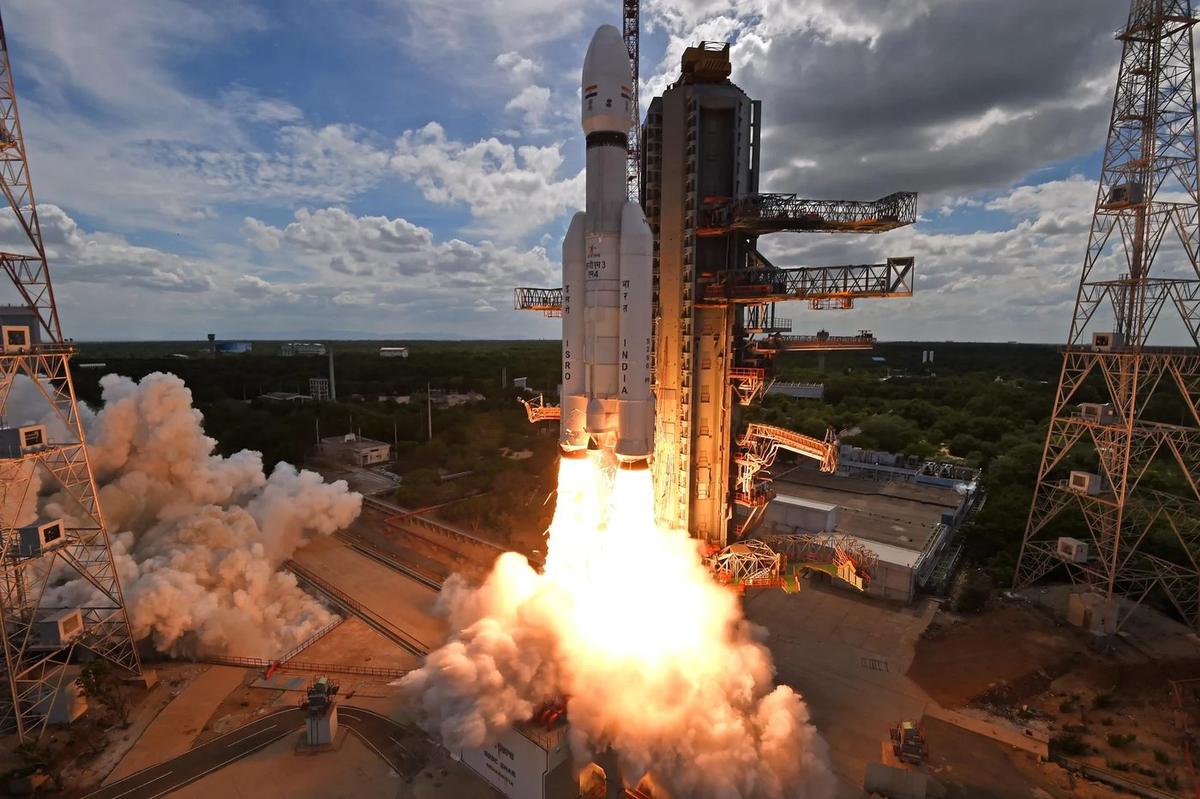
Photo: LVM3 launch, Sriharikota, ISRO, GODL-India

APPSC Group-I Mains 2023 · Paper V
2023 Paper V · Q12(b): model answer
Science, Technology & Environmental Issues · Pollution, waste and climate change. Held in June 2023 (Notification 28/2022).
Discuss how technology translated into a medium for the destruction of environment through human exploitation.
Syllabus: Pollution, waste and climate change · Climate change and sustainable development
Technology–environment paradoxOver-exploitationRebound effectSustainable technology
Technology multiplies human power over nature. Since the Industrial Revolution, fossil-fuel engines, machines and chemicals have raised living standards, but they have also let people extract, burn and dump on a scale nature cannot absorb. Carbon dioxide in the air reached 423.9 ppm in 2024 (WMO), about 152% of the pre-industrial level. The fault lies less in technology itself than in human exploitation: technology used for profit and consumption without limits.
1. How technology became a medium of destruction
| Technology | How it is exploited | Environmental damage |
|---|---|---|
| Fossil-fuel engines and power plants | Cheap energy for mass production and transport | Greenhouse gases, air pollution |
| Heavy mining machinery | Open-cast mines, mechanised sand mining | Lost forests and topsoil, falling water tables |
| Green Revolution inputs, tube wells | Overuse of urea, pesticides and groundwater | Degraded soil, depleted aquifers, residues |
| Plastics and electronics | Use-and-throw consumption | Microplastics; 17.78 lakh tonnes of e-waste (2023-24) |
| Trawlers, chainsaws, big dams | Over-fishing, logging, river control | Fish decline, deforestation, delta erosion |
- Scale and speed: machines let a few people clear forests, level hills or empty aquifers in years; ISRO's atlas found 97.85 million ha (29.7% of India) degraded in 2018-19.
- Rebound (Jevons) effect: efficiency lowers cost, which raises consumption, so total resource use often grows.
- Industrial hazards: chemical technology without a safety culture causes disasters, from Bhopal (1984) to the LG Polymers styrene leak at Visakhapatnam (2020), which killed at least 12 people.
- Externalised costs: polluters keep the profits while society bears the health and clean-up costs.
- New frontiers: energy- and water-hungry data centres, space debris and fast-growing e-waste.
2. Human drivers behind the misuse
- Consumerism and growth at any cost: GDP is counted, but the loss of forests, soil and clean air is not.
- Short-term profit and weak enforcement: under-staffed pollution control boards and post-facto clearances.
- Inequality: the richest consume and emit far more, while the poor live closest to mines, dumps and factories.
- Population and demand: more people and rising incomes need more land, water and energy, multiplying the impact of every machine.
3. Andhra Pradesh angle
Aquaculture technology turned parts of Kolleru Lake and delta paddy fields into fish and shrimp ponds, causing salinity and pollution; about 1,500 illegal tanks were removed in 2006, but many returned. The LG Polymers leak showed the cost of poor industrial safety.
4. Technology as the cure
- Clean technology: about 299 GW of renewable capacity (September 2026), electric mobility and green hydrogen.
- Smarter farming: drip irrigation, precision and natural farming, and bio-pesticides.
- Monitoring: satellites track forest loss, mining and pollution in near real time.
- Governance: EIA, the precautionary and polluter-pays principles, extended producer responsibility, the circular economy and Mission LiFE.
Technology is a double-edged sword: the same tools that degraded the planet can heal it if guided by regulation, restrained consumption and the goal of sustainable development.
The other choice in Q12
Answer either one in the exam.
- Q12(a)What is coastal erosion? Discuss factors causing coastal erosion. Why is erosion dominant in the Eastern coast than the Western coast in India?
10 marks · Environmental laws, EIA and disaster management · Environmental laws, EIA and disaster management
Every model answer on these pages is free to read. The Tool Kit adds four PDF books for Mains Papers I–IV: every previous question sorted by syllabus, with practice questions. It is in the ₹149 All-in-One Pass, with every previous paper of every exam on the site, practice quizzes, timed tests, mock test series and study books.
₹149 · valid for 12 months from the day you pay, on every exam · pay by UPI, card or net banking