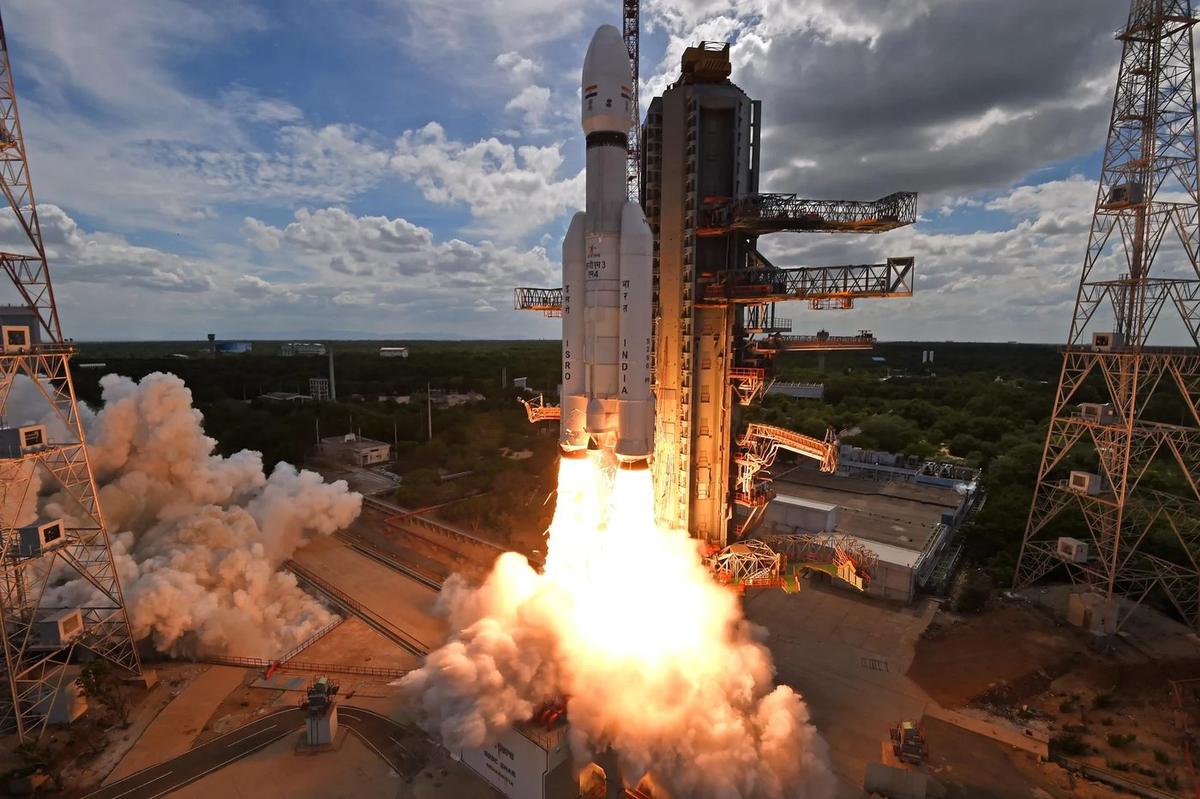
Photo: LVM3 launch, Sriharikota, ISRO, GODL-India

APPSC Group-I Mains 2023 · Paper V
2023 Paper V · Q11(b): model answer
Science, Technology & Environmental Issues · Energy: conventional and renewable. Held in June 2023 (Notification 28/2022).
What is the current scenario of renewable power generation in India? Discuss the factors responsible for the growing focus and shift towards Renewable energy.
Syllabus: Energy: conventional and renewable · Renewable energy
Renewable capacityNon-fossil shareEnergy securityPanchamrit
India's power sector is in the middle of an energy transition. On 30 September 2026, installed renewable capacity stood at 299.25 GW (MNRE), led by 171 GW of solar, and non-fossil sources crossed half of installed capacity in June 2025, five years ahead of the 2030 target in India's NDC. India is now third in the world in renewable capacity (IRENA 2026), after China and the USA.
1. Current scenario
- Solar boom: 125.65 GW ground-mounted and 33.41 GW rooftop; a record 55.3 GW of non-fossil capacity was added in 2025-26, of which 44.61 GW was solar.
- Capacity is not generation: non-fossil sources gave only 29.2% of electricity in 2025-26, because solar works only by day and wind is seasonal; coal still dominates generation.
- Leading states: Rajasthan in solar (45.1 GW), Gujarat in wind and total renewables; India is fourth in the world in wind.
- Targets: 500 GW of non-fossil capacity by 2030 and 60% non-fossil capacity by 2035 (NDC 3.0).
2. Factors behind the shift to renewables
- Climate commitments: the Panchamrit (COP26, 2021), net zero by 2070, and NDCs that cut the emissions intensity of GDP by 45% by 2030 and 47% by 2035 (from 2005).
- Energy security: India imports nearly 90% of its crude oil and some of its coal; domestic sun and wind, with electric vehicles and green hydrogen, cut import bills and exposure to price shocks.
- Falling costs: solar is now among the cheapest sources of new power, and module and battery prices keep falling.
- Policy support: solar parks, PM-KUSUM (about 25 lakh pumps and 13.1 GW by March 2026), PM Surya Ghar (over 50 lakh homes by August 2026), Green Energy Corridors, and PLI with the ALMM list, which raised module-making capacity to about 172 GW.
- Health, jobs and diplomacy: cleaner air, manufacturing and installation jobs, and leadership through the International Solar Alliance.
- 2015 International Solar Alliance launched with France
- 2021 Panchamrit: 500 GW non-fossil by 2030; net zero by 2070
- June 2025 Non-fossil sources pass 50% of installed capacity
- Sept 2026 Renewable capacity reaches 299.25 GW
- 2035 NDC 3.0 goal: 60% non-fossil capacity
3. Challenges
- Intermittency: a midday solar surplus and an evening peak force curtailment; storage and flexible plants are needed.
- Grid and finance: transmission lags new plants, and weak DISCOM finances delay payments.
- Land and imports: land conflicts, and dependence on imported polysilicon, wafers and critical minerals.
AP angle: Andhra Pradesh's Integrated Clean Energy Policy 2024 targets 78.5 GW of solar, 35 GW of wind, 22 GW of pumped storage and 1.5 MMTPA of green hydrogen. The State hosts the Ananthapuram-I (1,500 MW) and Kurnool (1,000 MW) solar parks, Greenko's 1,680 MW Pinnapuram pumped-storage project and NTPC's green hydrogen hub at Pudimadaka.
India has achieved scale; storage, stronger grids and domestic manufacturing must now turn capacity into reliable, round-the-clock clean power.
The other choice in Q11
Answer either one in the exam.
Every model answer on these pages is free to read. The Tool Kit adds four PDF books for Mains Papers I–IV: every previous question sorted by syllabus, with practice questions. It is in the ₹149 All-in-One Pass, with every previous paper of every exam on the site, practice quizzes, timed tests, mock test series and study books.
₹149 · valid for 12 months from the day you pay, on every exam · pay by UPI, card or net banking