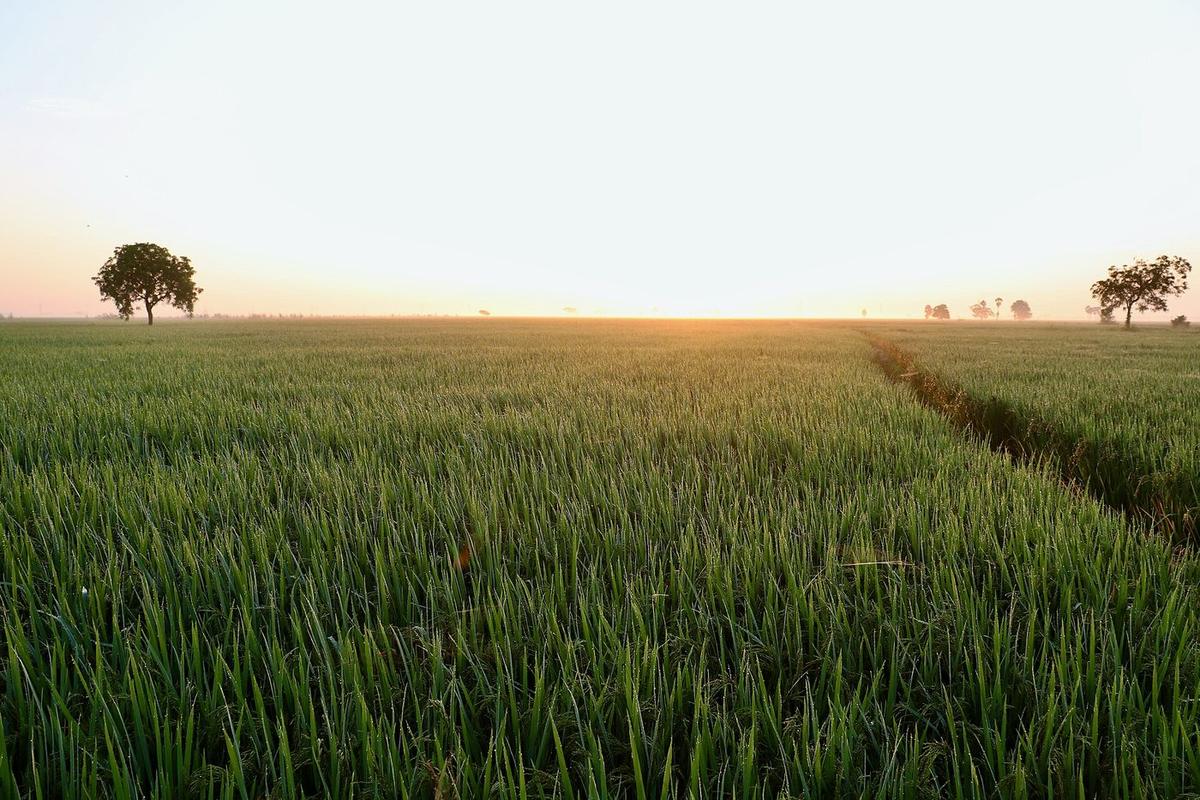
Photo: Paddy fields near Eluru, iMahesh, CC BY-SA 4.0

APPSC Group-I Mains 2023 · Paper IV
2023 Paper IV · Q15(a): model answer
Economy & Development of India and Andhra Pradesh · Farming and allied sectors (India and AP). Held in June 2023 (Notification 28/2022).
Explain the impact of rainbow revolution in India. Discuss the scope for Industrial transformation in Indian agriculture.
Syllabus: Farming and allied sectors (India and AP) · Fisheries, dairy, horticulture and the Rainbow revolution
Rainbow RevolutionAllied sectorsFood processingAgro-industrial value chains
The Rainbow Revolution, envisaged in the National Agriculture Policy 2000, seeks holistic growth across all farm sub-sectors rather than foodgrains alone. It brings together earlier colour-coded revolutions in crops, milk, fish, oilseeds, horticulture and poultry, aiming at diversification, nutrition security and higher farm incomes.
| Colour | Sector | Landmark |
|---|---|---|
| Green | Foodgrains | High-yielding varieties, mid-1960s |
| White | Milk | Operation Flood (1970) |
| Blue | Fisheries | PMMSY (2020) |
| Yellow | Oilseeds | Technology Mission on Oilseeds (1986) |
| Golden | Horticulture, honey | MIDH (2014-15) |
| Silver | Eggs and poultry | Commercial poultry growth |
1. Impact of the Rainbow Revolution
- Food security: a record foodgrain output of over 350 million tonnes (2024-25) supports free grain under PMGKAY for about 81 crore people.
- Milk: India is the largest producer (about 239 million tonnes, 2023-24), thanks to Operation Flood and cooperatives.
- Fish: India is the second-largest producer (about 184 lakh tonnes, 2023-24), now led by inland aquaculture.
- Horticulture and eggs: horticulture output exceeds foodgrains; India is second in fruits and vegetables and among the top egg producers.
- Incomes and nutrition: livestock and fisheries grow faster than crops, diversifying incomes for small and landless farmers and women.
- Exports: India is the largest rice exporter and a major exporter of marine products and spices.
- Gaps: over half of edible-oil needs are still imported; groundwater and soil depletion and regional imbalance persist.
AP angle: Andhra Pradesh leads in fish and shrimp, is the largest oil-palm grower, a leading egg producer and a major chilli producer (Guntur), with strong horticulture: a model 'Rainbow' State.
2. Scope for industrial transformation of agriculture
- Food processing: PM Kisan SAMPADA Yojana, PLI for food processing and PMFME for micro units (One District One Product), since only a small share of fruits and vegetables is processed.
- Value chains: 10,000 FPOs, cold chains, Operation Greens and the Agriculture Infrastructure Fund link farms to factories.
- Agri-tech: the Digital Agriculture Mission and AgriStack (2024), drones, precision farming and agri start-ups.
- Bio-economy: ethanol from cane and grain (E20 achieved in 2025), bio-fertilisers and the BioE3 policy.
- Allied industries: dairy and poultry are already organised like industries, and feed, vaccines, packaging and processing create non-farm rural jobs.
- Constraints: small holdings, weak cold chains, low processing levels and limited credit for agro-entrepreneurs slow this transformation.
- AP example: the AP Food Processing Policy (2024-29), aqua-processing units, spice parks and port-linked agri exports.
The next phase is moving from production to processing and markets, sustainably, so that farmers capture more of the value chain.
The other choice in Q15
Answer either one in the exam.
- Q15(b)Explain the regulation of agricultural markets in India. Discuss the scope of farmer-market linkages with a special mention of the e-National Agriculture Market in India.
10 marks · Farming and allied sectors (India and AP) · Farm markets, prices and farm policy (MSP, APMC, e-NAM)
Every model answer on these pages is free to read. The Tool Kit adds four PDF books for Mains Papers I–IV: every previous question sorted by syllabus, with practice questions. It is in the ₹149 All-in-One Pass, with every previous paper of every exam on the site, practice quizzes, timed tests, mock test series and study books.
₹149 · valid for 12 months from the day you pay, on every exam · pay by UPI, card or net banking