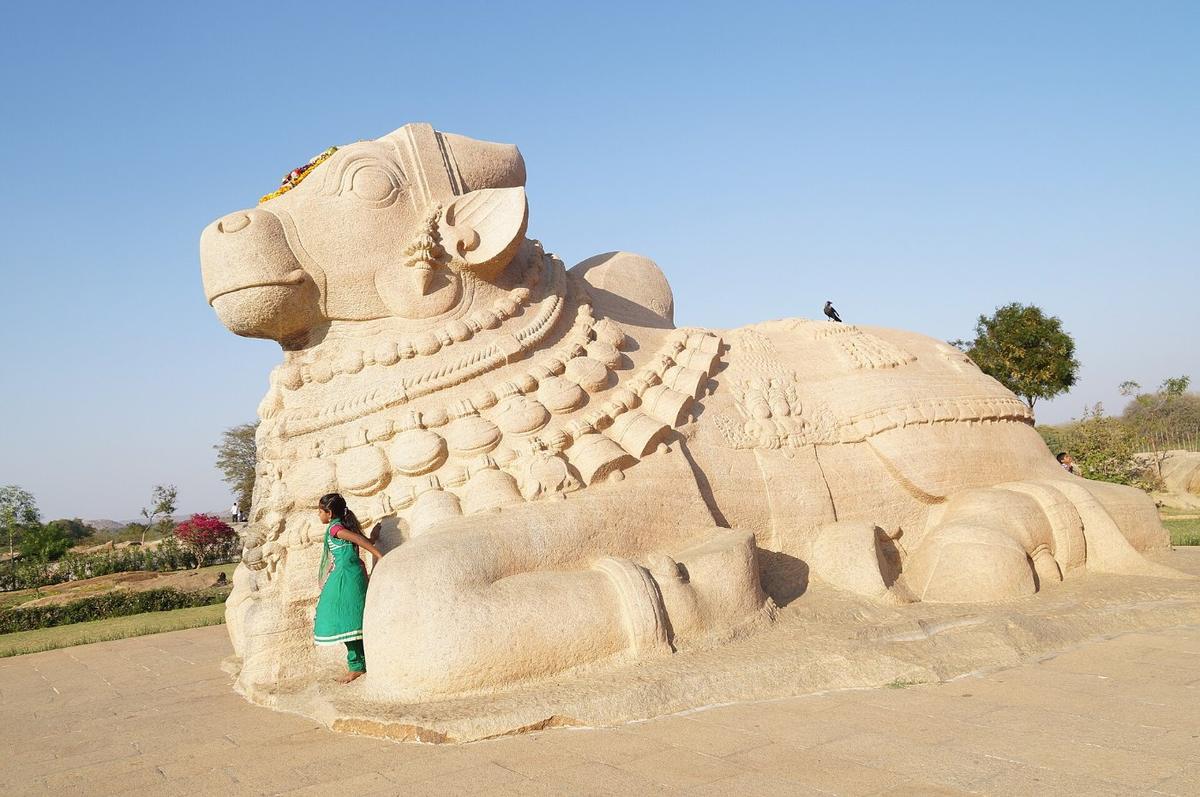
Photo: Lepakshi Nandi, Rahmanuddin, CC BY-SA 4.0

APPSC Group-I Mains 2023 · Paper II
2023 Paper II · Q1(a): model answer
History, Culture & Geography of India and Andhra Pradesh · Ancient India. Held in June 2023 (Notification 28/2022).
Examine the survival and continuity of Harappan culture in the present times.
Syllabus: Ancient India · Stone Age and the Indus Valley (Harappan) Civilization
Harappan continuityMaterial cultureProto-Hindu beliefsSubstratum of Indian civilization
The Harappan Civilization (mature phase c. 2600–1900 BCE) declined as a city culture, but it did not vanish. Its farming, crafts, beliefs and customs passed through Late Harappan and Chalcolithic village cultures into Vedic and later Indian life. Much of this inheritance survives today in villages, temples and households, so the Harappan world forms the substratum of Indian civilization rather than a dead past.
1. Town planning and technology
- Planned settlements: grid-pattern streets, covered drains and soak pits at Mohenjodaro and Harappa anticipate the drainage and sanitation principles of modern town planning.
- Water management: the reservoirs of Dholavira and the Great Bath foreshadow the stepwells and temple tanks of later India.
- Weights and measures: cubical chert weights followed a binary system (1, 2, 4, 8, 16…); the 16-anna rupee, used until decimal coinage in 1957, follows the same logic.
- Transport: terracotta models of bullock carts and boats closely resemble the carts and boats still used in Sindh, Rajasthan and Gujarat.
2. Economy and crafts
- Agriculture: the criss-cross furrowed field at Kalibangan resembles the mixed cropping still practised in Rajasthan.
- Cotton: the Harappans were among the earliest people to grow cotton; cotton textiles remain a hallmark of Indian craft.
- Crafts: carnelian bead-making (still practised at Khambhat), black-on-red pottery and the potter's wheel continue in village crafts.
3. Religion and beliefs
- Mother Goddess: numerous female figurines anticipate Shakti worship and village goddess cults.
- Proto-Shiva: John Marshall read the 'Pashupati' seal, a horned figure in a yogic posture surrounded by animals, as proto-Shiva; linga–yoni stones point the same way.
- Nature worship: the sacred pipal, the humped bull and the swastika remain objects of veneration.
- Ritual: fire altars at Kalibangan and Lothal, and ritual bathing at the Great Bath, echo Vedic sacrifices and the Hindu emphasis on purificatory bathing.
4. Social customs and daily life
- Ornaments: the bronze 'dancing girl' wears many bangles; red pigment in the hair-parting of figurines at Nausharo resembles sindoor (J.M. Kenoyer's interpretation).
- Leisure and homes: dice, toy carts, whistles and courtyard houses with rooms opening inward survive in village life.
| Sphere | Harappan evidence | Survival today |
|---|---|---|
| Religion | Mother Goddess figurines; 'Pashupati' seal | Shakti worship; Shiva as Pashupati |
| Sacred symbols | Pipal leaf, humped bull, swastika | Worship of the pipal and Nandi; swastika in rituals |
| Ritual | Great Bath; fire altars | Temple tanks, ritual bathing, fire rituals |
| Crafts | Carnelian beads; black-on-red pottery | Khambhat beads; village pottery |
| Measures and transport | Binary weights; terracotta bullock carts | 16-anna rupee (till 1957); bullock carts |
5. Limits of continuity
- Lost elements: the script, standardised town planning and trade with Mesopotamia disappeared; cities returned only with the second urbanisation of the 6th century BCE.
- Caveat: as the script is undeciphered, religious continuities are inferences from archaeology, not certainties.
AP angle: the mother-goddess cult lives on in AP's village goddesses (gramadevatas) such as Gangamma and Poleramma, and bullock carts and courtyard houses remain common in rural Andhra.
Thus Harappan culture survives less in monuments than in everyday practices, a striking example of continuity amid change in Indian civilization.
The other choice in Q1
Answer either one in the exam.
- Q1(b)Examine the socio-religious life and administration of early India with respect to the writings of Chinese travellers such as Fa-Hien, Hiuen-Tsang and I-Tsang.
10 marks · Ancient India · Satavahanas, Sangam age and Guptas; foreign travellers
Every model answer on these pages is free to read. The Tool Kit adds four PDF books for Mains Papers I–IV: every previous question sorted by syllabus, with practice questions. It is in the ₹149 All-in-One Pass, with every previous paper of every exam on the site, practice quizzes, timed tests, mock test series and study books.
₹149 · valid for 12 months from the day you pay, on every exam · pay by UPI, card or net banking