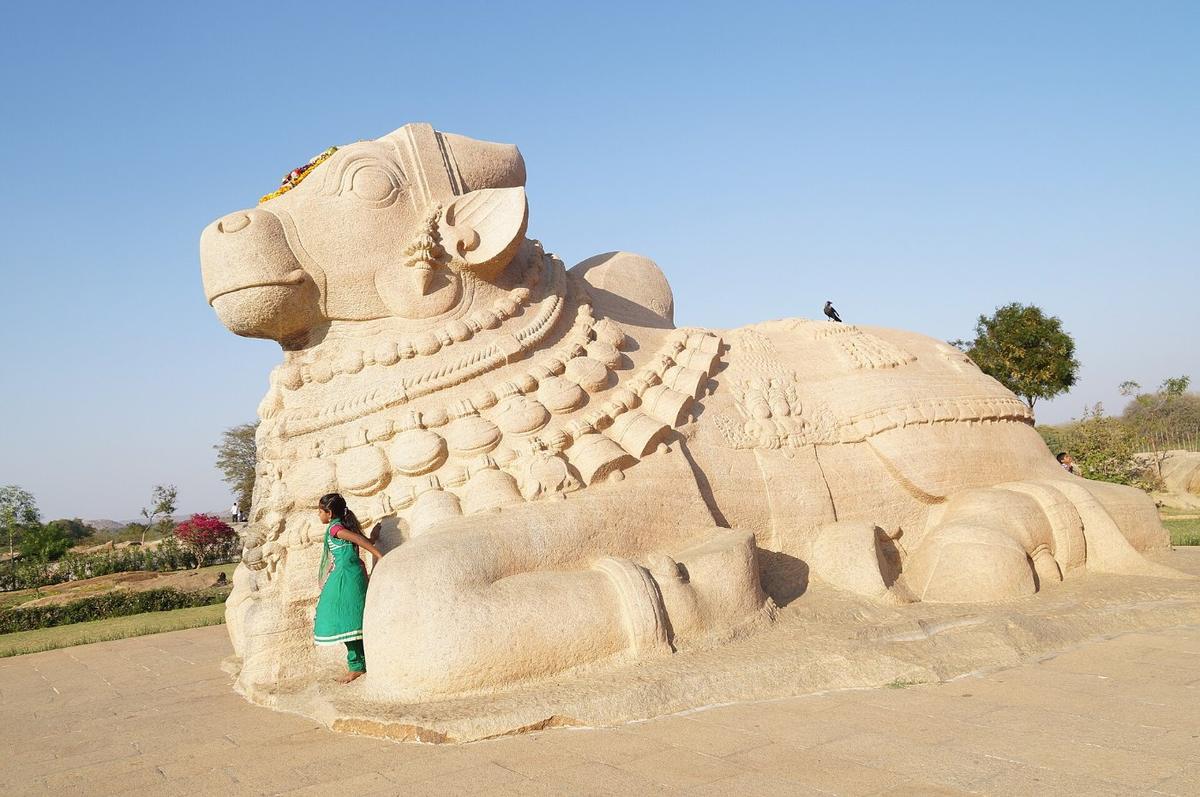
Photo: Lepakshi Nandi, Rahmanuddin, CC BY-SA 4.0

APPSC Group-I Mains 2023 · Paper II
2023 Paper II · Q14(b): model answer
History, Culture & Geography of India and Andhra Pradesh · Wildlife, Environment and Disasters. Held in June 2023 (Notification 28/2022).
Discuss various in situ conservation strategies of biodiversity in Andhra Pradesh.
Syllabus: Wildlife, Environment and Disasters · Wildlife, forests and biodiversity
In situ conservationProtected areasCommunity conservationEndemic species
In situ conservation protects species in their natural habitats, conserving whole ecosystems and evolutionary processes along with the species. Andhra Pradesh, spanning the Eastern Ghats, a long coast with mangroves and wetlands and dry Deccan scrub, is rich in endemics such as red sanders, the Jerdon's courser and the golden gecko, and protects them through protected areas and community action.
Schematic map of Andhra Pradesh (2011 census district outlines), not to scale; for study only.
1. Protected Area network
As per the AP Forest Department, AP has 3 national parks, 13 wildlife sanctuaries, 1 tiger reserve, 1 biosphere reserve and an elephant reserve; national parks and sanctuaries cover about 4.5% of the State's area.
- Tiger reserve: the Nagarjunasagar–Srisailam Tiger Reserve in the Nallamala hills is India's largest tiger reserve, managed under Project Tiger.
- National parks: Sri Venkateswara (Seshachalam hills; red sanders, slender loris) and Papikonda (Godavari gorge).
- Coastal sanctuaries: Coringa and Krishna protect mangroves and the fishing cat; Kolleru shelters pelicans; Nelapattu and Pulicat host pelicans and flamingos.
- Dryland sanctuaries: Sri Lankamalleswara (Jerdon's courser, rediscovered in 1986), Rollapadu (set up for the Great Indian Bustard) and Koundinya (elephants).
2. Landscape-level conservation
- Biosphere reserve: the Seshachalam Biosphere Reserve (2010) conserves dry deciduous forests with endemic flora.
- Elephant reserve: the Rayala Elephant Reserve under Project Elephant protects elephant habitat and corridors in the Chittoor region.
- Why habitats matter: protecting whole landscapes and corridors conserves species together with their prey, pollinators and natural evolution, which ex situ methods such as zoos and seed banks cannot do.
- Wetlands: Kolleru Lake has been a Ramsar site since 2002, and encroaching aquaculture tanks there were demolished in 2006.
3. Community-based conservation
- Heronries: villagers of Telineelapuram and Telukunchi (Srikakulam) protect nesting pelicans and painted storks.
- Institutions: sacred groves, Vana Samrakshana Samithis, and Biodiversity Management Committees with People's Biodiversity Registers under the Biological Diversity Act, 2002.
4. Species-focused protection
- Red sanders: a special task force fights smuggling of this endemic tree.
- Sea turtles and mangroves: Olive Ridley nesting beaches are protected and mangroves restored with local communities.
| Tool | Example in AP | Protects |
|---|---|---|
| Tiger reserve | Nagarjunasagar–Srisailam | Tiger, leopard, Nallamala forests |
| National park | Sri Venkateswara | Red sanders, slender loris |
| Wildlife sanctuary | Coringa | Mangroves, fishing cat |
| Ramsar wetland | Kolleru | Pelicans, migratory birds |
| Village protection of heronries | Telineelapuram | Pelicans, painted storks |
Challenges: red sanders smuggling, encroachment and aquaculture in wetlands, human–elephant conflict in the Chittoor region, mining, roads and power lines cutting through forests, and invasive species.
Strengthening corridors, community stewardship and scientific monitoring will help AP contribute to the Kunming-Montreal Framework's '30 by 30' target.
The other choice in Q14
Answer either one in the exam.
- Q14(a)Discuss various forest conservation strategies in India.
10 marks · Wildlife, Environment and Disasters · Wildlife, forests and biodiversity
Every model answer on these pages is free to read. The Tool Kit adds four PDF books for Mains Papers I–IV: every previous question sorted by syllabus, with practice questions. It is in the ₹149 All-in-One Pass, with every previous paper of every exam on the site, practice quizzes, timed tests, mock test series and study books.
₹149 · valid for 12 months from the day you pay, on every exam · pay by UPI, card or net banking