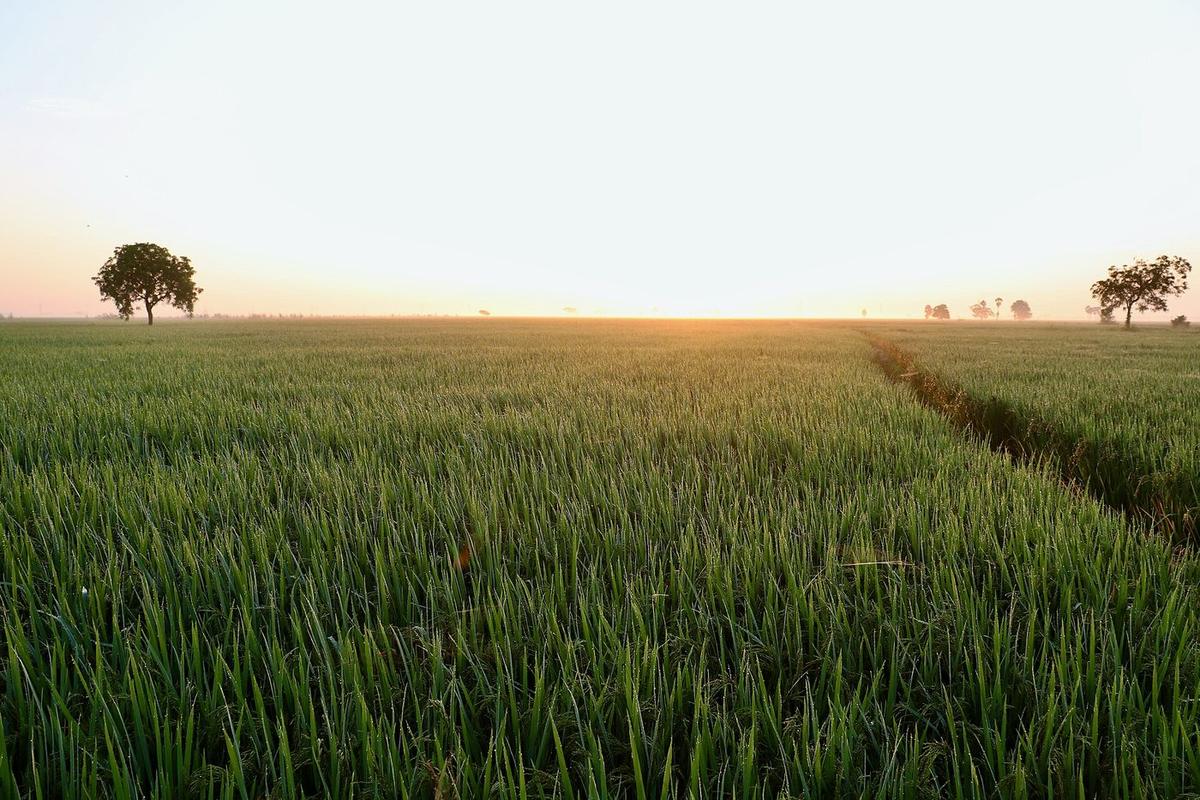
Photo: Paddy fields near Eluru, iMahesh, CC BY-SA 4.0

APPSC Group-I Mains 2020 · Paper IV
2020 Paper IV · Q8(a): model answer
Economy & Development of India and Andhra Pradesh · Farming and allied sectors (India and AP). Held in December 2020 (Notification 27/2018).
How has the growth in Andhra Pradesh's agriculture and allied sectors impacted the income levels of the farmers?
Syllabus: Farming and allied sectors (India and AP) · AP agriculture: share in SGDP, irrigation, crops and schemes
Agricultural growthFarm incomesAllied sectorsIndebtedness
Agriculture and allied sectors produce about a third of Andhra Pradesh's GVA and support most rural households. The State reported double-digit growth in this sector in 2014-19, led largely by fisheries, livestock and horticulture rather than field crops. The real test is whether this output growth became income growth for farmers, and the evidence shows a mixed picture: incomes rose, but debt and inequality among farmers remain high.
1. Positive impact on incomes
- Above-average income: according to the NSS Situation Assessment Survey 2019 (2018-19), an AP agricultural household earned ₹10,480 a month on average, slightly above the national ₹10,218.
- High-value activities: aquaculture, horticulture (banana, papaya, mango) and dairy brought high returns to farmers in the deltas and to women in dairy.
- Direct income support: YSR Rythu Bharosa (₹13,500 a year, 2019-24), and now Annadata Sukhibhava–PM-KISAN (₹20,000 a year from 2025). Free crop insurance and zero-interest crop loans also helped.
- Diversified sources: livestock and wage incomes cushion households when crops fail.
- Shift in land use: many delta farmers moved low-return paddy land into fish and shrimp ponds, raising incomes, though with costs to soil, water and food-grain output.
| Indicator | Andhra Pradesh | India |
|---|---|---|
| Average monthly income | ₹10,480 | ₹10,218 |
| Households in debt | 93.2% | 50.2% |
| Average outstanding loan | ₹2.45 lakh | ₹74,121 |
2. Why incomes did not rise as fast as output
- Debt: 93.2% of AP agricultural households were indebted, with an average debt of about ₹2.45 lakh, the highest in India (SAS 2019). Rising input costs and interest absorbed the gains.
- Uneven growth: much of the growth came from capital-intensive aquaculture and livestock, while rain-fed crop farmers in Rayalaseema stagnated.
- Tenant farmers: they cultivate much of the delta land but pay high rents and often miss institutional credit, insurance and subsidies.
- Price volatility: crashes in tomato, onion and chilli prices, and limited procurement at MSP.
- Climate shocks: droughts and cyclones such as Michaung (2023) cause crop losses.
3. Way forward
- Collective strength: FPOs can buy inputs in bulk and sell in larger lots, improving prices for small farmers.
- Value addition: food processing near production centres captures more of the consumer rupee.
- Risk management: price stabilisation, timely insurance claims and tenancy reform that gives tenants access to credit.
- Lower costs: low-cost natural farming (APCNF) reduces spending on chemicals and so reduces debt.
Output growth must become income growth; this is central to the "Swarna Andhra@2047" vision.
The other choice in Q8
Answer either one in the exam.
- Q8(b)Give an account of the different schemes implemented by the Andhra Pradesh government to promote agriculture in the state?
10 marks · Farming and allied sectors (India and AP) · AP agriculture: share in SGDP, irrigation, crops and schemes
Every model answer on these pages is free to read. The Tool Kit adds four PDF books for Mains Papers I–IV: every previous question sorted by syllabus, with practice questions. It is in the ₹149 All-in-One Pass, with every previous paper of every exam on the site, practice quizzes, timed tests, mock test series and study books.
₹149 · valid for 12 months from the day you pay, on every exam · pay by UPI, card or net banking